Saturday, December 02, 2006

More quick pics from the garden

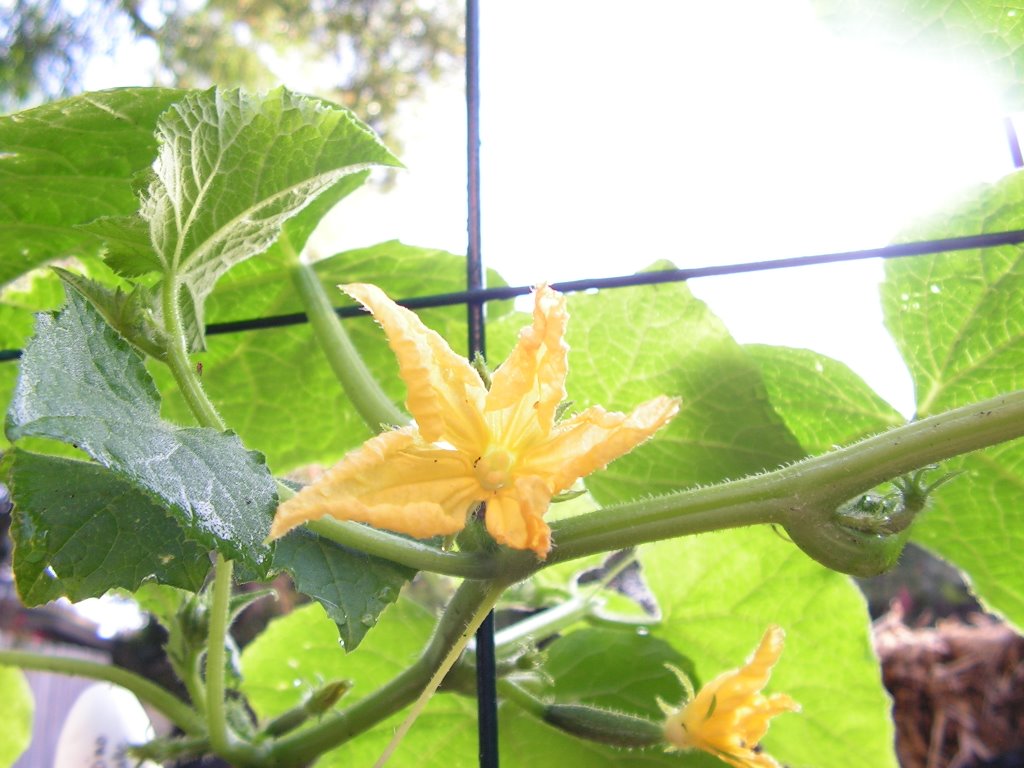
'Cucino' cukes, in bloom, planted October 14, so approximately six weeks from seed to bloom. These 'Cucino' seeds were EXPENSIVE, and only 3/4 of them sprouted. Then the frosts we had a few weeks ago took two of them down (they are apparently somewhat more susceptible than the other cucumbers I've planted, 'Salad Bush' and 'Lemon'). The fruit is forming; according to the description, it should be no larger than a cornichon.
***
My hybrid lasagna-square foot garden: using the Dryland No-Till method of preparing the bed, and the square-foot approach of intensive use of space. A very low-impact and low-cost way to start a garden that works well here in FLA during the cool, dry season. Every week, after I drop my daughter off at school, I spin through the neighborhood looking for bags of yard waste. A couple very thoughtful households even shred the leaves and grass clippings. I pour a bucket of water into the bag of yard waste, twist it closed, and leave it to sit for a week or two. Where I'm building the new section of the garden, I lay down a ten-sheet-deep layer of newspaper right on top of the grass (weeds and rye that I planted in October). I toss the decomposing mulch thickly over the new section of my bed. On top of that all, I lay down a cover of pine-straw for aesthetic reasons. To plant either seeds or seedlings, I pull the mulch back, tear a little gash in the newspaper, pile a half-gallon of bagged composted manure into a three-inch high hill, and in goes the seed or seedling. Then the mulch goes back around the mound, I water thoroughly, and off it grows. The roots seem to grow more out than down, finding their way through the rich compost. Again the downside to this approach is that at least initially, the garden needs more water since the mulch drains so quickly and lies on top of the soil. Eventually I guess the mulch will become humus, and the newspapers will dissolve and maybe the water solution will be resolved.
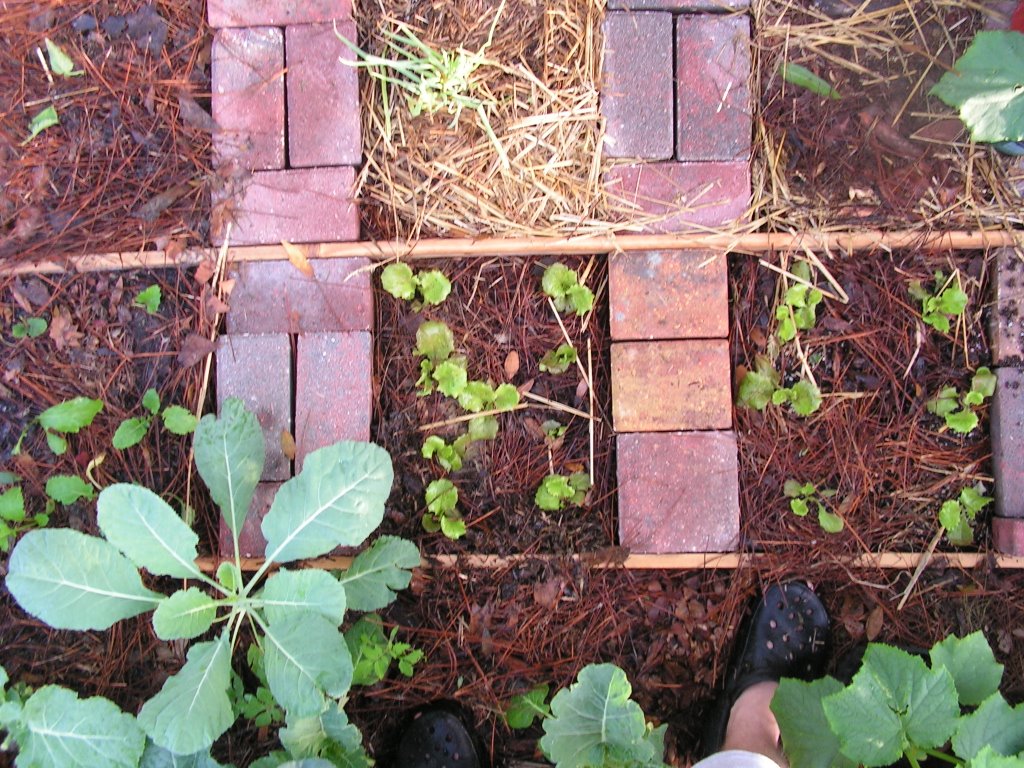
Trying to keep things eco-friendly and cheap, I've used scavenged boards and leftover pavers to build the borders and spacers in the garden.

***

A pea ('Knight', a bushing type), pushing through the pine-straw mulch. The 'Cascadia' I planted at the same time hasn't shown itself.


***

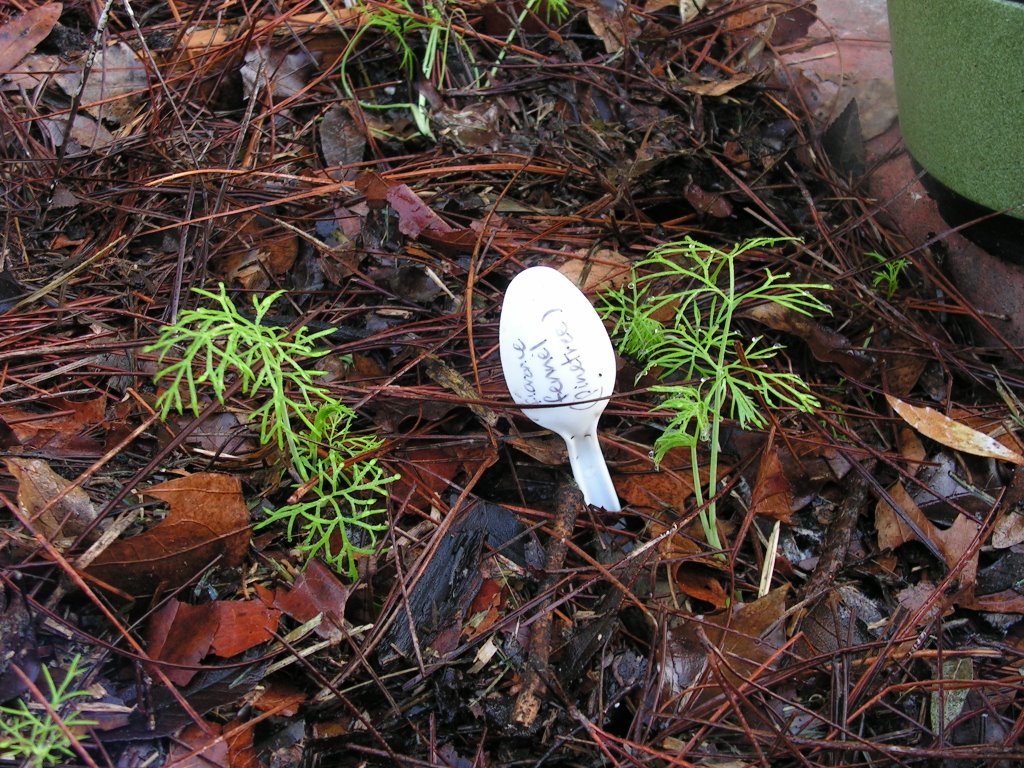
'Florence Fennel', a bulbing fennel that I planted on October 23, and transplanted into the garden mid-November. I keep stepping on the tender things, but they are very forgiving.
Tuesday, November 28, 2006

Pruning fruit trees...

A very useful demonstration of pruning fruit trees.

Radishes!

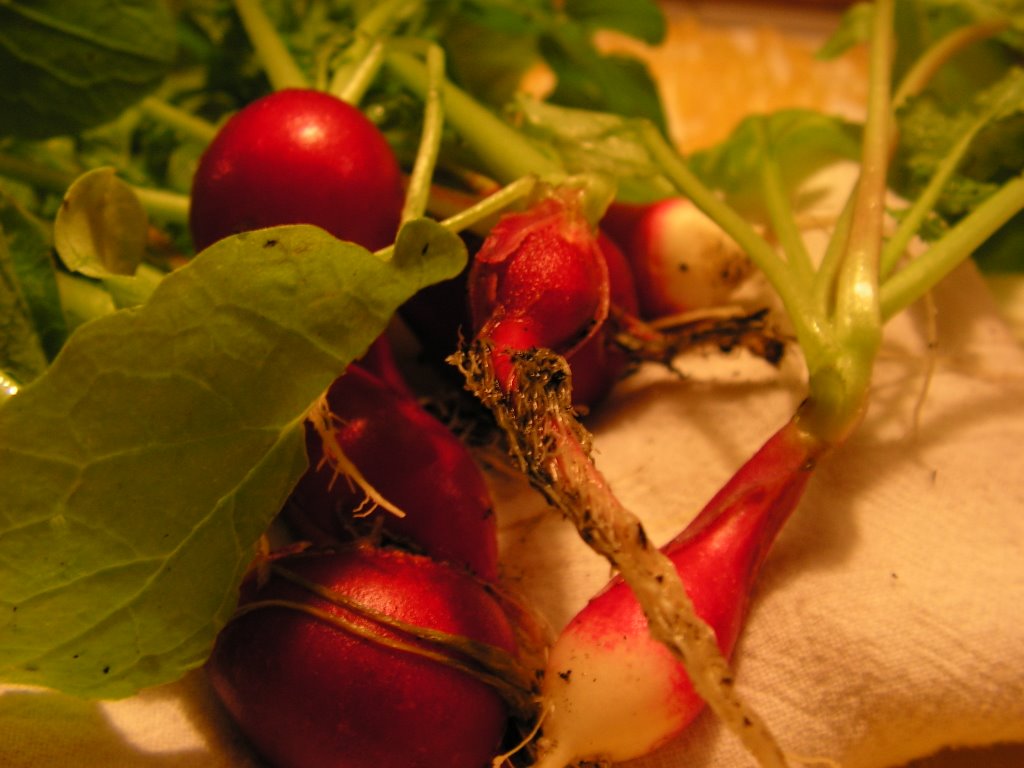
French Breakfast and Cherry Bell radishes, about thirty-four days after I planted the seeds. I grew these in an eighteen-inch by six inch window box, which was large enough to plant about twenty radishes. I've sown several other successions of radish seeds. These were very tasty, and very attractive: The French Breakfast were long, with a bright white base. We noshed them as an appetizer with freshly-baked pain au levain, Plugra butter, and Maldon salt. Mmmmmmm..... Posted by Picasa

My Just Fruits and Exotics order is ARRIVED!

From Just Fruits & Exotics, I got in the mail today...

  • Brightwell (Rabbiteye Blueberry)
  • Gulf Coast (Southern Highbush Blueberry)
  • Sharpblue (Southern Highbush Blueberry)
  • Emerald (Rabbiteye Blueberry)
  • 10 plugs of Chandler strawberries
  • 1 Egyptian Walking Onion
  • Muscadine Grape
  • Flordabelle Peach

Everything came well packed. The strawberries were large and healthy, growing in four-inch containers. They went straight into a well-prepared mulch bed with some extra composted manure and my "home mix" organic fertilizer. I've covered them with raised screens, to keep them well shaded while they acclimate. The onions went into a square.

Everything else went back into one-gallon pots until I figure out exactly where I'm putting everything. I'd say the quality of everything was top-notch: Healthy, large and ready to grow.


I also found a moment to transplant eighteen Dukat Dill seeds and eighteen Parsley seeds from their coffee-filter birthing grounds into some small starter cells. It took eight days for the parsley to germinate, a little less for the dill. I really like this method of germinating the seeds and then transplanting them.

Monday, November 27, 2006

Another late Monday...

I work again this evening, so I stole a few moments to work in the garden. I think I've finally come to the "top" of my vegetable garden. So far, it's been a free-form affair, using the "no-till" method of newspapers and mulch I've built an ever-expanding bed for veg, herbs and some flowers in the middle of my very sunny back-yard. I've been working north and east, and now the bed is about ten feet by twenty feet, with a soft curve in the front and a butterfly garden in the middle. (I might live to regret that decision, since caterpillars make aught a difference between what they should eat and should not.) Today, I came to the north-west corner and put down newspapers, mulch: leaves, grass clippings, wheat hay, and some bagged compost. Since it's a corner, I planted some climbing peas, Tall Telephone and Super Sugar Snap (both from Pinetree). I'll use some folding tomato wire to make an l-shaped trellis for the peas to grow up. Since I planted the peas in a row along the back of the bed, I planted Radishes (French Breakfast) and carrots (Little Fingers) to fill in the square.

I really like the reasonableness of square-foot gardening: Its principles of intensive cultivation, constant rotation, and moderate quantities of vegetables synchronize well with my busy schedule. I've been using some scrap boards I found at the dump as edging, and then dividing the squares with some leftover bricks, giving me a spot to stand for seeding and picking.

It's a great time to grow here in Central Florida. Things do not grow terribly quickly, with the weak winter sun. But weeds are not a problem, and I haven't seen any bug damage to speak of. I only water every other day, if that often; however, the no-till method requires a bit more water than if I'd been able to plant in a very well-prepared, deep and friable soil. But creating such a bed here in FLA is another thing entirely...

Sunday, November 26, 2006

Lavandula multifida

On a Florida Forum GardenWeb recommendation, I planted this Lavandula species to replace my long-lived Indigo Spires Salvia. My hope is that it will mix it up with the La Marne pink rose (a Polyantha) that grows near the front of the bed. Lavenders by and large do not grow well in our conditions: They love the Mediterranean (or California) mix of hot sun and dry air. The sun we've got (and then some!), but most lavenders just rot in our mix of high heat and lots of moisture. I have managed to keep alive an English Lavender in a pot by keeping it in the shade, under the eves of my gazebo, where it gets hit with the sprinkler every so often. By the end of the summer, it has just a few living shoots of green, but it will recover nicely over the winter and put on a pleasing show come spring. Then I'll move it back into the shade and dry conditions and nurse it through the summer...

According to my GardenWeb sources, L. multifida thrives here. However, unlike its English cousin, I cannot say that it possesses the most beguiling of scents... The first thing that comes to mind is turpentine. That said, it's grown vigorously in the couple of months it's been in the bed. And it's a very attractive plant, with its grayish leaves and bright-blue inflorescences.

I found the following description from the excellent site of Magnolia Gardens and their very smart Plants for Texas program. We here in Central Florida have many (but not all) the same difficulties that our neighbors to the West have. I'd say what grows well there (judging by Magnolia's site) grows well here...
Description

Lavandula multifida is not your typical Lavender that will melt in our heat and humidity. This species stands up to our wet conditions without the usual problems associated with lavenders. Fern Leaf Lavender has many deep lobed, silver coated, green leaves giving the foliage a lacy appearance and has long straight stems topped off with blue bracts usually found in clusters of 3. Lavandula multifida will grow to a height of about 24 inches and is highly aromatic making it attractive to bees. Great for use in borders, beds, and containers. Lavandula multifida is part of our Plants For Texas® Program, meaning it was Texas Grown, Tested in Texas to perform outstanding for Texas Gardens.

Some quick pics of the veg...


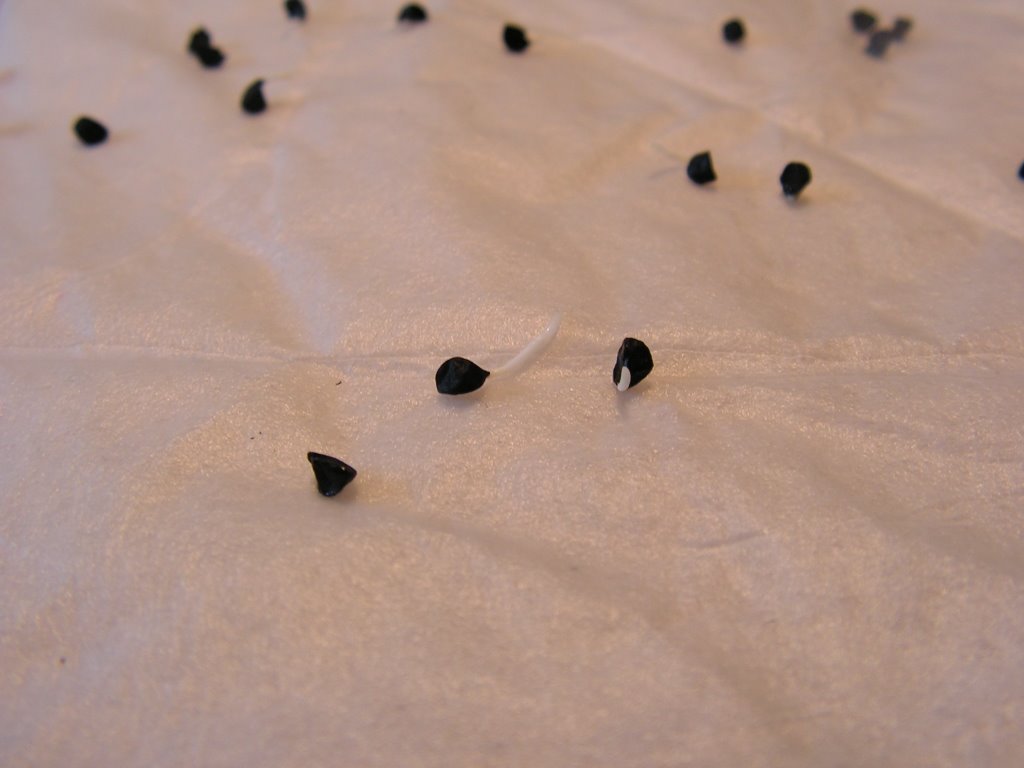
Some seeds started (the binder clips are key!)...


And radishes ready to pick ...


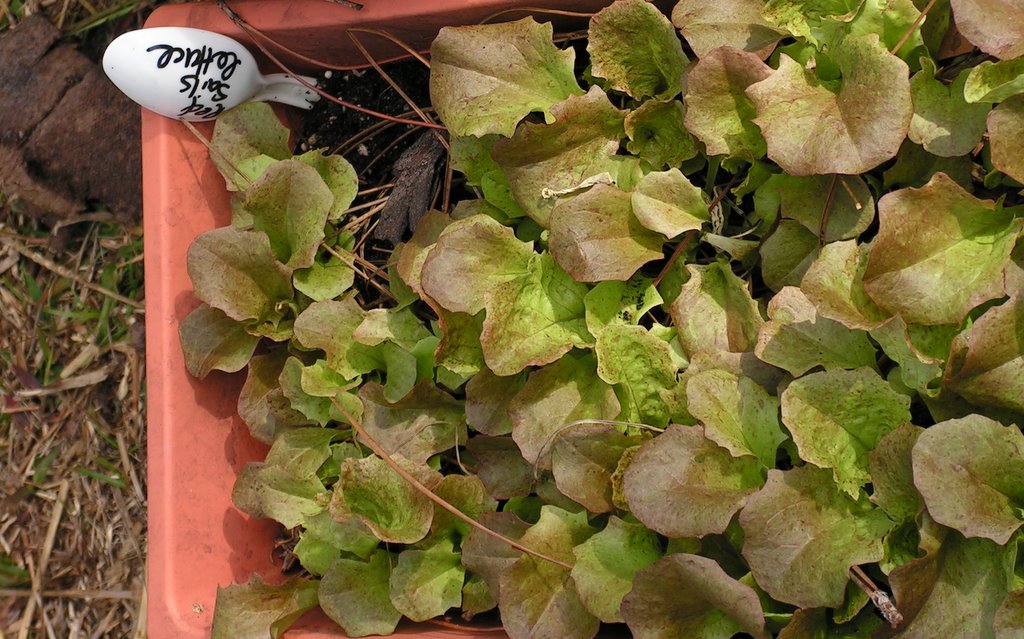
(below) Red Sails Lettuce, some to transplant into the garden, the rest to harvest as cut & come again.


(above) Mustard greens, broccoli, radishes and nasturtiums.

Cool-season veg & bloom

With guests in town and a holiday meal to make, I didn't have much time for gardening this past weekend. I found a very few hectic minutes to plant the following on Saturday:

- In my Parks dome, I planted (1) Nigella papillosa; (2) More mixed Rocket Snaps; (3, 4) Candytuft (this only did ok for me last year, but I had a bunch of seeds and it did free-sow a bit, so why not?); (5,6) Sweet Pea 'Fantasia Mix'

- In another seed starter: Shallots 'BONILLA' from Pinetree(which I started with the "coffee filter method"); Winter Density and Red Sails lettuces (from Pinetree); Arugula 'Apollo' (from T&M).

- In a eighteen-inch by six-inch planter, mache, a varietal called BIG SEEDED from Pinetree.

It was the first "hot" weather (around 78 degrees) here for a few weeks, and a brisk wind combined to dry things out a bit in the garden. I came home from a weekend on the beach to find my poor radishes growing in boxes looking rather wilty. Speaking of the radishes, I pulled the first few: Tasty, and just a few days outside the promised thirty-day harvest (Oct. 22-Nov. 26). The bad news is that two of my cukes got too chilly (I assume) and gave up the ghost. Posted by Picasa

Tuesday, November 21, 2006

Seeds started on November 20

After half a week away at a conference, I was eager to get dirt under my nails... After a long day catching up in the office, I planted the following:
  • Nine KNIGHT peas (56 days)
  • Nine CASCADIA peas (48 days)
We like pea shoots almost as much as we like the peas themselves! If you've never eaten pea shoots, they taste just like peas, but have a slightly crunchy, somewhat elastic texture, not unlike spinach. Like spinach, the shoots can be cooked or eaten raw in salads.
  • Using the coffee-filter method, I planted some cool-season herbs: PARSLEY-PREZZEMOLO GIGANTE D' ITALIA, CHERVIL, DILL-DUKAT STRAIN
Right now, the only things doing well in my garden are lettuces (Red Sails in particular), Rocket, a mixed-leaf mesclun from Pinetree called MISTICANZA and mustard greens. My broccoli is growing reasonably vigorously, but has yet to form heads. Radishes are six inches high, but no bulbing yet (though it's been close to a month... I guess the thirty day to harvest promise doesn't hold true in November.). Herbs are flourishing. Cukes are healthy but have all but stopped growing during this record-break cold snap. My roses are lovely, but they are dragging their roots... After more than a month, the ranunculus I planted with my son in the rose bed have poked their crinkly heads out from beneath the mulch.

Thursday, November 16, 2006

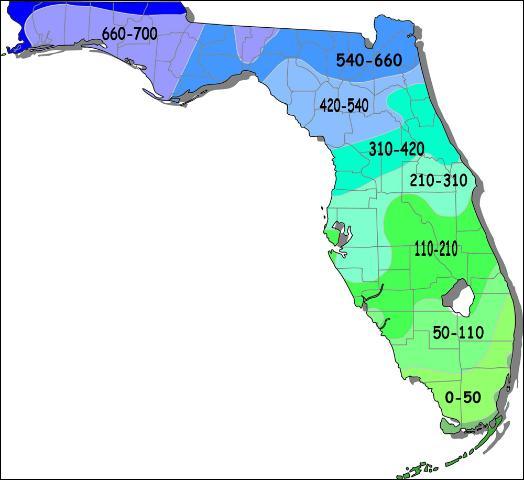
Useful Florida Climactic Data


For serious home gardeners and hobby growers, and for lovers of arcane data like cooling hours, the best site I've found is the Florida Climate Center at FSU:

Table of Probabilities for first and last freezes and frosts.

Monday, November 13, 2006

DRYLAND TECHNIQUES AND MULCHES

I've started using this technique for my new vegetable and flower beds... It makes a lot of sense here in Florida: I'll report back how ti works out for me.
DRYLAND TECHNIQUES AND MULCHES

The first season. We began our no-till garden in an area of well-grassed lawn. In several years of continuous production, it was never plowed, cultivated, spaded or hoed. The first season it is necessary to do some extra steps if you start with an uncultivated area as we did. It is described in the March 1981 issue of Organic Gardening in an article by Jamie Jobb called "Tossing an Instant Garden." (ECHO will send a copy of this article to overseas development workers who request it.) A layer of newspapers is spread over the area. They should be no less than 3 sheets thick and well overlapped at the edges. Then organic materials of any kind are placed on top. We use either chipped wood that is given to us by the power company when they trim along the power lines, or grass clippings. You could experiment with other materials that may be available to you such as rice hulls, sugar cane bagasse, tall cut grass, leaves, coffee pulp, etc. The method works because weeds are not able to push their way up through newspapers and a layer of mulch, but roots can go down through wet newspaper. Wherever a seed is to be planted a small mound of earth is placed on top of the newspaper (or a narrow row of soil about one inch thick is used if seeds are small and to be planted closely together). The mulch is then pulled back against the earth and a thin layer put on top of it to prevent drying of the soil. The seeds must be watered more frequently than when planted in tilled soil because the thin layer of soil can dry out quickly. When we pulled mature plants at the end of the first season we found that some roots had gone through the paper and others had grown along the top of the paper to the first edge, then underneath for normal growth. Transplants do surprisingly well when simply planted into the sod through a hole cut in the paper.

Subsequent seasons. The procedure with newspapers is for the first season only. Before the season is over you will find that the newspaper and the sod have decayed and turned to compost. From then on if you keep a layer of mulch about 6 inches thick over the area, the soil beneath will be ready to plant whenever you wish. Our garden has been in continuous use since the day it was first planted. We use the word "no-till" because it is analogous to the system of farming by the same name in which herbicides are used just before planting, then seeds are planted directly into unplowed sod. However, this method uses no herbicides.

What are the advantages? (1) Gardens can be started in any area without the need to plough or spade. You can plant in areas that would be difficult to plough, such as around dead trees or in rocky soil. Grasses and other weeds are better controlled than if the ground had been cultivated. (2) There is much, much less work involved in controlling weeds. But it is a no-till, not a no-work, garden! It can take a lot of time gathering and placing the mulch periodically around the plants. And some weeds will come up that must be removed. (3) Less water is needed for irrigation. (4) The soil is kept cooler. This can be a disadvantage, however, for colder areas. If soil temperatures are too low, the mulch can be raked back in areas to be planted a few days before planting, so that the sun can strike the soil directly. The soil will be dark after a few months of no-till gardening and should warm up quickly. (5) Soil moisture and temperature are more uniform, an advantage for most plants. (6) Nematodes will likely be kept under control. The soil environment is much less suited to nematode growth than, for example, the hot dry sand found in our area. Furthermore, some fungi found in the decaying organic matter will kill nematodes. We have had some signs of root-knot nematodes in the no-till garden, but they have not been a problem after the first few months of operation. It is almost impossible to garden in the same plot for more than one season here without the heavy use of nematicides with normal gardening techniques. We have not yet had to use any nematicide. (7) The only need for a compost pile is for a small one to put large or diseased plants or weeds. When the mulch decays, it is automatically compost and is already in place! Earthworms will soon help carry organic matter down into the soil. (8) Soil erosion from sloping land should be less of a problem.

Sunday, November 12, 2006

Do you know what zone you're in?

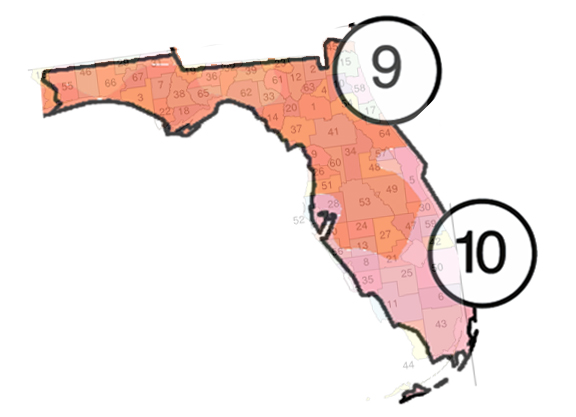
The National Arbor Day Foundation has a startling map that demonstrates the reality of climate change over a very short period of time. Based on the most recent fifteen year’s data available from more than five thousand National Climatic Data Center cooperative stations across the United States. In the period between 1990 and 2004, Zone 10 has crept significantly north in Florida, enveloping most of Brevard County and some of Seminole County. South Voludia County is now the southern-most border of Zone Nine, which has pushed its way north out of Florida and into coastal Georgia and South Carolina. I Photoshop-ed a map of Florida counties onto NADF's revised zonal map:

Oxalis triangularis


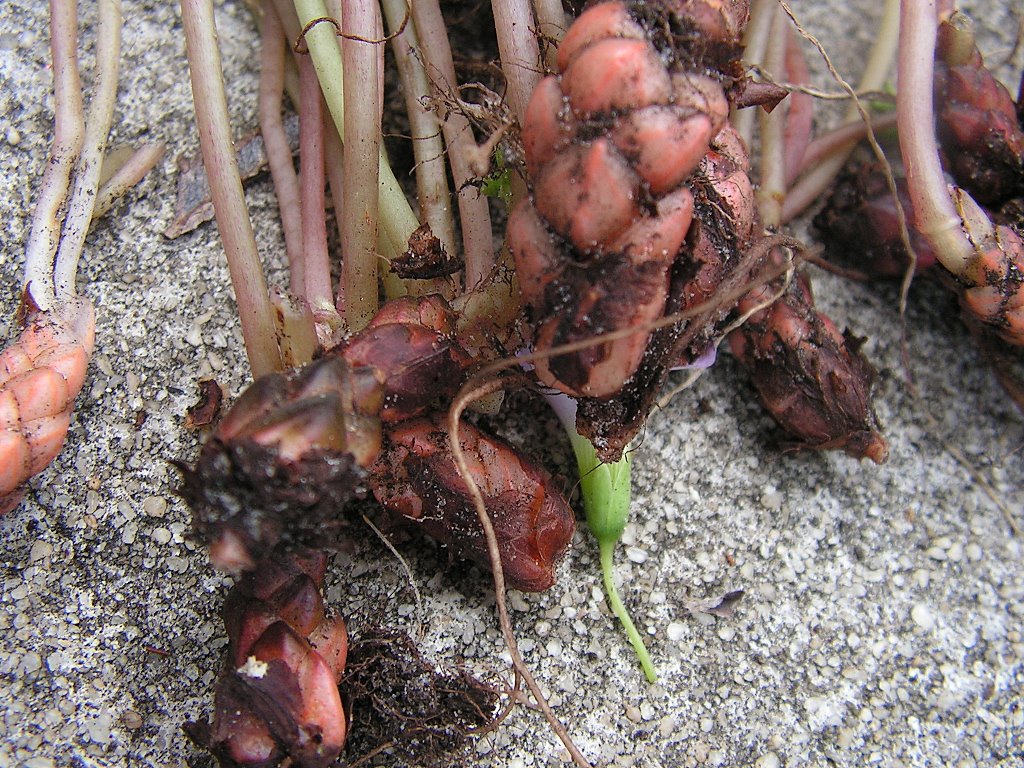
After a little less than a year growing in a smallish pot, my Oxalis triangularis needed to be repotted. I started with around a dozen corms in a nine-inch pot; with a little care and a lot of patience, I pulled no fewer than five dozen pencil-eraser-shaped bulbs from the pot today. Some I shared, some I transplanted to shady corners around my patio, some I gave away to friends. Posted by Picasa

Saturday, November 11, 2006

More seeds...

From Pinetree...
1 258. KNIGHT (56 days) 1.25 1.25
1 260. TALL TELEPHONE (Alderman) (68 days) 1.25 1.25
1 259. SUPER SUGAR SNAP (62 Days) 1.50 1.50
1 263. CASCADIA (48 days) 1.25 1.25
1 W228. FAVA BEAN-WINDSOR 1.25 1.25
1 W274. PARSLEY-PREZZEMOLO GIGANTE D' ITALIA 0.95 0.95
1 519. CHERVIL 0.80 0.80
1 52501. DILL-DUKAT STRAIN 0.90 0.90
1 W590. TOMATILLO 0.95 0.95
1 W128. EMERITE 1.25 1.25
1 W141. BIG SEEDED 0.75 0.75
1 W176. BONILLA 1.95 1.95

Friday, November 10, 2006

Seeds for November 3

In my seed starter, on November 3, I planted:
1, 2, 3: Pink Paeony Papaver
4, 5, 6: 'Rocket' Snaps
7: 'Sensation Cherry' Geranium
8: Dianthus 'King Salmon'
9: Alyssum 'Pastel Carpet'
10: Celosia 'Fresh Look Yellow'

I'd never grown Geraniums from seed, but got a few packets from Parks during their year-end sale. I think they must be pelleted, and they're not the cheapest seed, but they germinate readily and grow pretty quickly.

Thursday, November 02, 2006

National Clonal Germplasm Repository

National Clonal Germplasm Repository (Corvallis, Oregon) :

Where I found free cuttings of blueberries appropriate for Central Florida:
  • Gulfcoast
  • Pearl River
  • Aliceblue
  • Beckyblue
  • Bluegem
And blackberries:
  • Flordagrand
  • Oklawaha

Johnson Nursery Order

  • Climax Blueberry (2)
  • Misty Blueberry (2)
  • Apache Thornless Balckberries Pkg of 10
  • Arapaho Thornless Blackberries Pkg of 3
  • Sweet Charlie Strawberry Pkg of 25

Just Fruits and Exotics order...

Blueberries:
  • Woodard
  • Blue Gem
  • Brightwell
  • Gulf Coast
  • Sharpblue
  • Emerald (one not listed on their website but apparently well-adapted to my conditions)
&c:
  • 10 plugs of Sweet Charlie strawberries
  • 1 walking onion
  • Muscadine Grape

Great, intelligent customer service. The owner and I chattered for about half an hour about gardening
—she clearly knows her fruit!

The total came to just over $100, plus a packing charge and tax.

A bit pricey, but they have the market cornered!

Sunday, October 29, 2006

More vegetables...

[an update]: The Тurnip Тoppers were up nearly the next day and have already been moved to pots. It's Thursday (so a few days after sowing) and everything save the Nasturtiums has germinated and is growing merrily.

It rained here about an inch this past weekend, and again all day yesterday. That rain, the warm weather (mid-70s to low-80s) and a few days of bright sun have cheered my vegetables. The Fennel I planted two weeks ago is up and growing, the carrots have their first true leaves and the radishes seem almost ready to pick.

***
With guests in town and a busy week in front of me, I planted only a few seeds:

  • Turnip Topper: This variety is grown primarily for the greens. There tend to be 7 tops which are dark green, crisp, and delicious, particularly when harvested young. This variety is resistant to aphids and mildew. (35 days)
  • Red Sails lettuce: An early looseleaf type which has a very open head. It is relatively slow to bolt and succession plantings can be made through the summer.
  • Early Wonder Beets and Action Beets (50 days)
  • Tokyo Cross Turnips: The rapid maturation of this variety is absolutely amazing and they will get quite large if you wish. Harvest them young and they are usually worm-free without chemicals. Tops also have a nice flavor. (30 days)
  • Naturtiums
  • Some Cherry Belle radishes amongst the brassicae already growing in my garden
So far, everything except the fennel that I've planted the past two weeks has germinated & is growing vigorously in pots or in the ground. The many cukes that I planted a couple of weeks ago have finally developed their first, "real" serrated leaves.

I've started the guerilla raids of neighbors' oak leaves for compost. Strawberries are sure to be delivered in the next week. My fig tree has grown a foot in the last week, and my dwarf citrus love their new home... Can blueberries be far behind?

Wednesday, October 25, 2006

Cowpeas, California Blackeye #5

I'm planning to use these cowpeas as a cover crop around my new dwarf citrus and fig trees. Our family LOVES field peas, mixed in with greens or pasta. This particular cultivar does not attract nematodes, and can thus be grown and turned under year after year:

http://henryfields.com/product.asp?pn=12215

Cowpeas, California Blackeye #5: "Cowpeas, California Blackeye #5
65 days-Jet-black markings!

Rich, slightly sweet flavor, meaty texture. California Blackeye #5 Cowpeas disease resistant dwarf plants, 7-8 in. pods. Thrive in long, hot summers. These old fashioned Southern favorites are packed with good nutrition! The shelled 'peas' are rich in immunity-boosting folate and are a good source of fiber.

Monday, October 23, 2006

Sowing some more cool-weather veg

A quick note on a late Monday morning: I work late tonight, so I stayed home to clean up a bit and do some things in the garden. It's a very cool and overcast morning after a week of record heat, so I thought I should plant some seeds and take advantage of the perfect germination conditions: In peat pots, I planted Florence Fennel. (I don't expect to harvest much before the frost gets it, but I might get a few stalks... and the fronds are a lovely larval plant for butterflies.)

In another set of peat pots, I planted some Turnip Toppers to harvest their leaves later in November.

Finally, in a plastic windowbox, I planted two kinds of radishes: French Breafast and Cherry Belle. Both are very quick to produce (thirty days) and I plant to do a series of plantings if these turn out successfully.

One drawback to the lasagna-style gardening I'm practicing is that it's fairly difficult to sow directly, but perhaps I'll give it a try with these radishes: They'd be a way to use the bare spots in my butterfly garden. (I'll note that I (unwisely) put my vegetables next to my butterfly garden... I guess I'll end up losing a lot to the caterpillars, but I can afford some largesse to the winged sort.)

In the garden itself, I planted some large, healthy seedlings of broccoli among the mustard greens. I planted them all too close, of course, but they only came in packs of nine, and I want to keep this, my first garden plot, small for the time being.
The carrots seeds the kids and I planted last week have finally germinated, as have the cucumbers, arugula, and mixed "mesclun." My turnip greens that I bought as a six-pack from Lowe's have put out an impressive bit of growth, too. The only thing that hasn't put in its appearance is the Asparagus Pea.

In the flower gardens, I noticed Sparaxis from last year coming up, and a few Freesia that I planted earlier in October have forced their way through the mulch. I think I noticed a few of last year's Freesia in the back of the bed.

It was an extraordinarily hot week: several days in the low-90s, breaking records almost every day. This was one week after we set a record low in Daytona Beach the previous Monday. This week looks to be very cool, with low records distinctly possible tonight and tomorrow night: Lows in the mid-40s, which will put the kabosh on any true tropical.

Crazy weather.

Saturday, October 21, 2006

Blueberries for Central Florida

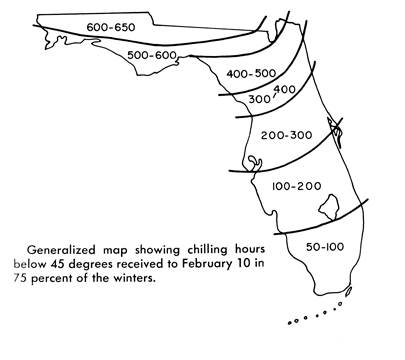
My criteria are simple: Under 400 chill hours and readily available at either Just Fruits and Exotics or Johnson's Nursery, two reliable mail-order retailers that deal with fruit for southern latitudes. According to what I've read, the more varieties of each species that you have, the better the pollination and fruit production. Many source recommend planting two varieties in the same hole.

Rabbiteyes
Native to the south, rabbiteyes lengthen out the picking season into August. At least two varieties are needed for cross pollination. Most of these need a minimum of 350 chill hours, making them marginal for the area. I'm going to give them a shot, though.

From IFAS: To increase cross-pollination and fruit set, mix two or more of the following cultivars from the appropriate group: 'Sharpblue'/'Misty'/'Flordablue'/'Avonblue'; 'Beckyblue'/'Climax'/'Bonita';'Tifblue'/'Climax'/ 'Powderblue'/'Woodard'/'Brightwell'

Southern Highbush
A new breed of early ripening blueberry, Southern Highbush (also called Tetraploids) are a cross between Rabbiteye and Northern Highbush blueberries. Everything is different about these guys: the plants are smaller, the leaves look different (thicker and more crinkly) and they ripen early and bear more heavily than Rabbiteyes. These beauties need a soil high in organic matter for best production. Most of these need 300 or fewer chill hours. (Descriptions are from here.)
  • Misty: Appears to be more susceptible to infection and death by blueberry stem blight than most other southern highbush cultivars. 'Misty' tends to produce very heavy crops, even as young plants. Over-fruiting predisposes blueberry plants to stem blight.
  • Gulf Coast: 1987 USDA release, very early harvest season (same as Sharpblue), 200-300 chill hours, medium-sized fruit, pedicels tend to remain attached to fruit at picking, otherwise a very good cultivar.
  • Sharpblue: UF release, the most commonly grown southern highbush cultivar, very early harvest (50% of fruit ripe by late April or early May in Gainesville), very early flowering, 150 chill hours, moderately productive, medium-sized fruit of high quality if handled carefully, susceptible to several fungal leaf spot diseases, although plantings containing only a few plants tend to escape serious leaf disease problems.
  • Windsor: is vigorous, with stout stems and a semi-spreading growth habit. Windsor appears to be best adapted to north-central Florida but has been grown successfully as far south as Hardee County.
The best reference I've run across on the web for blueberries is here, at the Home Orchard Society. Useful information, like the fact that blueberry roots never go deeper than eighteen inches and sound advice for dealing with the pH issue (blueberries require very acid soil).

Sunday, October 15, 2006

Dreaming of fruit trees...

Looking on Johnson Nursery's website, I put together this fantasy list of fruit trees for my backyard orchard... I will probably place this order, or one like it, soon:
  • Climax Blueberry
  • Austin Blueberry
  • Premier Blueberry
  • Powder Blue Blueberry
  • O’Neal Blueberry
  • Ozarkblue Blueberry
  • Pearl Rive Blueberry
  • Tifblue Blueberry
  • Sweet Charlie strawberries (100 plugs)
  • Arapaho Thornless Blackberries (10)
  • LSU Purple Fig (nematode resistant)
  • Alma Fig

Saturday, October 14, 2006

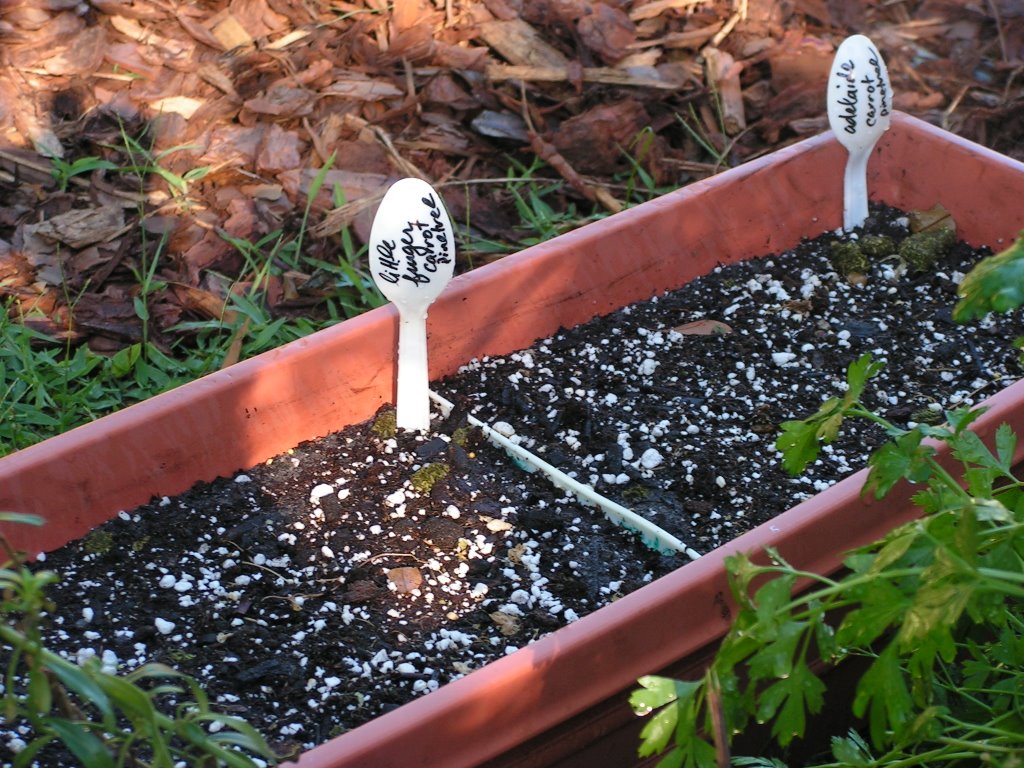
Miniature carrots 'Adelaide' and 'Little Finger':


Adelaide: "This Dutch hybrid is used exclusively for producing those baby carrots that are so attractive and command such a premium price at the market. An early, cylindrical, bright orange, coreless carrot that grows to about 3 ½ inches for harvest, Adelaide will retain its remarkably sweet flavor for quite a while. Use raw, in salads, for pickling, and in stir fries."

Little Finger: This is an excellent choice for succession plantings. The carrots are about the size of your index finger (@3 1\2 inches long) and not tapered much at all like a nantes. Plant quite densely, i.e. 20-25 seeds per square foot. This one also does great in containers.

Zephyr Lilies

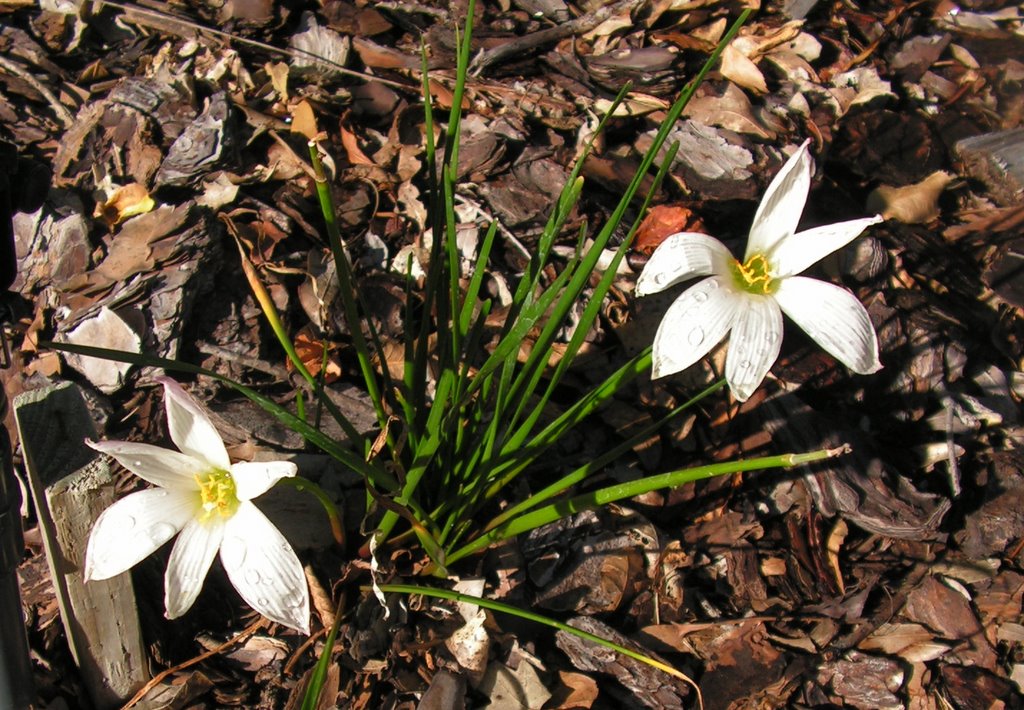
I wouldn't trade my Zephyr Lilies (Zephyranthes candida) for any stinkin' Daffodil in the world. When and why these bloom is always a mystery: Clearly, it's related to rain, since they don't bloom during the dry season or drought. The last time it rained here was ten days ago, yet all my Zephyrs are blooming today. During the hot and wet season, they bloom every couple of days. When not in bloom, they have a perfectly undistinguished grasslike foliage. Their motility is slow and not very far—the large, black and boxy seeds that form after pollination fall into my mulch and are slowly colonizing the area around my roses. I like one cultivar particularly: a double, frilly pure pink. Posted by Picasa
The aptly named 'Prosperity', a hybrid-musk climbing rose. I've had it growing in my garden for probably three years—the main cane is now about the width of a wine bottle. It's always blooming somewhere, but when the fine weather of our dry season kicks in, the bush is just covered in huge hands of pure white blooms with vivid yellow stamens and anthers. The fragrance is really unremarkable, though my reference books say otherwise (and commonsense, too—musk roses have long been considered the most odiferous of the garden roses).

It's a very vigorous rose, growing on 'Fortuniana' stock here in Florida.
 Posted by Picasa

Planting the winter vegetables...

I'm a flower gardener: The bigger and brighter the bloom, the better. (People who murmur demurely about growing foliage and appreciating "textures" obviously cannot grow flowers!)

Vegetable gardening in Florida has many challenges, but if you can navigate the freezes, avoid the bugs, and ditch the 'soil,' you can grow a lot of veg here, just not the same way you might up north.

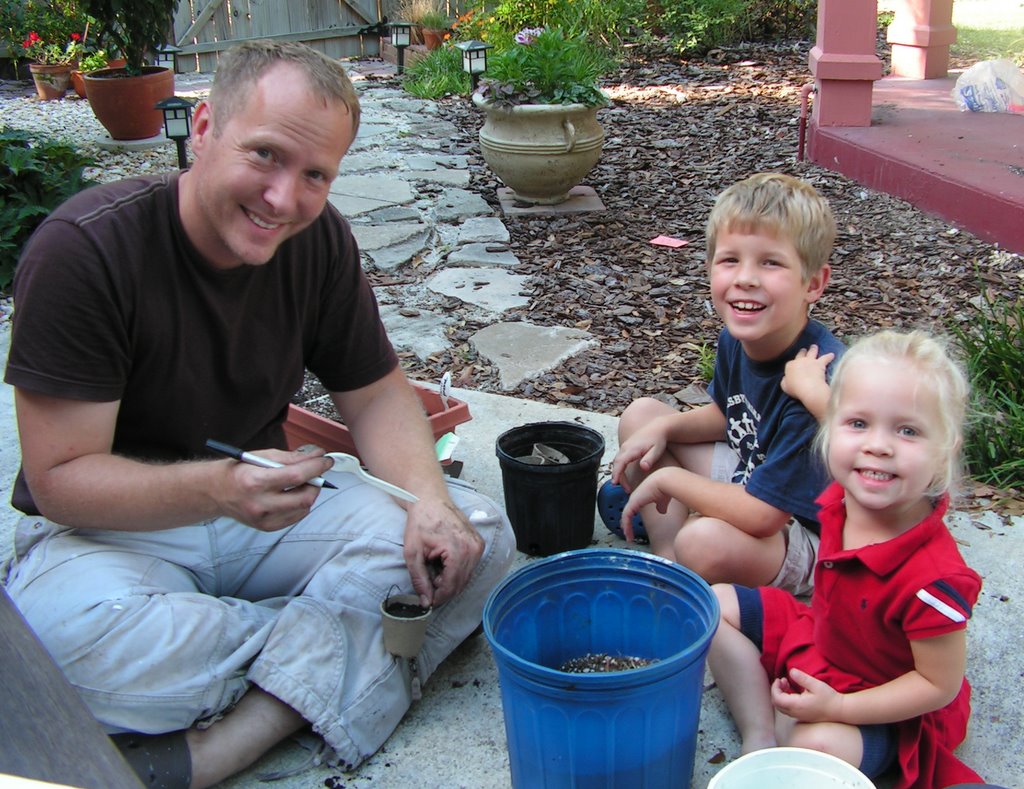
I'm giving it a shot this year: I've always found room in my garden to grow lettuces in the cool season, but this year I decided to try some pot culture: miniature carrots, bush cucumbers, and Thompson & Morgan's 'Asparagus Bean'. The kids lent a hand with the seeds on a fine, dry and cool day here in Florida.

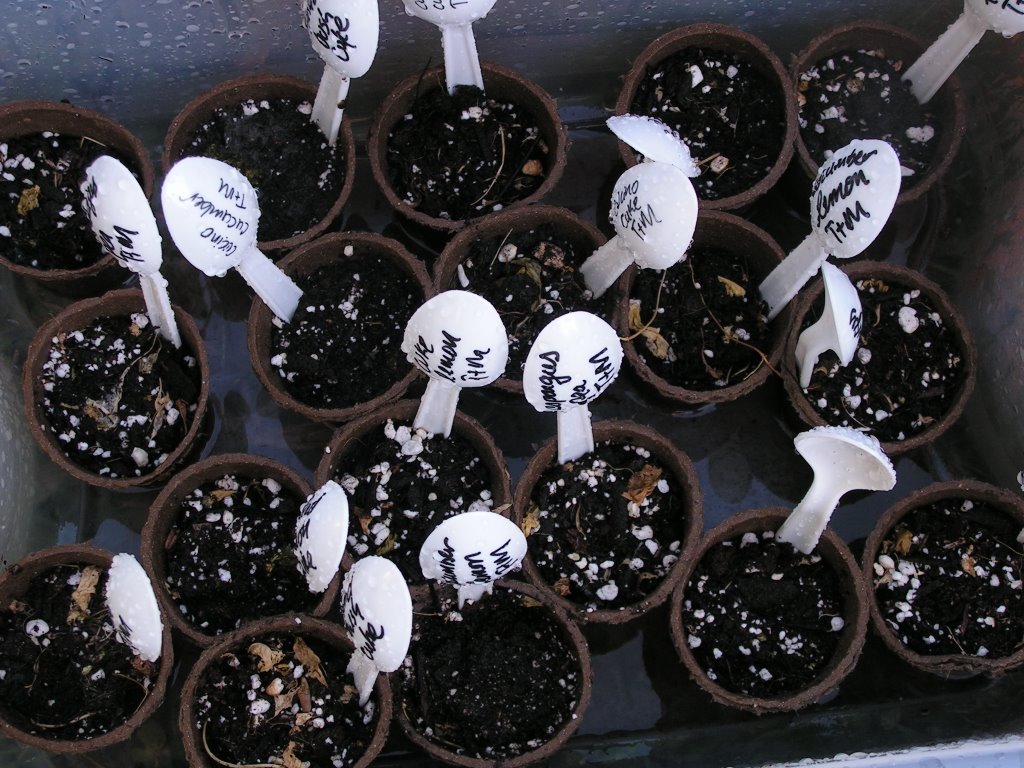
I planted the Rocket (Apollo from Thompson & Morgan) and the salad mix (MISTICANZA from Pinetree Garden) in a homemade, small-scale version of an Earthbox. The carrots (Little Finger and Adelaide, from Pinetree) went in some plastic windowbox containers (about ten inches deep, hopefully enough for these four-inch carrots). For the moment, the cucumbers (Salad Bush from Pinetree; Lemon and Cucino from Thompson & Morgan) are in peat pots: I'll put together another homemade Earthbox when they've outgrown the peat pots.

Saturday, October 07, 2006

I've decided to branch out into some select veggies, mostly for container growing in the cool season:

Pinetree Garden Seeds: Great selection, great prices....

140. BUSH CROP (55 days)
142. SALAD BUSH (F1 Hybrid 56 days)
67. ADELAIDE (F1 hybrid 65 days)
73. LITTLE FINGER (60 days)
W331. ARUGULA-RUCOLA SELVATICA
W361.
MESCLUN MIX-MISTICANZA

From Thompson & Morgan... PRICEY but very high-quality product.

1 of [136] Asparagus Pea
1 of [199] Cucumber : Lemon
1 of [355] Cucumber : Cucino F1
1 of [4258] Helianthus debilis Key Lime Pie
1 of [468] Rocket : Apollo

Freesia

It was supposed to be much cooler today than it turned out to be. Despite the near-90° temperatures and humidity, I forged ahead and planted fifty Freesia bulbs and a dozen Amaryllis bulbs. As usual, I bought them from easytogrowbulbs.com, and their quality was exceptional: The Freesia were three-quarters of an inch in diameter, and the Amaryllis (which I got on special at around $3 per bulb!) were the size of cooking onions.

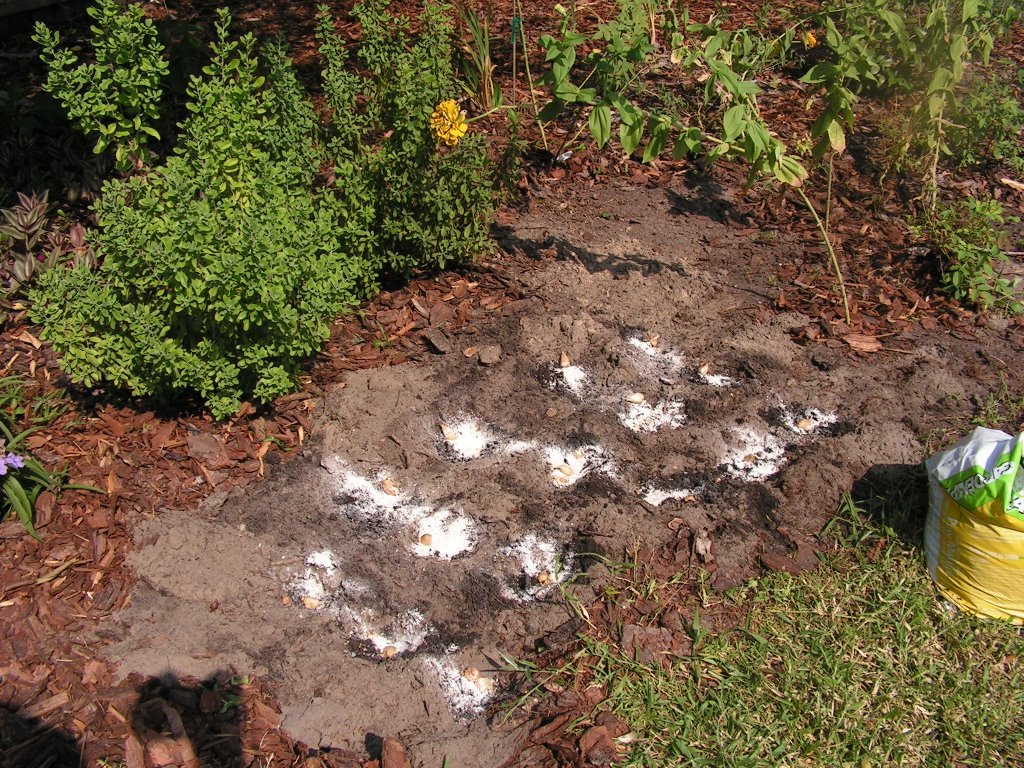
The Amaryllis (one of the toughest plants I know) went into the full-sun bed that lines the walk to my back yard with a little fertilizer and some water-retention crystals. I didn't enrich the soil much, since they're growing in more than five years of decayed pine mulch -- it's at least six inches deep. The Freesia, which went into a new bed that gets about six hours of morning sun, got a little more attention: Two handfuls of compost, a handful of bone meal, some water crystals and Osmicote. Both were heavily mulched in pine bark.

I had great luck with the Freesia last year: I planted them at the end of December, and they bloomed for six weeks, starting mid-March. I'm planting them much earlier this year, hoping that I'll extend my growing and blooming season by a bit. I left last year's bulbs in the ground, and I think I saw one of them poking its leaves through the mulch today.

My latest Park Seeds order

SUNFLOWER SONJA
VINCA
PARK
'S MOONLIGHT MIX
ZINNIA RUFFLES CHERRY
ZINNIA RUFFLES
ZINNIA DASHER MIX
SNAPDRAGON LABELLA HYBRID MIX

GERANIUM SENSATION CHERRY
CLEOME SERRULATA SOLO (SPIDER FLOWER)

COREOPSIS TINCTORIA

COREOPSIS TINCTORIA MAHOGANY MIDGET

ELEUSINE CORACANA GREEN CAT (GOOSE GRASS
)
LIATRIS SPICATA KOBOLD (BLAZING STAR)
ORNAMENTAL PEPPER CHILLY CHILI HYBRID

RUDBECKIA
CORDOBA (GLORIOSA DAISY)

Thursday, October 05, 2006

A very eary start to the dry season...

After a very dry wet season, we started the dry season about a month early... This earliness is a good thing for the garden, since it's late-September and early-October rains that wreck a garden (fungal diseases thrive on short days and lots of water). It's awful, though, for the water table and for local springs and streams, which were already about as low as anyone around here remembers.

Weather Discussion : Weather Underground: "Climate...(previous discussion)...it looks like the drier season arrived earlier than normal this year (sep. 27th at Orlando/Daytona Beach and Sep. 28th at Melbourne/vero beach). This means that the frequency of rainfall showed a marked decrease. Longer term forecasts into the middle of the month do not show significant moistening that would lead to a prolonged period of afternoon sea breeze showers/storms. "

Wednesday, October 04, 2006

Rosa 'Natchitoches Noisette'

I bought this lovely pink rose thinking it was a 'Blush Noisettte,' a cultivar created by a nurseryman in South Carolina in the nineteenth century that set off a revolution in rose breeding all over the world. During my trip to Seminole Springs a couple of weeks ago, though, I learned that it had been mislabeled, and was instead 'Natchitoches Noisette' (apparently pronounced knack-uh-tish!), named after the city in Louisiana where this rose was found growing in a cemetary.
Whatever its TRUE identity, this rose has flourished in my garden, where it pokes out from within and behind a large Guara. The description at helpmefindroses remarks on its clove scent... Not something I've ever noticed.

Another weekend day spent at Leu Gardens. My apiphilia at work. Posted by Picasa

Sunday, September 24, 2006

My latest easytogrowbulbs order

Freesia Single Mix
Amaryllis White Christmas
Oxalis Grand Duchess Veriscolor
Ranunculus Flower Fields Collection
Those Amaryllis were only $3 per bulb, quite the bargain! I bought a dozen and will put them into my new bed along the walk in the side lot, next to the Amaryllis I found growing next to the house.

Biosphere Nursery & Seminole Springs Roses

I spent yesterday, along with my son, visiting a couple of excellent nurseries in the area. The day started with Biosphere Nursery, an excellent, native-oriented nursery:
  • 2x Russelia: An interesting cultivar (or perhaps a species) of the Firecracker plant, with leaves that are oblong rather than fern-like. Nice.
  • 2x Summer Cassia: I saw this grown as a standard at Leu Gardens this week. Lovely small tree, and someone recently called it "crack for butterflies."
  • 2x Sparkling Showers Durante: I have the species of this plant, which has tiny lavender flowers. This cultivar has rich purple flowers that are dappled or striped in white.
  • 2x (red) Milkweed: I brought home a Monarch caterpillar hiding out somewhere on one of these, but I fear the birds got it.
  • 2x (bronze) Fennel: Beautiful plants, and a favorite of Swallowtails.
  • 2x Confederate Rose: Why isn't this stunning plant grown more often? A member of the Hibiscus family (Hibiscus mutabilis). The blooms start out pale pink, almost white. By the end of the day, they're a rich cerise-pink. By evening they've closed and contorted themselves into tight whorls.
After a stop in Zellwood for sweet corn, we headed for Seminole Springs Nursery:
  • 'Maman Cochet': "Orange-pink & orange-pink blend [op] blooms. Strong fragrance. 30 petals. Blooms in flushes throughout the season. " 1935.
  • 'Maitland White' ('Puerto Rico'): Bermuda Found Rose. "White, near white & white blend [w] blooms. Sweet fragrance. Blooms in flushes throughout the season."
  • 'Madam Lombard': Very double, pink-orange.
  • 'Smiths Parish Yellow': "The ivory/yellow flowers sometimes yield a petal that is pink or red or perhaps displaying a stripe across the yellow. A tidy shrub with few thorns it's thought that like many of the Bermuda Mystery Roses it has a strong Tea influence. We have found that this rose performs fairly well in light shade."
  • 2x Lavandula multifida

Plants For Texas® Texas Born, Texas Tested For Texas Gardens™

Plants For Texas® Texas Born, Texas Tested For Texas Gardens™

The plants offered on the Plants for Texas site are in almost all cases also appropriate for Central Florida, which enjoys the same deluge-drought cycle and intense sun of our neighbor across the gulf:
Every year gardeners go to their local garden centers and walk out with armloads of plants. After planting, mulching, trimming, watering, fertilizing, and generally babying the purchases they disappear. By July the only thing left of some of those plants is the plastic tag. Where do they go? Most likely they melted in the Texas heat. In many cases dead plants only came as the result of picking the wrong plant, Not having a "brown thumb".

Wednesday, September 20, 2006

But what of the lilies in the field?

Add the $20 hole to my long list of "conventional garden wisdom" that needs to be debunked.

You'll often hear about the importance of lavishing organic materials on the planting hole, amending the soil in a plant's future home with lots of organic material, bone meal, blood meal, kelp, fish heads, sacrificial virgins, etc. etc.

The idea makes sense, of course: We all know how important it is to have rich, humusy soil full of nutrients and capable of retaining moisture. So it makes sense, right, to mimic good soil by sparing no expense in improving the soil nature has provided with organic materials, etc.

However, as is usually the case with Conventional Wisdom, the seemingly-sound idea behind the $20 hole does not match reality. Quoting from the University of Florida IFAS-Extension literature:
A common procedure for transplanting container-grown plants involves amending the backfill around the root ball with an organic material such as peat. However, a significant amount of research over a range of irrigation schedules, plant materials, and soil types provides no evidence that this practice is beneficial. In fact, incidences where roots remain in the amended backfill soil and do not grow into the undisturbed field soil have been reported. The argument for amending backfill soils centers around the fact that peat increases the waterholding capacity of a sand soil. What actually happens is the water in the adjacent landscape soil is held at greater tensions than the water in the amended backfill. The result is a drying container root ball as water moves from the container medium and the amended soil into the adjacent landscape soil as it dries.
Plants transplanted in very rich holes do not, as expected, thrive; instead they are actually harmed by the over-abundance of organic material. This is clearly an example of too much of a good thing, and a waste of money, at that.

I've known about this debunking for some time, but came across it again today while exploring UF's extension website, which offers a lot of sound gardening advice backed by a good dose of empiricism. I don't enrich my planting holes much, usually removing a spadeful of Florida "dirt" and replacing it with compost from my pile, a fork or two of peat, some ground pine bark, granular, slow-release fertilizer (Osmocote), some Milorganite (for a weak but quick boost of NPK) and, lately, some water-absorbant crystals. No pretensions for science or consistency. Whatever suits my fancy and whatever is at hand.

Then, lots of mulch.

In annual beds, I pull the mulch back, empty a couple of wheelbarrows full of compost and spread it evenly. Then I plant my seedlings in the compost, heaping the compost up into little, low mounds. The mulch goes back, and that's it.

The mounding serves two purposes: It raises the plants higher, so the mulch doesn't cut their stems. And, since everything sinks in Florida over time, it prevents the plants from being "drowned" or rotting from too much water. (This is the nature of an inert sandy soil: organic materials decay, but the sand does not.)

At least once or twice a year, for all my bushes and new trees (particularly for roses), I pull back all the mulch from the beds and put down a thick layer of compost and shredded leaves and a sprinkle of Osmocote. Then I push back the mulch.

I think this slow and dispersed amending of the soil, from the surface down, avoids the pitfalls of the too-rich hole while still improving the general health of the soil.

Landscape Mulches: Will Subterranean Termites Consume Them?

Landscape Mulches: Will Subterranean Termites Consume Them?

Little is known or mentioned in the literature about mulches and termites. Warnings about not leaving pieces of wood or stakes as termite attractants after house construction are common though. One publication noted that when construction is complete on a new house, every "piece of wood that can be picked up between the tines of a common garden rake should be removed"(Moore 1979). Another publication notes that moist warm soil containing an abundant supply of cellulose material is a termites optimal environment (Johnston et al. 1972). They define "cellulose material" as scraps of lumber, stakes, stumps, and roots left in the soil. One of the prerequisites for subterranean termites and wood-decaying fungi is for the wood to be in reasonably close proximity to the soil surface (Moore 1979) as mulch is. Yet, most houses in Florida with many trees and other landscape plants may already have plenty of food available for termites, and mulch may just be one more additional food source.

Further research on mulches and termites is warranted to determine if we should be concerned about using mulch around houses. Also, research is needed on possible repellent mulches such as melaleuca which might serve as an additional barrier for household protection against termites. At this time the benefits of mulches such as water conservation, reduced used of herbicides, and reduced soil erosion are very apparent while the risks to termite infestations due to mulches are unknown. Homeowners will continue to use mulches in landscaping around their houses and buildings. Our current recommendation is to be vigilant and up-to-date with termite inspection and treatment.

Monday, September 18, 2006

Commercial Floriculture

The Commercial Floriculture site at the University of Florida is oriented (obviously) at commerical growers. However, it contains a wealth of information for the home gardener, including plant trials and very specific recommendations on cultivars, plant care, and fertilizers. Of particular interest are the Sunflower trials and Statewide Plant Trials. The latter section won't win any awards for ease of access or organization, but the important material is digested here in the research papers section. What you'll find is very precise and detailed information on cultivars of common bedding plants like Larkspur, Geraniums, Snaps, etc.

Saturday, September 16, 2006

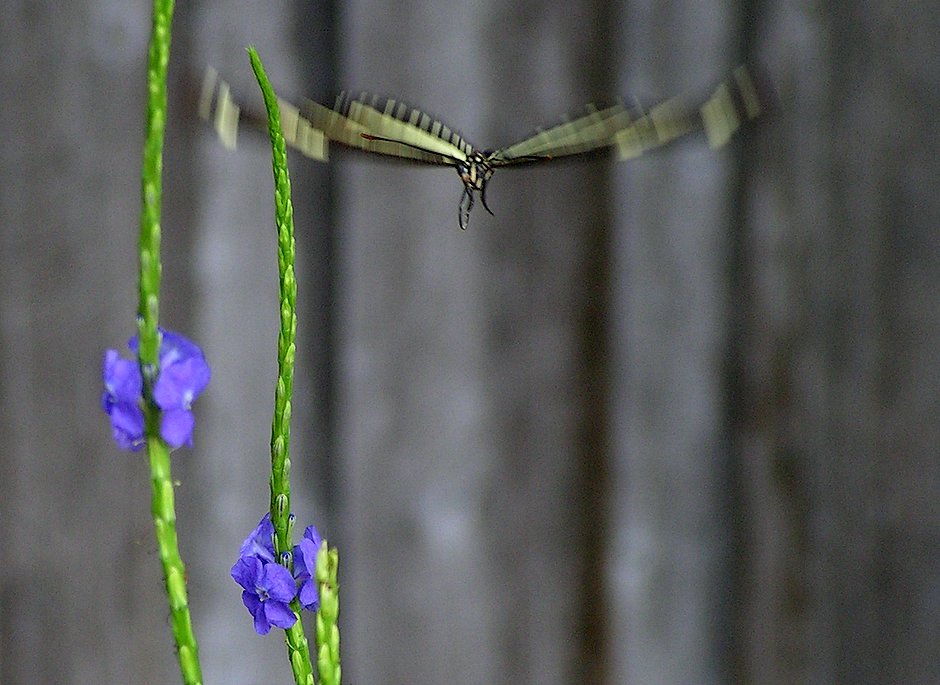
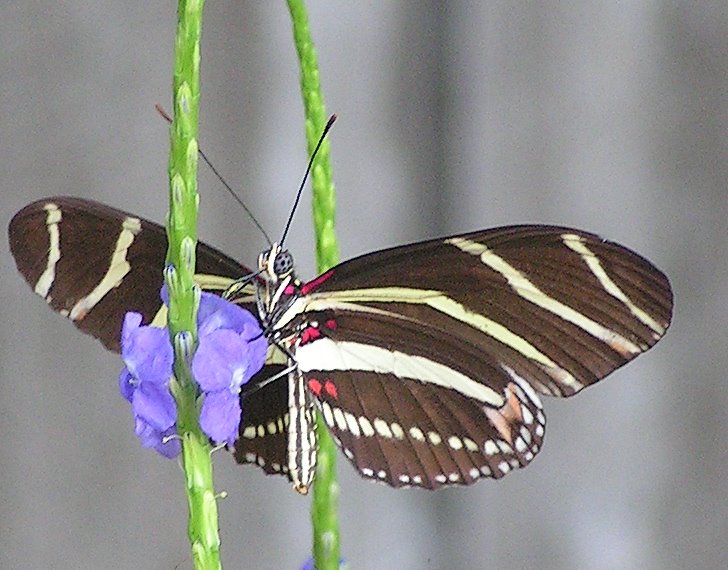
Porterweed and a Zebra Heliconian

Drinking coffee, looking out the kitchen door, I saw this Zebra Longwing flopping about my garden this morning. I followed it for a bit as it flitted around my Blue Porterweed. For what I was trying to do—capture something in motion in filtered light—my aperture was too wide and my f-stop too slow, but it turned out a pretty cool effect. They're such slow-moving, easy-going butterflies (unlike most Swallowtails), it's easy to get a closeup shot, as I did below.

Wednesday, September 13, 2006

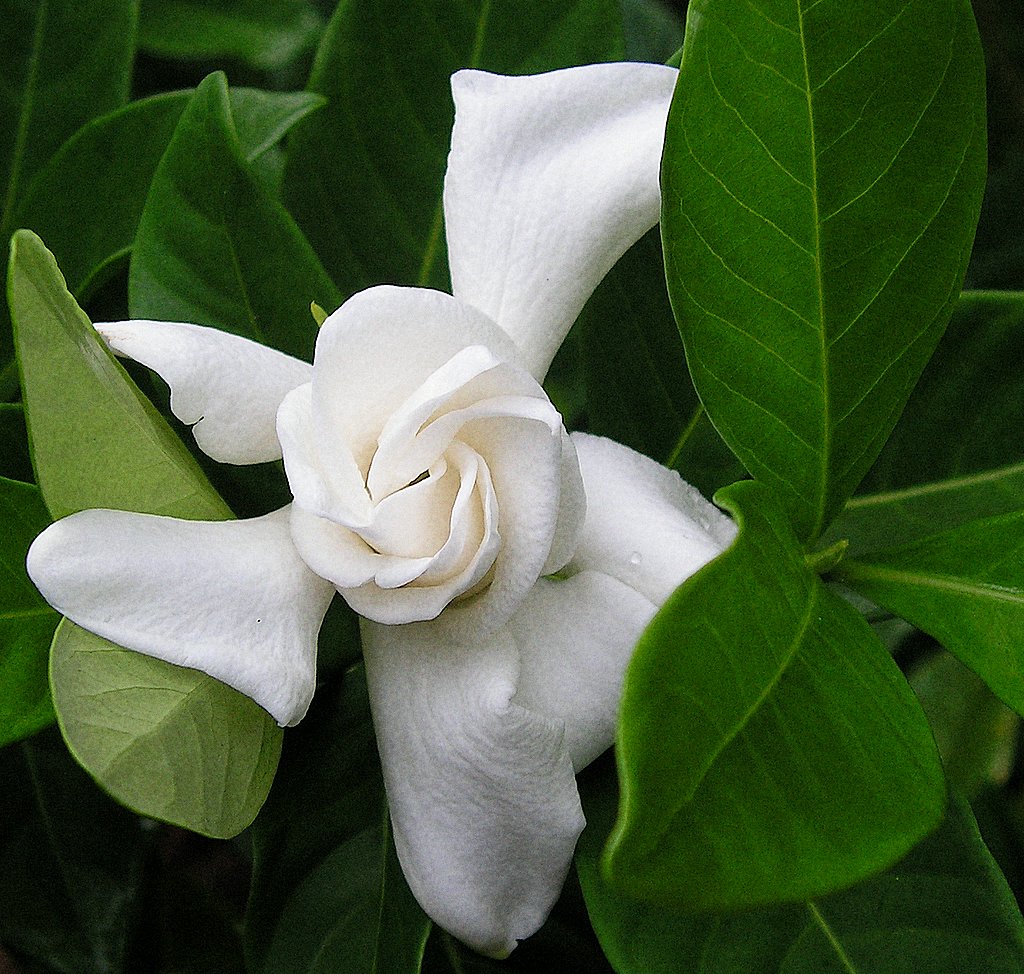
Gardenias in September...

It's been an odd summer... Very dry, if you check the monthly averages. However,you wouldn't know it to see it: Longish periods of drought, then heavy rainfall right in the nick of time, greening everything up for a time, only to return to more dry weather. Instead of daily or near-daily rains, we've been getting one rain shower a week. South of us, say Sanford and down, has seen plenty of rain after a dry spring. North of here is just plain parched, with drought conditions in north-Volusia county.

Anyway, what with the odd weather, some cool breezes, and shortening days, many of my plants think it's springtime: Many of my orchids (dendrobiums and oncidiums, mostly) have spiked, and this morning I noticed a bloom on my Gardenia, which typically blooms the first week of May. Roses are budding profusely, and by the middle of October they, and many other plants in my garden, will have shaken off the doldrums of sub-tropical climes. In the evening, sitting blowing bubbles with my daughter, I can catch from time to time soft, cool puffs of air, promising more clement weather. Posted by Picasa

Zone 9 Tropical Plants

I need to check this place out:
Zone 9 Tropical Plants - Offers Exotic Tropical Plants: Flowering and Fragrant Vine Shrub

Some of their offerings:
Jatropha multifida - Coral Plant (qt)
Bauhinia purpurea - Purple Orchid Tree (gal)
Bauhinia tomentosa - Yellow Bauhinia (gal)
Bauhinia grandidieri - Dwarf Orchid Tree (gal)
Duranta Sweet Memories (qt)

and some interesting Gardenias...

Thursday, September 07, 2006

My Trade List

For GardenWeb devotees, my trade list...
I always have potted up for trade...

Stachytarpheta jamaicensis 'Porterweed'
Hamelia Patens 'Firecracker Shrub'
Star Jasmine
Rex begonia
Ruellia elegans
Alternanthera 'Purple Knight'
Numerous Old Garden Roses
African Purple Basil (awesome plant)
Blue-Eyed Grass (another winner)
Helianthus debilis 'Dune Sunflower'
Spicy Jatropha (J. integerrima)
Various keikis from Dendrobium orchids
Seedlings:
- Thunbergia alata (blackeyed susan vine)
- Pot marigolds (various vigorous cultivars)

Monday, September 04, 2006

Leu Gardens in September

Leu Gardens, about forty miles south of me, is a family favorite destination during the cooler months. Today, Labor Day, we decided to make a quick run through the garden, the heat be damned.

I was struck by how different the gardens look at the end of summer from how it looks in, say, January: The camellias, azaleas, perennials,
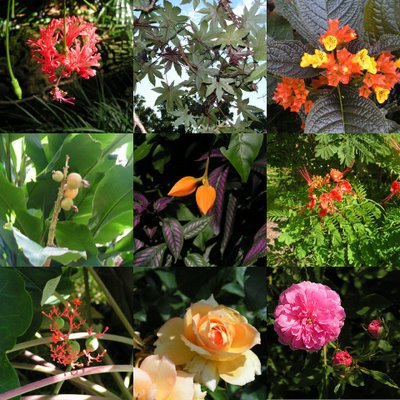
and globulus citrus have all faded into a background, a canvas of green; in their place, front and center, a tropical vision of fringes and cups painted from a combustive palette of oranges, reds and yellows. The trip today reminded me—a timely reminder, amidst the doldrums of subtropical "fall"—that Central Florida is a special place for gardening: At 30° latitude, with a bit of stubborness and know-how, we can grow practically anything: Camelias, Azalaes, Orchids, citrus, Hibiscus, Rosa, bananas, figs, Delphiniums, Papaver, Daisies, Dahlias, Crotons... Where else are hard-pressed to decide when a garden looks best, December or August?

(Clockwise, from far left: Hibiscus schizopetalus, Ricinus communis 'Red Spire', Chrysothemis pulchella 'Black Flamingo', Caesalpinia pulcherrima, Rosa 'Pink Pet' (China, 1928), Rosa 'Fragrant Apricot' (Floribunda, 1998), Jatropha podagrica, Alpinia latilabris, Center: I have no clue.)

Saturday, September 02, 2006

The Sunshine State


If you've gardened for a while here in the Sunshine State, you quickly learn to be leery of the advice to plant anything "in full sun." Every newbie who's planted a geranium in June in full sun, because that's what he did in Jersey, learns that full sun is a death sentence for all but but a few plants. Aside from trees and some large shrubs, I'm hard-pressed to think of many plants that actually do better here in Florida in full sun than they do in high shade.

For instance: Even roses, plants famous for their love of sun, are taxed in June and July by noontime's glare. You'll read that roses need at least six hours of full sun and do best with ten, but that's for Yankees. Here in Florida, roses will thrive with just four or five hours of direct sun, especially if they continue to get some additional time of bright light. My main rose bed, where 'Prosperity', 'Don Juan' and 'Abraham Darby' compete for place of honor, gets about six hours of sun in June, and some bright light in the late afternoon. This amount seems pretty optimal. I have other roses, interplanted with herbaceous perennials, in a border that get ten hours of sun: They need additional water, and don't seem to do any better than their less-sunny comrades.

I could provide plenty more examples of plants famous for their love of full sun elsewhere that quite prefer a little shade here in Florida. So why is this? Why does "full sun" elsewhere, farther northward, so often mean "partial sun" here? Of course the answer is: The sun is just stronger here in FLA. But that's like responding to the question: Why does the train move? with the answer: Because the wheels turn.

Why is the sun stronger?

DeLand, where I live, is located at 29° of latitude, which makes it about two-thousand miles from here to the equator. (Each degree of latitude is approximately 70 miles. Traveling northward, two-thousand miles is roughly the distance between here and the Hudson Bay in Ontario. So, Central Florida is midway between the Hudson Bay and Columbia.) That relative proximity to the equator has a profound, positive relationship to the amount of insolation—the amount of radiant solar energy—any given point of earth receives.

Of course, everyone knows that the equator is where the sun is strongest, where the day is more or less the same length all year long, and where there are no seasons. But returning to our earlier question: Why is the sun stronger at the equator? Largely, this difference is due to the axial tilt (23°) of the earth. The sun's rays hit the earth at a higher angle—more perpendicularly— at the equator than anywhere else on the planet. Twice a year (the autumnal and vernal equinoxes), the equator is directly perpendicular to the rays of the Sun: At noon on the equinoxes, the sun is directly overhead and the rays of the sun hit the earth perpendicularly. On those dates, at every point along the equator, the earth receives its greatest amount of radiant energy.

So, here's the rule: The closer one is to the equator, the more vertically the Sun's rays fall on the earth. The amount of radiant energy is directly correlated with the degree to perpendicular that the Sun's rays hit the earth: The closer to perpendicular, the great the radial energy. This correlation has to do with both simple geometry, and with atmospheric effects: When the sun is at a lower angle (closer to the horizon), as it is the farther north one goes, a given point on the earth's surface receives a lower density of incident light. This difference in density of incident light is, fundamentally, similar to the difference in intensity between, say, early morning light an noontime sun. The higher the sun in the sky, the more intense the solar radiation, and the more solar energy made available to photosynthesis for conversion into sugar. Furthermore, the lower the Sun's angle relative to the earth, the more of the earth's atmosphere that the sun has to pass through.

So, what's this all mean to the Central Florida gardener? The map to the right gives a rough idea of the difference in insolation: If you click it and look carefully, you'll notice that Central Florida receives, annually per day, about 25% more insolation, more kilowatts per meter per day, than, say, Boston.

Saturday, August 05, 2006

The August Garden

(Spicy Jatropha, Jatropha integerrima).

August is upon us: Intense sun, daily highs around 92°, frequent deluges and night-time temperatures in the lows 70s. Some plants, like this Jatropha and other tropicals and subtropicals thrive in weather like this. Well-established bushes and trees can grow a foot a month. Many annuals, though, give up the ghost in now or in September. I pulled my last strawflower out of the garden today—it had been blooming since mid-March or earlierso nearly five months.

My zinnias (Z. elegans 'Parasol' from Thompson & Morgan) are still going strong. In the past, I've had trouble with root rot or related fungus taking out my zinnias in July or August; this new cultivar, and the fact that I planted them earlier, in early May, must have made the difference. I've interplanted these zinnias with 'Purple Knight' Althernanthera— a nice effect.

My roses are still producing some fits of blooms, though they go into "grow green" mode this time of the year, concentrating their energies on rapid growth rather than producing blooms. My OGRs and the ever reliable Don Juan have been blooming consistently, though; the Don is now over fifteen feet tall and blooming like a romantic fool. Grandiflora and hybrid teas bloom irregularly. For the first time this season, my 'Gold Medal' bush has put out a burst of new growth and some pretty blooms (below). And 'Mr. Lincoln' has been productive lately, too. I bought both these bushes this winter, stunted and nearly leafless from Home Depot for $1.50 each. A lot of love and attention (and fungicides and fertilizers) have been lavished on them, and the return has been prodigious.

We had a severe windstorm here in DeLand last week—one of the worst storms I've seen—which snapped several dahlias neatly in half. They've recovered well, with the lateral growth quickening, but I'm worried that the hollow stems left open to the elements will eventually rot the roots. We'll see. Over the next eight weeks, a lot of plants will die or go dormant, but November's cool winds will wake them from the sleep and we'll enjoy a Florida "spring" about the time Thanksgiving rolls around.

Friday, July 28, 2006

'Cecile Brunner ' Climbing Rose for Florida

One of the recommended roses from the Central Florida Rose Society, this 'Cecil Brunner' took a long time to come to bloom, but even in the heat of late July, its blooms are winning. The descriptions of this rose (apparently a climbing sport of a cross between a Tea and a Polyantha) are so varied and contradictory as to make one suspect that there are many different roses sold under the same name.

My bush, in any case, has quickly hit eight feet from a cutting I planted in December from Seminole Springs, and finally put out its first small flush of blooms, each absolutely perfect and double, though not deeply. It starts out a nice blush-pink, more intense in the center. Very quickly it picks up a yellow tint, and by the time its completely blown, is distinctly yellow. No one notes this shift in color, which likely means that its just Florida weather affecting the blooms. Many flowers here react to the intensity of the sun and heat unlike they do elsewhere. The scent is, well, a bit odd -- not at all rosey, more spicey, almost a curry. But not unpleasant.

An update: It happens. Sometimes tags get switched at the nursery. I'm convinced, after a bit of research and reflection, that the rose that I bought labeled 'Cecile Brunner' is, in fact, 'Céline Forestier': The blooms are too large (this time of the year) for Cecile (which are nearly miniature), they're too yellow, and they're clearly quartered and deeply cupped. Plus, there's the spicy tea-rose fragrance.

It simply cannot by Cecile, and looking on Seminole Springs' website, the only rose that fits the profile is Celine. I'm not unhappy with the error, as today, in the doldrums, I have a dozen roses in bud, waving madly in the afternoon breezes.

Sunday, July 16, 2006

Thinking about a fruit orchard...


One of the innumerable reasons I complain about living in Central Florida is that I've always wanted a large fruit orchard, and growing fruit trees here in zone 9B is fairly difficult: Most deciduous fruit trees require 800+ chilling hours a year, but here, north of Orlando, we get around 400. And we cannot grow mangos and avocados because of our once or twice yearly frosts. Of course you can grow citrus (my property is at the center of Henry DeLand's original grove from the 1870s); and, if you're lucky, you can eke out a hand of bananas every once an a while. I like an orange now and again, but our one tree usually supplies more oranges than a small family like ours could care to eat.

Coming across the outfit Just Fruits and Exotics has really got me dreaming about what I can do to the rest of the backyard. They appear to specialize in species and cultivars that thrive in our hot, humid growing conditions. I'm already planning a long row of fig trees along the back fence, fronted by several hedgerows of blueberries and pomegranates. Maybe I'll mix a dwarf jujuba and into my large, eclectic bed in the center of the backyard. Perhaps I'll fill in the partly shady side lot (where our old grapefruit grew until some fungus felled it last year) with some persimons, bananas and mayhaws.

I doubt I'll have a hard time convincing the wife and kids to rent a trailer for the MINI Cooper and head out to Just Fruit in Crawfordville, FL at the beginning of November, just in time to enjoy the Florida Seafood Festival in nearby Apalachicola.

Monday, July 10, 2006

Going Bananas!

I'm out of town, away from my garden. In place of visits to my garden, I've been surfing the 'net and finding lots of useful links...

Florida Gardening Forum
Lots of good advice here.

Just Fruits and Exotics
I just discovered this site, which contains an exciting array of Florida-friendly fruits, including olive trees, peaches, figs, pomegranates, quince, etc. I'm already planning a trip there with a borrowed pickup in October!

Going Bananas!
Our 5 acre nursery/grove is exclusively devoted to growing nearly 100 varieties of banana plants and multiple cultivars of lychee and longan trees. Because we specialize in these plants only, we can give you the very best quality of plant material at economical prices. We grow the plants ourselves and oversee every aspect of the growing, plant selection, and shipping. We are certain you will be happy with your plants once you follow the simple growing instructions. Banana plant varieties and lychees & longan trees can be purchased on location, along with banana blend fertilizer. Mail order items are limited to banana plants and corms.

Saturday, July 08, 2006

Rosa laevigata


The Cherokee Rose is a particularly thorny rose with a liana (scrambling, upright) growth pattern. Even its heps, which turn russet in the fall, are covered in quite sharp prickles. I started some from cutting a couple of years ago at the base of the gazebo in our back yard (the rose is very easy to start from cuttings), and the canes have proved more vigorous than I necessarily care for. Posted by Picasa

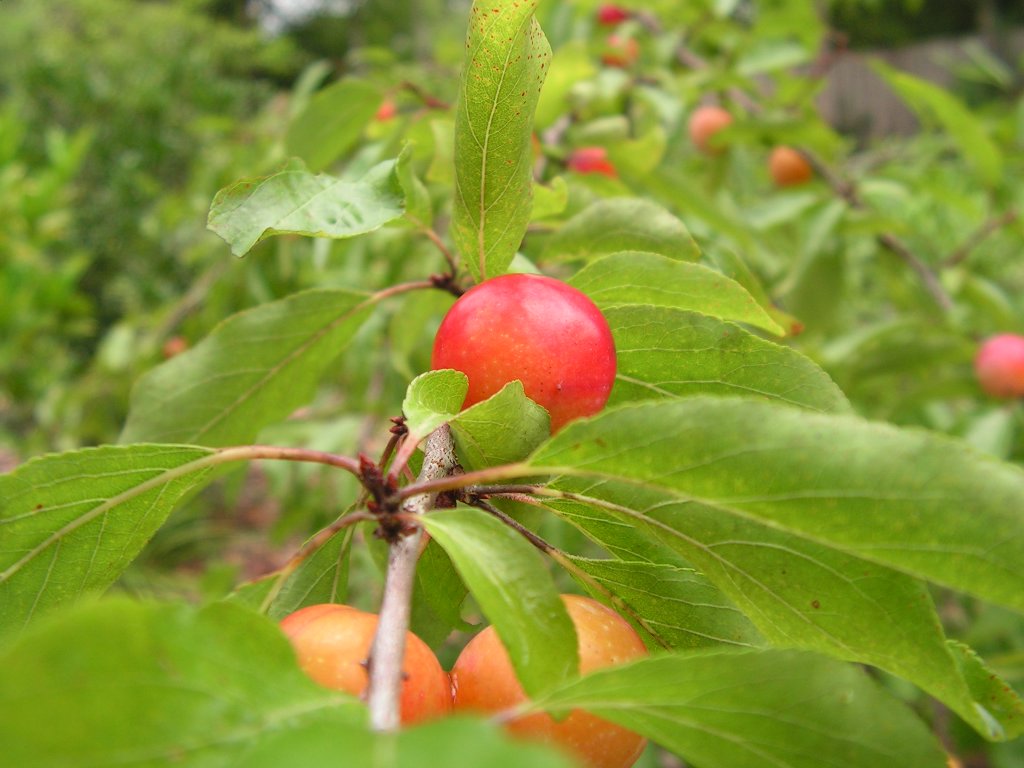
Chickasaw Plum

Below: Plums on a Chickasaw Plum ( Prunus angustifolia)

Central Florida Gardening in July

(Above: Buds on a tuberose)
The rainy season started in earnest while I was away on a research trip from mid-June to the Fourth of July. I came back to an overgrown, weedy garden that needed a few hours of care and a sharp mower blade. Considering they were sprayed very irregularly, my roses have done superbly, particularly the OGRs, which have grown considerably. 'Mr Lincoln', a grandiflora, wins the prize for the most growth: It has four basal breaks and is now almost five feet tall. (I bought it back in November for $1.50 from a local home improvement store. It was stunted and leafless then. Clearly this plant loves growing on 'Fortuniana' and lots of water.)

Zinnias and Cosmos that I started from seed in April are blooming madly, and those I started in May and transplanted mid-June are just now coming into bud. The Crepe Myrtles I planted last spring are in full bloom and have reached about fifteen feet, though they still look a bit gangly. The 'Knock-Out' Roses (not the cherry red ones, but the light pink sports) that I planted this spring are thriving: They've grown from one foot to three feet and doubled their spread since March, when I planted them. They show absolutely no signs of black spot, despite having never been sprayed. I managed to start two cuttings, which are merrily growing in pots in partial shade. I'll plant them out in fall, when things cool down.

Many plants have flourished: Buddleia davidii, Spicy Jatropha (Jatropha integerrima) and Thryallis (Galphimia glauca). Bulbs like Gladiolus callianthus (the Peacock Orchid) are up and ready to bloom. The Dune Sunflowers (Helianthus debilis) that I've planted around the property have spread broadly and are in full bloom now. Other plants that seem to thrive in the heat and rain include Alternathera 'Purple Knight', Ruellia elegans, and African Purple Basil.

However, with the hot and very wet weather, many plants are easing into dormancy in the coming weeks, to reawaken when the first cool, dry breezes begin to blow in November. I lost a camellia, a Professor Charles S. Sargent. It was growing with other camellias that I planted at the same time - these other camellias are fine. I don't know what killed this one.

It's a good time to start plants from cuttings, which is what I am heading out to do right now on this hot and sunny Saturday...

Thursday, July 06, 2006

The Southern Bulb Company Storefront

The Southern Bulb Company Storefront: "...RARE AND HEIRLOOM BULBS...
In many cases, our bulbs have survived naturally (unmaintained) for over 100 years! Many were brought over by the first Southern settlers and have adapted, multiplied and thrived outside the bulb trade for their entire existence. We rescued them from old homesites, construction sites and abandoned lots so the Southern gardener (Zones 6-10) can (finally) enjoy success with flower bulbs."

Wednesday, June 14, 2006

Blossom to Table: Honey Grows Up - New York Times

I'm reading Robbing the Hive right now, so this article in the NYT piqued my interests. I love bees: Every morning, I spend a few moments near my gaura and basil plants, listening to their contented hum. Another symptom of my biophilia.

I hope this interest in artisanal honey continues -- by the nature of its production, it tends to be a small-operation and local agricultural affair, readily available practically anywhere there are flowers.

The article errs when it remarks that tupelo honey is a product of Georgia: It's produced everywhere in the Florida panhandle, where the tupelo tree grows abundantly in the marshy river flats. There are native tupelo trees in North America, but I'm fairly sure that most of the ones in Georgia and Florida are introduced species from Asia.
Blossom to Table: Honey Grows Up - New York Times: "June 14, 2006
Blossom to Table: Honey Grows Up
By DANA BOWEN

TED DENNARD, founder of the Savannah Bee Company, says 2004 produced the best orange blossom honey the South has seen in decades.

But you never know. 'Last year was an awful year for basswood,' said Zeke Freeman, owner of Bee Raw Honey, blaming an early summer drought in New York.

And Neal Rosenthal, who imports Mario Bianco brand honeys from Italy, in rare flavors like dandelion, lime blossom and eucalyptus, wistfully recalled, 'We still talk about the remarkable chestnut honey of 1983.'

It's apt that Mr. Rosenthal imports wine as well as honey. Many of the same factors that distinguish a reserve cru from a pitcher of house red — a distinct varietal, a particular place, propitious bursts of sun and rain — determine whether honey is packaged in a costly jar or pumped into a plastic bear-shape bottle. And with more single-flower honeys on store shelves and farmers' market tables, chefs have been dispatching their wildly different flavors to dishes the way sommeliers pair wine with food."

Wednesday, June 07, 2006

Joe Freeman's Favorite Roses

Not long ago, I condensed and reproduced a list of reliable and easy to care for roses for Central Florida. Here's another list of favorite roses, this one from the excellent book, The Florida Gardener's Book of Lists by Lois Trigg Chaplin. Joe Freeman, according to the book, is the chief horticulturalist at Cypress Gardens. I've starred the roses that were also mentioned in the Orlando Sentinel's best rose list.

Abraham Darby* (English)
Belinda's Dream* (Shrub)
Carefree Beauty (Floribunda)
Chestnut Rose (Rosa rosburghii)
Gold Medal* (Grandiflora)
Heritage* (English)
Louis Phillipe* (China)
Maitland White (Noisette)
Mr. Lincoln* (Hybrid Tea)
Mutabilis* (China)
Nur Mahal (Hybrid Musk)
Old Blush (China)
Othello (English)
Pink Pet* (Polyantha)
Prosperity* (Hybrid Musk)
Smith's Parish (Bermuda)
Sombreuil (Climbing Tea)
Spice (Bermuda)
St. David (Bermuda)

Thursday, June 01, 2006

Figs Believed to Be First Cultivated Fruit - New York Times

I love figs! Our old neighbor has a truly massive brown fig tree planted in her swale. It never gets irrigated, and receives full-day direct sun. She doesn't eat figs, which meant they were ours for the picking. I recently bought a small fig tree; when the rainy season starts (if it starts!), I'll plant it out at the corner of our property.

Figs Believed to Be First Cultivated Fruit - New York Times

On This Old McDonald's Farm, A First Hint of Agriculture: Figs

In the ruins of a prehistoric village near Jericho, in the West Bank, scientists have found remains of figs that they say appear to be the earliest known cultivated fruit crop, perhaps the first evidence anywhere of domesticated food production at the dawn of agriculture. The figs were grown some 11,400 years ago.

Presumably that was well after Adam and Eve tried on the new look in fig leaves, in which case the fig must have grown wild in Eden.

Two botanists and an archaeologist, who describe the discovery in today's issue of the journal Science, said the figs came from cultivated trees that grew about 1,000 years before such staples as wheat, barley and chickpeas were widely domesticated in the Middle East. These grain and legume crops had been considered the first steps in agriculture.

The researchers uncovered nine small figs in the ruins of a burned building. The fire left the figs charred, preserving them in a condition for detailed analysis. The researchers established the age of the cache by dating the fire's remains.

A comparison with modern wild and domesticated varieties, the scientists said, led them to conclude that the ancient figs had undergone a mutation in the wild that produced a sweet fruit but no fertile seeds.

Because these trees were a reproductive dead end, the botanists reasoned, they could have been propagated only by people planting shoots of the variant strain again and again. A piece of stem stuck in the ground will sprout roots and grow into a tree, which could explain why figs were domesticated much earlier than grapes, olives and other fruit plants.

The archaeobotanists who conducted the study were Mordechai Kislev and Anat Hartman of Bar-Ilan University in Israel. Their co-author of the journal report was Ofer Bar-Yosef, an archaeologist at the Peabody Museum of Harvard.

In an interview by telephone from Israel, Dr. Bar-Yosef said that he was ''confident about the identification of the figs as being of a domesticated variety'' and that they were probably the earliest known domesticated crop. The cultivation technique, he said, seemed to be well enough advanced to suggest that people had thus been intervening in nature for several centuries.

Dr. Bar-Yosef noted that the experimental technique of repeated plantings was similar to the methods by which hunter-gatherers collected wild grains and legumes and gradually developed cultivated crops.

Over the last century, scientists have scoured the Middle East for traces of the origins of agriculture and argued over what the first crops were and where they were grown. Dr. Bar-Yosef contends that the first cultivated grains were introduced in what is now Israel and north into the upper Euphrates River valley. Other researchers think the most likely origins were in southern Turkey.

But scholars agree with Dr. Bar-Yosef that the beginning of agriculture, whether with the first sweet fig or ripe grain, was pivotal in human cultural evolution.

''Eleven thousand years ago, there was a critical switch in the human mind -- from exploiting the earth as it is, to actively changing the environment to suit our needs,'' Dr. Bar-Yosef said in a statement from Harvard. ''People decided to intervene in nature and supply their own food rather than relying on what was provided by the gods.''