Some seeds started (the binder clips are key!)...

And radishes ready to pick
 ...
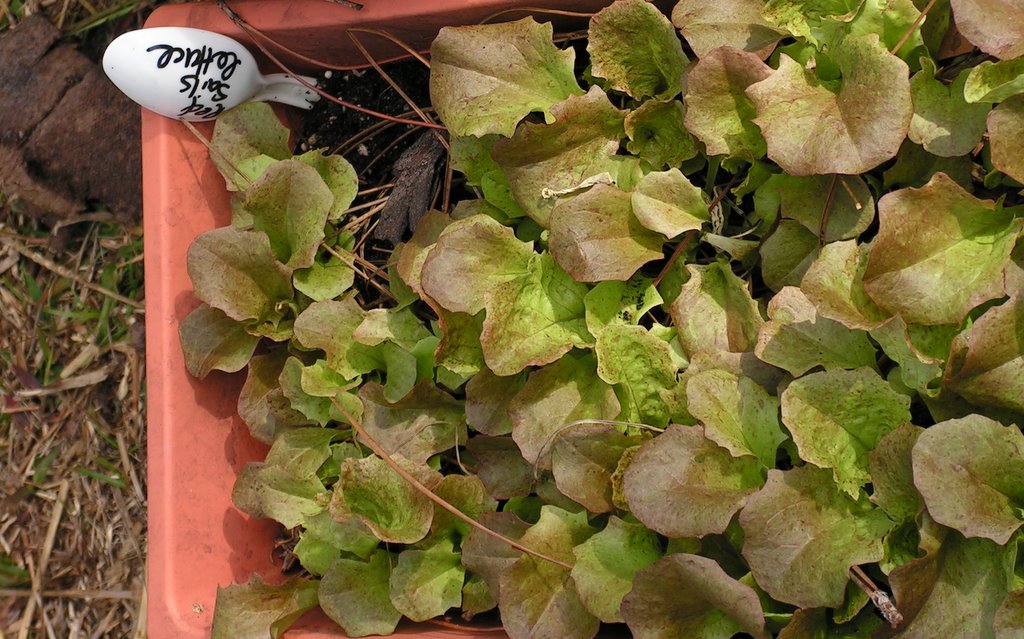
...(below) Red Sails Lettuce, some to transplant into the garden, the rest to harvest as cut & come again.
(above) Mustard greens, broccoli, radishes and nasturtiums.
...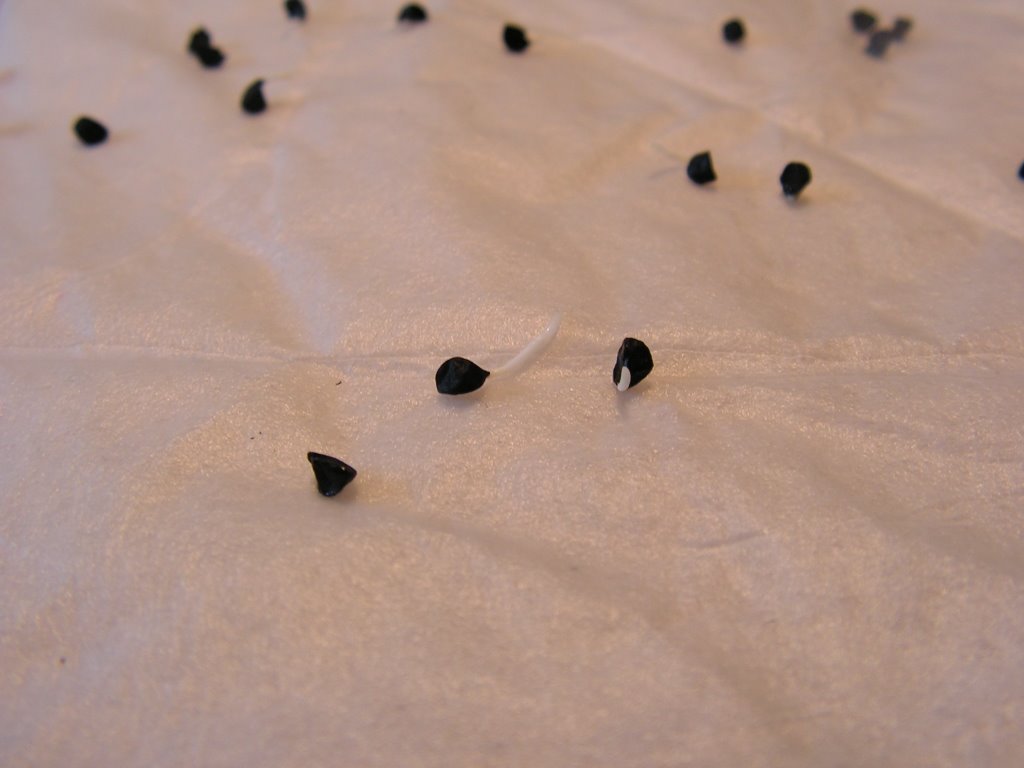 With guests in town and a holiday meal to make, I didn't have much time for gardening this past weekend. I found a very few hectic minutes to plant the following on Saturday:

 For serious home gardeners and hobby growers, and for lovers of arcane data like cooling hours, the best site I've found is the Florida Climate Center at FSU: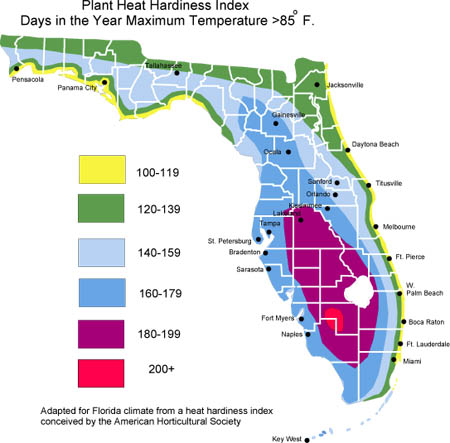
The first season. We began our no-till garden in an area of well-grassed lawn. In several years of continuous production, it was never plowed, cultivated, spaded or hoed. The first season it is necessary to do some extra steps if you start with an uncultivated area as we did. It is described in the March 1981 issue of Organic Gardening in an article by Jamie Jobb called "Tossing an Instant Garden." (ECHO will send a copy of this article to overseas development workers who request it.) A layer of newspapers is spread over the area. They should be no less than 3 sheets thick and well overlapped at the edges. Then organic materials of any kind are placed on top. We use either chipped wood that is given to us by the power company when they trim along the power lines, or grass clippings. You could experiment with other materials that may be available to you such as rice hulls, sugar cane bagasse, tall cut grass, leaves, coffee pulp, etc. The method works because weeds are not able to push their way up through newspapers and a layer of mulch, but roots can go down through wet newspaper. Wherever a seed is to be planted a small mound of earth is placed on top of the newspaper (or a narrow row of soil about one inch thick is used if seeds are small and to be planted closely together). The mulch is then pulled back against the earth and a thin layer put on top of it to prevent drying of the soil. The seeds must be watered more frequently than when planted in tilled soil because the thin layer of soil can dry out quickly. When we pulled mature plants at the end of the first season we found that some roots had gone through the paper and others had grown along the top of the paper to the first edge, then underneath for normal growth. Transplants do surprisingly well when simply planted into the sod through a hole cut in the paper.
Subsequent seasons. The procedure with newspapers is for the first season only. Before the season is over you will find that the newspaper and the sod have decayed and turned to compost. From then on if you keep a layer of mulch about 6 inches thick over the area, the soil beneath will be ready to plant whenever you wish. Our garden has been in continuous use since the day it was first planted. We use the word "no-till" because it is analogous to the system of farming by the same name in which herbicides are used just before planting, then seeds are planted directly into unplowed sod. However, this method uses no herbicides.
What are the advantages? (1) Gardens can be started in any area without the need to plough or spade. You can plant in areas that would be difficult to plough, such as around dead trees or in rocky soil. Grasses and other weeds are better controlled than if the ground had been cultivated. (2) There is much, much less work involved in controlling weeds. But it is a no-till, not a no-work, garden! It can take a lot of time gathering and placing the mulch periodically around the plants. And some weeds will come up that must be removed. (3) Less water is needed for irrigation. (4) The soil is kept cooler. This can be a disadvantage, however, for colder areas. If soil temperatures are too low, the mulch can be raked back in areas to be planted a few days before planting, so that the sun can strike the soil directly. The soil will be dark after a few months of no-till gardening and should warm up quickly. (5) Soil moisture and temperature are more uniform, an advantage for most plants. (6) Nematodes will likely be kept under control. The soil environment is much less suited to nematode growth than, for example, the hot dry sand found in our area. Furthermore, some fungi found in the decaying organic matter will kill nematodes. We have had some signs of root-knot nematodes in the no-till garden, but they have not been a problem after the first few months of operation. It is almost impossible to garden in the same plot for more than one season here without the heavy use of nematicides with normal gardening techniques. We have not yet had to use any nematicide. (7) The only need for a compost pile is for a small one to put large or diseased plants or weeds. When the mulch decays, it is automatically compost and is already in place! Earthworms will soon help carry organic matter down into the soil. (8) Soil erosion from sloping land should be less of a problem.
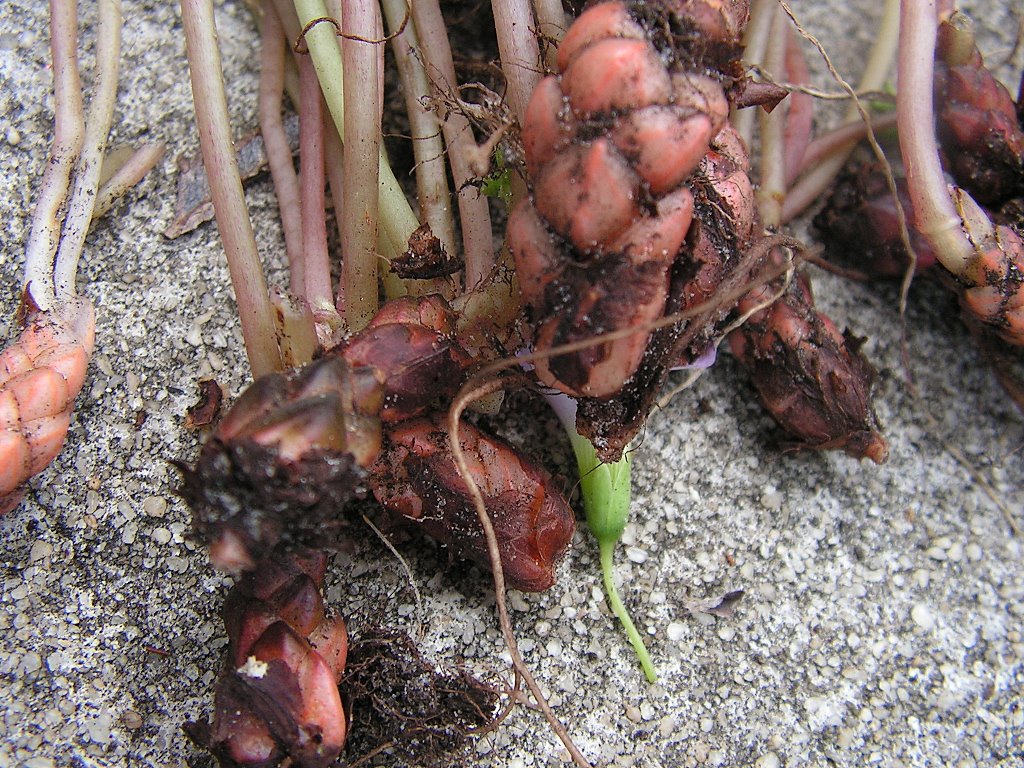
| 1 | 258. KNIGHT (56 days) | 1.25 | 1.25 |
| 1 | 260. TALL TELEPHONE (Alderman) (68 days) | 1.25 | 1.25 |
| 1 | 259. SUPER SUGAR SNAP (62 Days) | 1.50 | 1.50 |
| 1 | 263. CASCADIA (48 days) | 1.25 | 1.25 |
| 1 | W228. FAVA BEAN-WINDSOR | 1.25 | 1.25 |
| 1 | W274. PARSLEY-PREZZEMOLO GIGANTE D' ITALIA | 0.95 | 0.95 |
| 1 | 519. CHERVIL | 0.80 | 0.80 |
| 1 | 52501. DILL-DUKAT STRAIN | 0.90 | 0.90 |
| 1 | W590. TOMATILLO | 0.95 | 0.95 |
| 1 | W128. EMERITE | 1.25 | 1.25 |
| 1 | W141. BIG SEEDED | 0.75 | 0.75 |
| 1 | W176. BONILLA | 1.95 | 1.95 |
 A quick note on a late Monday morning: I work late tonight, so I stayed home to clean up a bit and do some things in the garden. It's a very cool and overcast morning after a week of record heat, so I thought I should plant some seeds and take advantage of the perfect germination conditions: In peat pots, I planted Florence Fennel. (I don't expect to harvest much before the frost gets it, but I might get a few stalks... and the fronds are a lovely larval plant for butterflies.)
 The carrots seeds the kids and I planted last week have finally germinated, as have the cucumbers, arugula, and mixed "mesclun." My turnip greens that I bought as a six-pack from Lowe's have put out an impressive bit of growth, too. The only thing that hasn't put in its appearance is the Asparagus Pea.
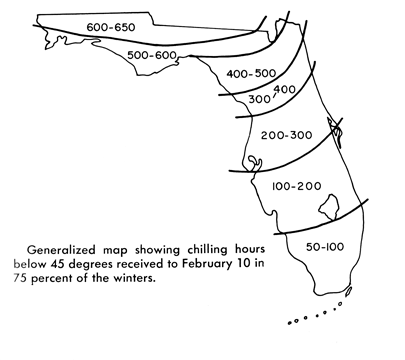
 My criteria are simple: Under 400 chill hours and readily available at either Just Fruits and Exotics or Johnson's Nursery, two reliable mail-order retailers that deal with fruit for southern latitudes. According to what I've read, the more varieties of each species that you have, the better the pollination and fruit production. Many source recommend planting two varieties in the same hole.
Rabbiteyes
Native to the south, rabbiteyes lengthen out the picking season into August. At least two varieties are needed for cross pollination. Most of these need a minimum of 350 chill hours, making them marginal for the area. I'm going to give them a shot, though.
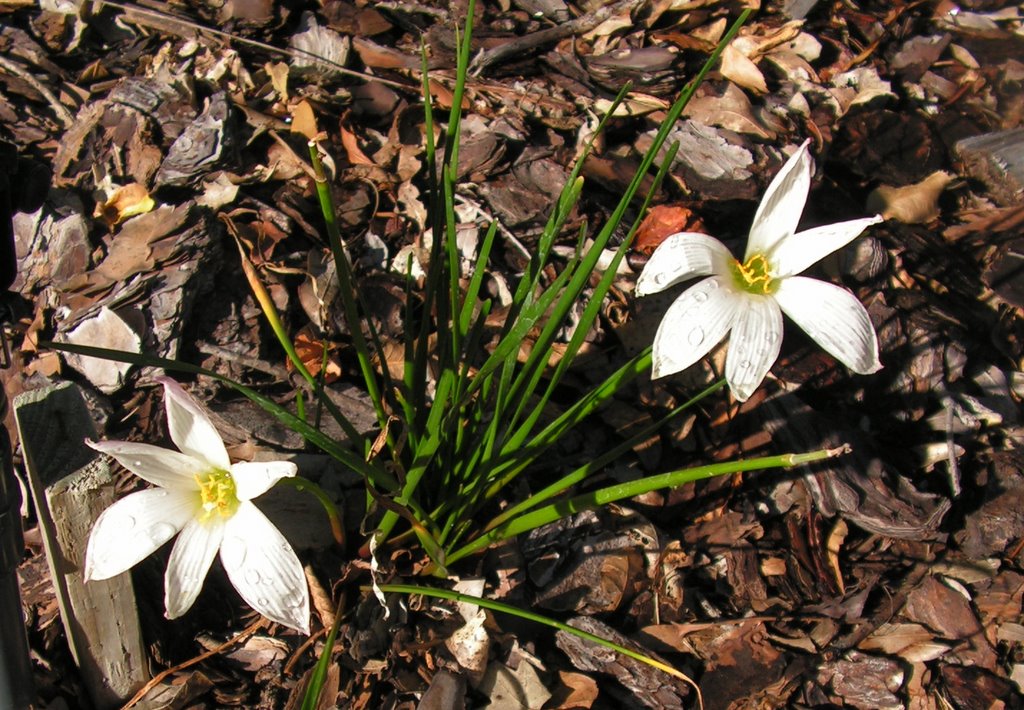 , yet all my Zephyrs are blooming today. During the hot and wet season, they bloom every couple of days. When not in bloom, they have a perfectly undistinguished grasslike foliage. Their motility is slow and not very far—the large, black and boxy seeds that form after pollination fall into my mulch and are slowly colonizing the area around my roses. I like one cultivar particularly: a double, frilly pure pink.
 ed 'Prosperity', a hybrid-musk climbing rose. I've had it growing in my garden for probably three years—the main cane is now about the width of a wine bottle. It's always blooming somewhere, but when the fine weather of our dry season kicks in, the bush is just covered in huge hands of pure white blooms with vivid yellow stamens and anthers. The fragrance is really unremarkable, though my reference books say otherwise (and commonsense, too—musk roses have long been considered the most odiferous of the garden roses).
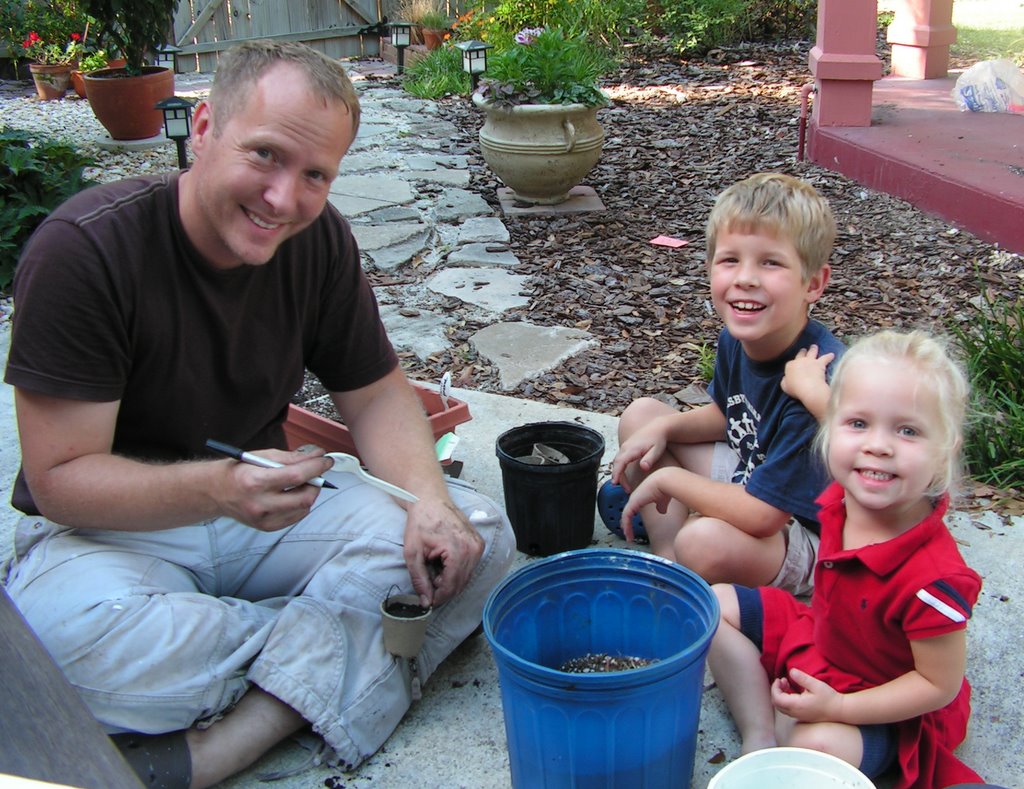 I'm a flower gardener: The bigger and brighter the bloom, the better. (People who murmur demurely about growing foliage and appreciating "textures" obviously cannot grow flowers!)
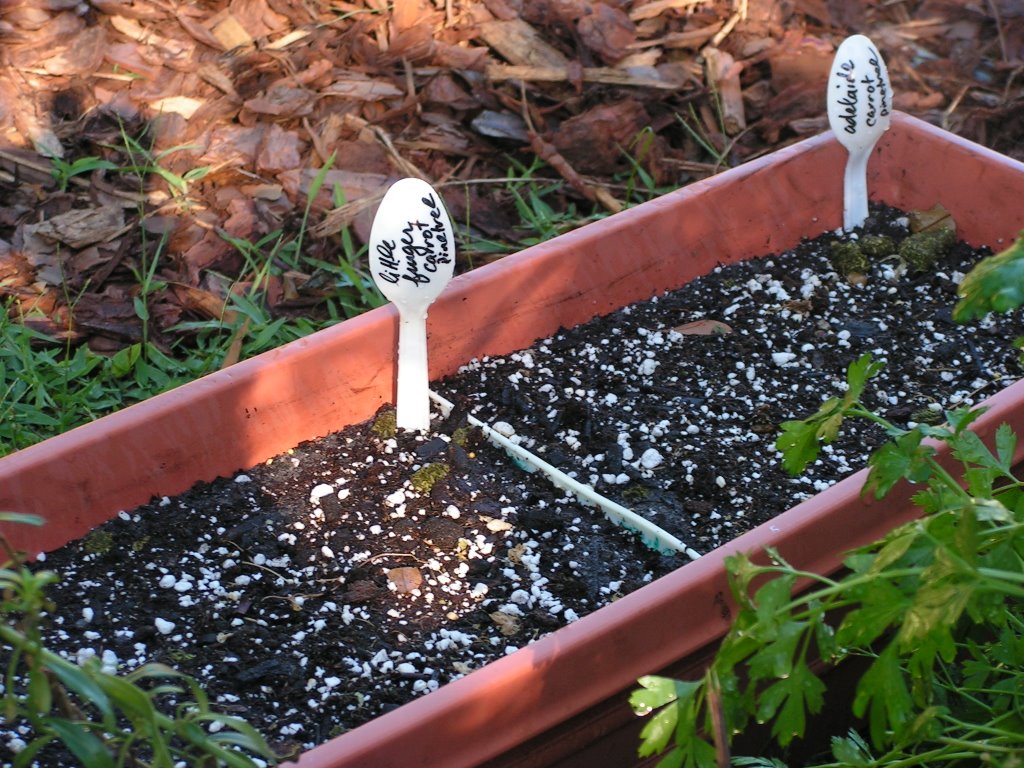
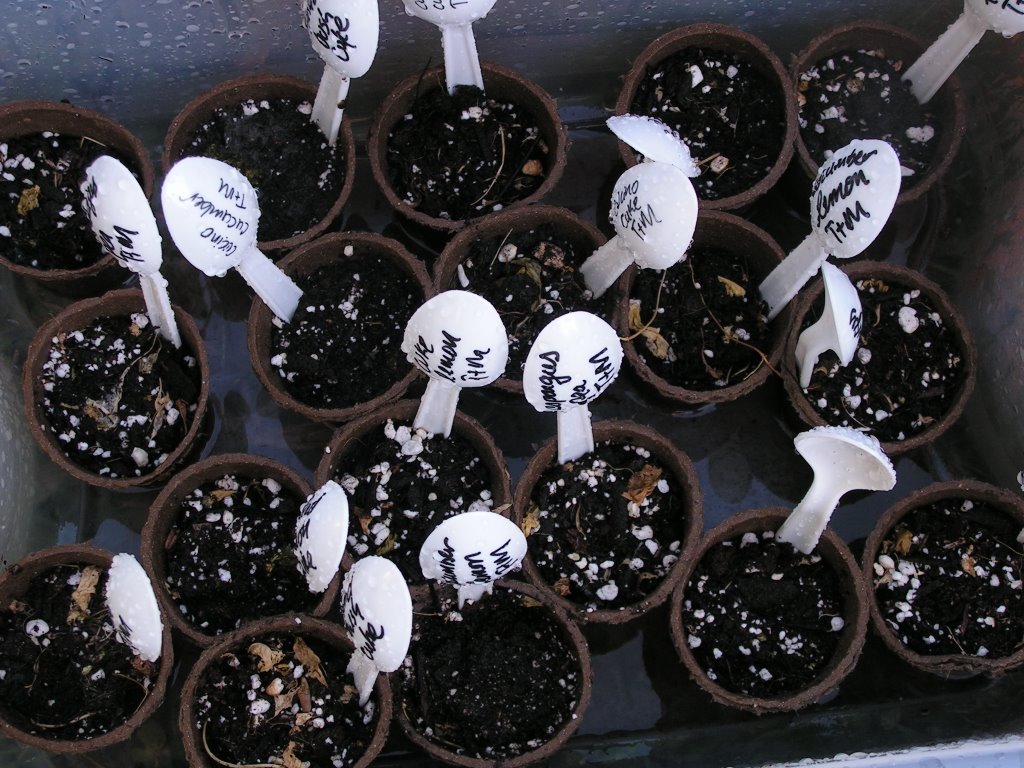 inches deep, hopefully enough for these four-inch carrots). For the moment, the cucumbers (Salad Bush from Pinetree; Lemon and Cucino from Thompson & Morgan) are in peat pots: I'll put together another homemade Earthbox when they've outgrown the peat pots.
Pinetree Garden Seeds: Great selection, great prices....
140. BUSH CROP (55 days)
142. SALAD BUSH (F1 Hybrid 56 days)
67.
73. LITTLE FINGER (60 days)
W331. ARUGULA-RUCOLA SELVATICA
W361. MESCLUN MIX-MISTICANZA
From Thompson & Morgan... PRICEY but very high-quality product.
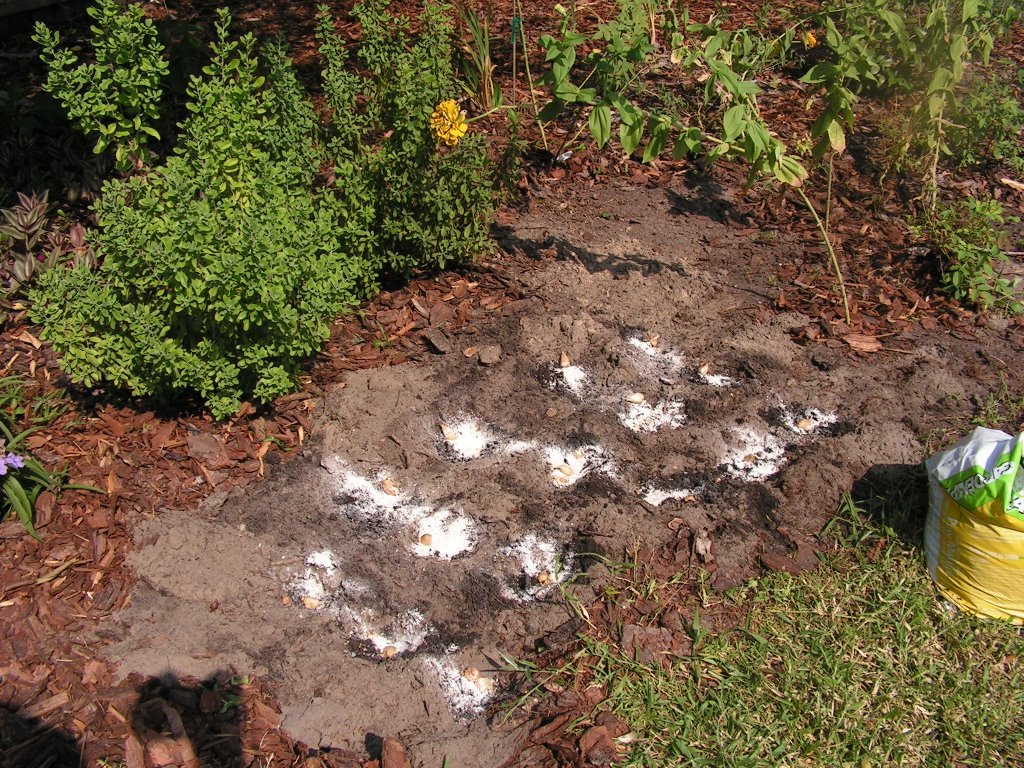 It was supposed to be much cooler today than it turned out to be. Despite the near-90° temperatures and humidity, I forged ahead and planted fifty Freesia bulbs and a dozen Amaryllis bulbs. As usual, I bought them from easytogrowbulbs.com, and their quality was exceptional: The Freesia were three-quarters of an inch in diameter, and the Amaryllis (which I got on special at around $3 per bulb!) were the size of cooking onions.
 I bought this lovely pink rose thinking it was a 'Blush Noisettte,' a cultivar created by a nurseryman in South Carolina in the nineteenth century that set off a revolution in rose breeding all over the world. During my trip to Seminole Springs a couple of weeks ago, though, I learned that it had been mislabeled, and was instead 'Natchitoches Noisette' (apparently pronounced knack-uh-tish!), named after the city in Louisiana where this rose was found growing in a cemetary.
Every year gardeners go to their local garden centers and walk out with armloads of plants. After planting, mulching, trimming, watering, fertilizing, and generally babying the purchases they disappear. By July the only thing left of some of those plants is the plastic tag. Where do they go? Most likely they melted in the Texas heat. In many cases dead plants only came as the result of picking the wrong plant, Not having a "brown thumb".
A common procedure for transplanting container-grown plants involves amending the backfill around the root ball with an organic material such as peat. However, a significant amount of research over a range of irrigation schedules, plant materials, and soil types provides no evidence that this practice is beneficial. In fact, incidences where roots remain in the amended backfill soil and do not grow into the undisturbed field soil have been reported. The argument for amending backfill soils centers around the fact that peat increases the waterholding capacity of a sand soil. What actually happens is the water in the adjacent landscape soil is held at greater tensions than the water in the amended backfill. The result is a drying container root ball as water moves from the container medium and the amended soil into the adjacent landscape soil as it dries.Plants transplanted in very rich holes do not, as expected, thrive; instead they are actually harmed by the over-abundance of organic material. This is clearly an example of too much of a good thing, and a waste of money, at that.
Little is known or mentioned in the literature about mulches and termites. Warnings about not leaving pieces of wood or stakes as termite attractants after house construction are common though. One publication noted that when construction is complete on a new house, every "piece of wood that can be picked up between the tines of a common garden rake should be removed"(Moore 1979). Another publication notes that moist warm soil containing an abundant supply of cellulose material is a termites optimal environment (Johnston et al. 1972). They define "cellulose material" as scraps of lumber, stakes, stumps, and roots left in the soil. One of the prerequisites for subterranean termites and wood-decaying fungi is for the wood to be in reasonably close proximity to the soil surface (Moore 1979) as mulch is. Yet, most houses in Florida with many trees and other landscape plants may already have plenty of food available for termites, and mulch may just be one more additional food source.
Further research on mulches and termites is warranted to determine if we should be concerned about using mulch around houses. Also, research is needed on possible repellent mulches such as melaleuca which might serve as an additional barrier for household protection against termites. At this time the benefits of mulches such as water conservation, reduced used of herbicides, and reduced soil erosion are very apparent while the risks to termite infestations due to mulches are unknown. Homeowners will continue to use mulches in landscaping around their houses and buildings. Our current recommendation is to be vigilant and up-to-date with termite inspection and treatment.
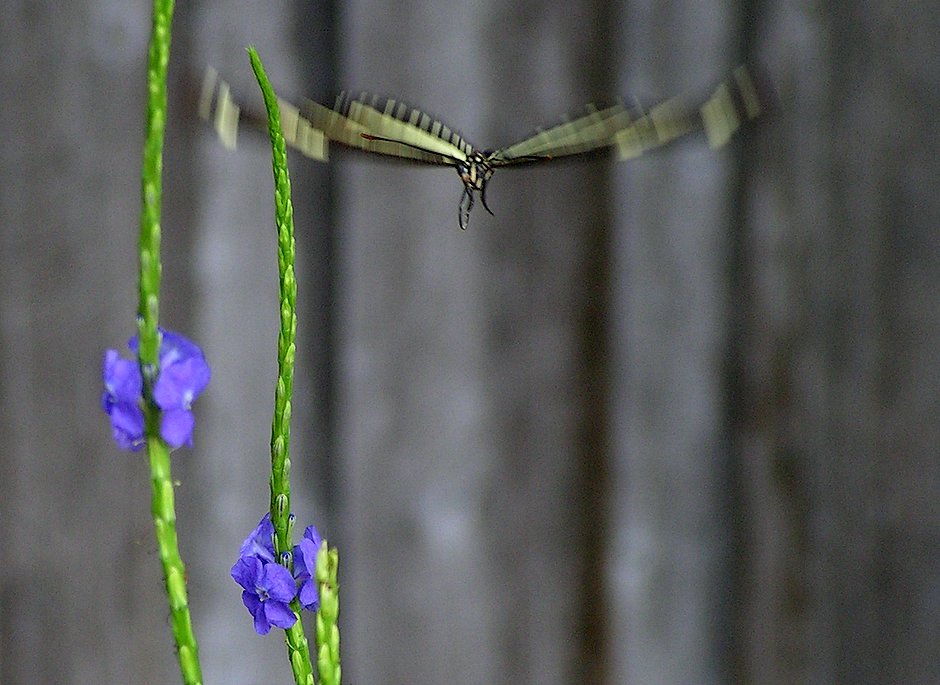 Drinking coffee, looking out the kitchen door, I saw this Zebra Longwing flopping about my garden this morning. I followed it for a bit as it flitted around my Blue Porterweed. For what I was trying to do—capture something in motion in filtered light—my aperture was too wide and my f-stop too slow, but it turned out a pretty cool effect. They're such slow-moving, easy-going butterflies (unlike most Swallowtails), it's easy to get a closeup shot, as I did below.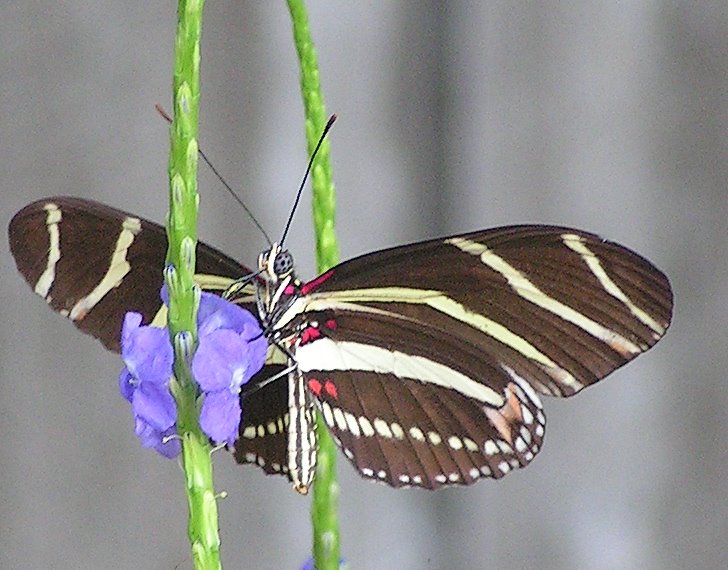
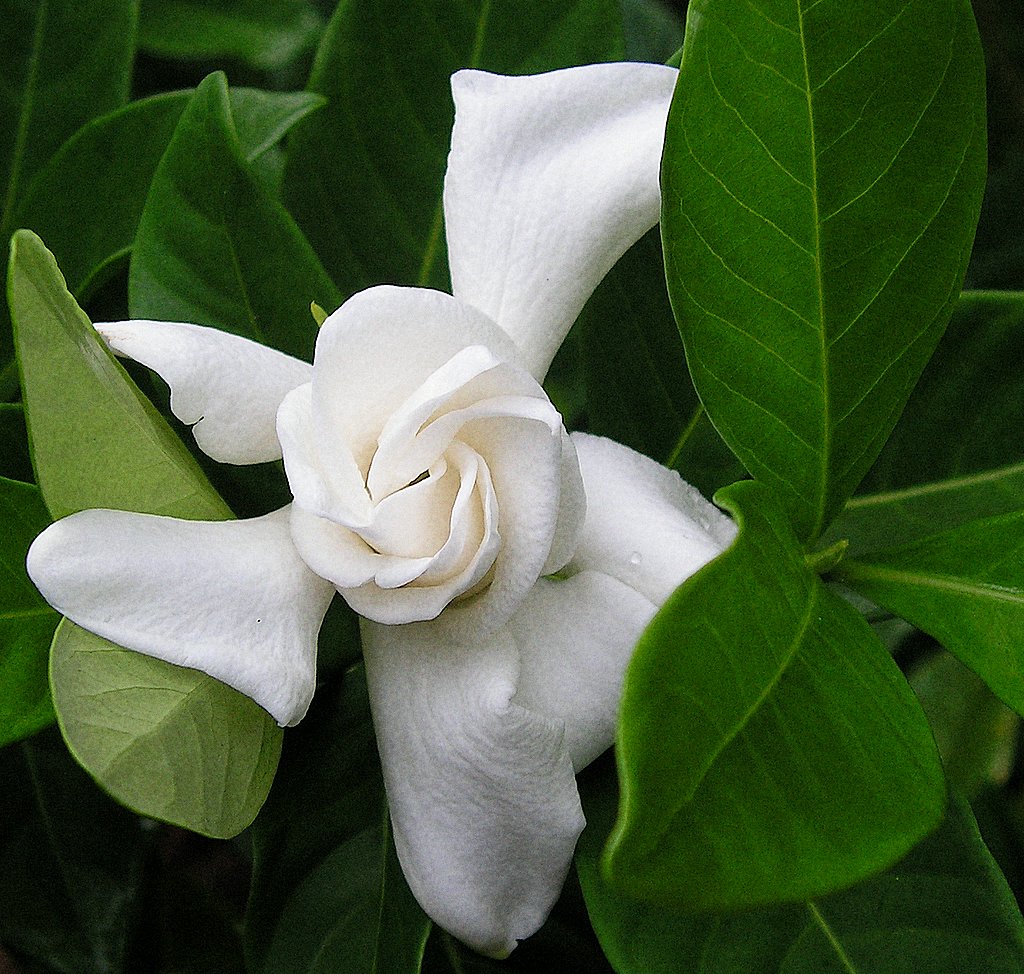 It's been an odd summer... Very dry, if you check the monthly averages. However,you wouldn't know it to see it: Longish periods of drought, then heavy rainfall right in the nick of time, greening everything up for a time, only to return to more dry weather. Instead of daily or near-daily rains, we've been getting one rain shower a week. South of us, say Sanford and down, has seen plenty of rain after a dry spring. North of here is just plain parched, with drought conditions in north-Volusia county.
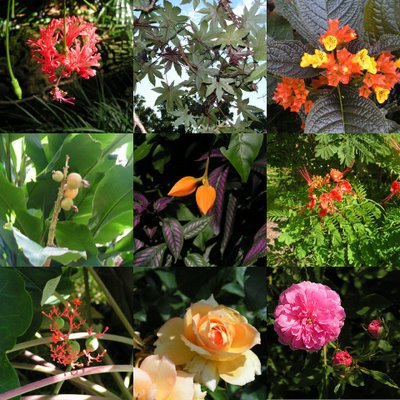 and globulus citrus have all faded into a background, a canvas of green; in their place, front and center, a tropical vision of fringes and cups painted from a combustive palette of oranges, reds and yellows. The trip today reminded me—a timely reminder, amidst the doldrums of subtropical "fall"—that Central Florida is a special place for gardening: At 30° latitude, with a bit of stubborness and know-how, we can grow practically anything: Camelias, Azalaes, Orchids, citrus, Hibiscus, Rosa, bananas, figs, Delphiniums, Papaver, Daisies, Dahlias, Crotons... Where else are hard-pressed to decide when a garden looks best, December or August?
 un is at a lower angle (closer to the horizon), as it is the farther north one goes, a given point on the earth's surface receives a lower density of incident light. This difference in density of incident light is, fundamentally, similar to the difference in intensity between, say, early morning light an noontime sun. The higher the sun in the sky, the more intense the solar radiation, and the more solar energy made available to photosynthesis for conversion into sugar. Furthermore, the lower the Sun's angle relative to the earth, the more of the earth's atmosphere that the sun has to pass through.
 (Spicy Jatropha, Jatropha integerrima).
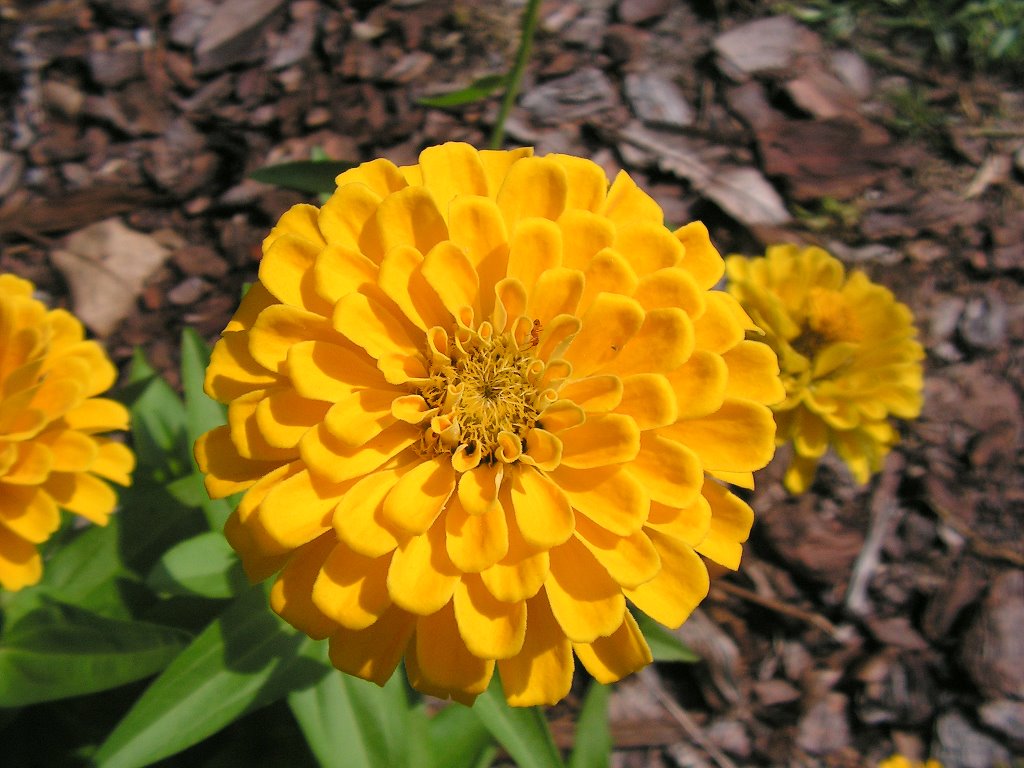 he past, I've had trouble with root rot or related fungus taking out my zinnias in July or August; this new cultivar, and the fact that I planted them earlier, in early May, must have made the difference. I've interplanted these zinnias with 'Purple Knight' Althernanthera— a nice effect.
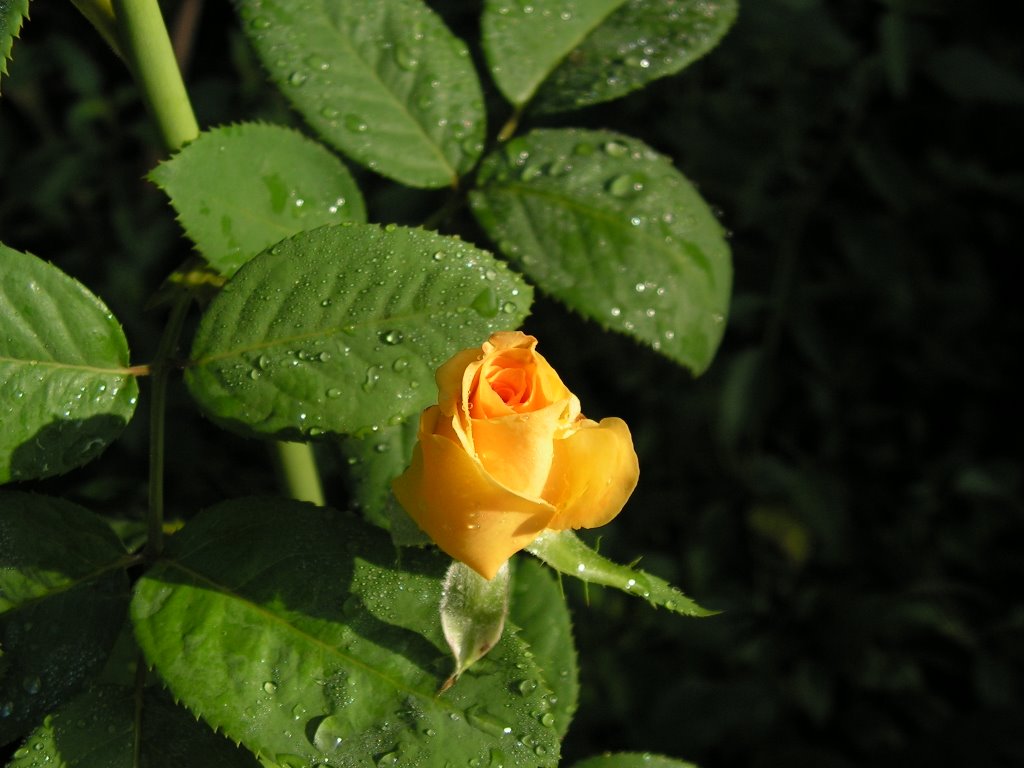 e lately, too. I bought both these bushes this winter, stunted and nearly leafless from Home Depot for $1.50 each. A lot of love and attention (and fungicides and fertilizers) have been lavished on them, and the return has been prodigious.
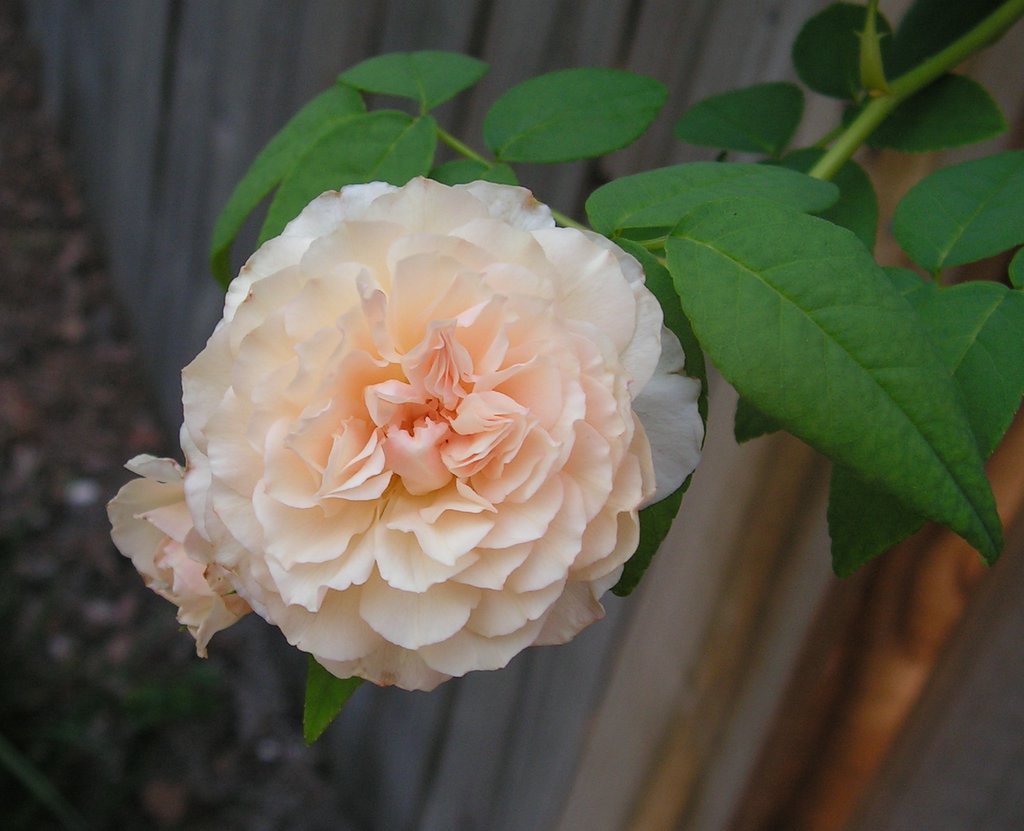 One of the recommended roses from the Central Florida Rose Society, this 'Cecil Brunner' took a long time to come to bloom, but even in the heat of late July, its blooms are winning. The descriptions of this rose (apparently a climbing sport of a cross between a Tea and a Polyantha) are so varied and contradictory as to make one suspect that there are many different roses sold under the same name.
Florida, with over 4,100 species of native or naturalized ferns and seed plants, is the third most floristically diverse state in the United States.The final word on a plant's indigenous status in Florida. I've used it several times to identify a roadside plant.
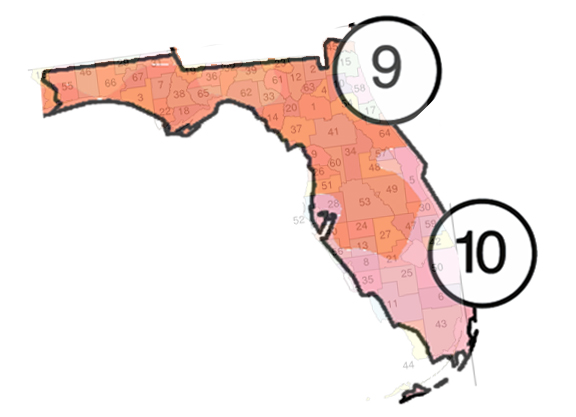
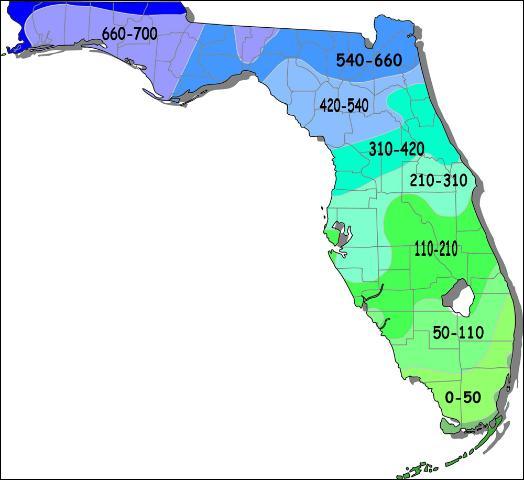 d a large fruit orchard, and growing fruit trees here in zone 9B is fairly difficult: Most deciduous fruit trees require 800+ chilling hours a year, but here, north of Orlando, we get around 400. And we cannot grow mangos and avocados because of our once or twice yearly frosts. Of course you can grow citrus (my property is at the center of Henry DeLand's original grove from the 1870s); and, if you're lucky, you can eke out a hand of bananas every once an a while. I like an orange now and again, but our one tree usually supplies more oranges than a small family like ours could care to eat.
 (Above: Buds on a tuberose)
Blossom to Table: Honey Grows Up - New York Times: "June 14, 2006
Blossom to Table: Honey Grows Up
By DANA BOWEN
TED DENNARD, founder of the Savannah Bee Company, says 2004 produced the best orange blossom honey the South has seen in decades.
But you never know. 'Last year was an awful year for basswood,' said Zeke Freeman, owner of Bee Raw Honey, blaming an early summer drought in New York.
And Neal Rosenthal, who imports Mario Bianco brand honeys from Italy, in rare flavors like dandelion, lime blossom and eucalyptus, wistfully recalled, 'We still talk about the remarkable chestnut honey of 1983.'
It's apt that Mr. Rosenthal imports wine as well as honey. Many of the same factors that distinguish a reserve cru from a pitcher of house red — a distinct varietal, a particular place, propitious bursts of sun and rain — determine whether honey is packaged in a costly jar or pumped into a plastic bear-shape bottle. And with more single-flower honeys on store shelves and farmers' market tables, chefs have been dispatching their wildly different flavors to dishes the way sommeliers pair wine with food."
In the ruins of a prehistoric village near Jericho, in the West Bank, scientists have found remains of figs that they say appear to be the earliest known cultivated fruit crop, perhaps the first evidence anywhere of domesticated food production at the dawn of agriculture. The figs were grown some 11,400 years ago.
Presumably that was well after Adam and Eve tried on the new look in fig leaves, in which case the fig must have grown wild in Eden.
Two botanists and an archaeologist, who describe the discovery in today's issue of the journal Science, said the figs came from cultivated trees that grew about 1,000 years before such staples as wheat, barley and chickpeas were widely domesticated in the Middle East. These grain and legume crops had been considered the first steps in agriculture.
The researchers uncovered nine small figs in the ruins of a burned building. The fire left the figs charred, preserving them in a condition for detailed analysis. The researchers established the age of the cache by dating the fire's remains.
A comparison with modern wild and domesticated varieties, the scientists said, led them to conclude that the ancient figs had undergone a mutation in the wild that produced a sweet fruit but no fertile seeds.
Because these trees were a reproductive dead end, the botanists reasoned, they could have been propagated only by people planting shoots of the variant strain again and again. A piece of stem stuck in the ground will sprout roots and grow into a tree, which could explain why figs were domesticated much earlier than grapes, olives and other fruit plants.
The archaeobotanists who conducted the study were Mordechai Kislev and Anat Hartman of Bar-Ilan University in Israel. Their co-author of the journal report was Ofer Bar-Yosef, an archaeologist at the Peabody Museum of Harvard.
In an interview by telephone from Israel, Dr. Bar-Yosef said that he was ''confident about the identification of the figs as being of a domesticated variety'' and that they were probably the earliest known domesticated crop. The cultivation technique, he said, seemed to be well enough advanced to suggest that people had thus been intervening in nature for several centuries.
Dr. Bar-Yosef noted that the experimental technique of repeated plantings was similar to the methods by which hunter-gatherers collected wild grains and legumes and gradually developed cultivated crops.
Over the last century, scientists have scoured the Middle East for traces of the origins of agriculture and argued over what the first crops were and where they were grown. Dr. Bar-Yosef contends that the first cultivated grains were introduced in what is now Israel and north into the upper Euphrates River valley. Other researchers think the most likely origins were in southern Turkey.
But scholars agree with Dr. Bar-Yosef that the beginning of agriculture, whether with the first sweet fig or ripe grain, was pivotal in human cultural evolution.
''Eleven thousand years ago, there was a critical switch in the human mind -- from exploiting the earth as it is, to actively changing the environment to suit our needs,'' Dr. Bar-Yosef said in a statement from Harvard. ''People decided to intervene in nature and supply their own food rather than relying on what was provided by the gods.''
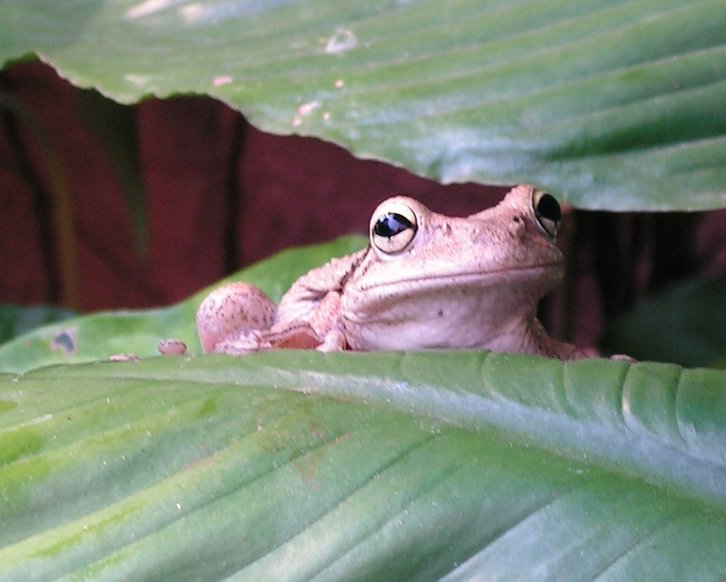 We have several species of tree frogs living around our house. This is one of two who live behind a wall fountain on the patio. They usually come out only at dusk, but it's mating time. The utter wreck of a garden fountain I installed this winter (I must replace it!) is full of tadpoles at all stages of maturity, to the constant entertainment of my son.
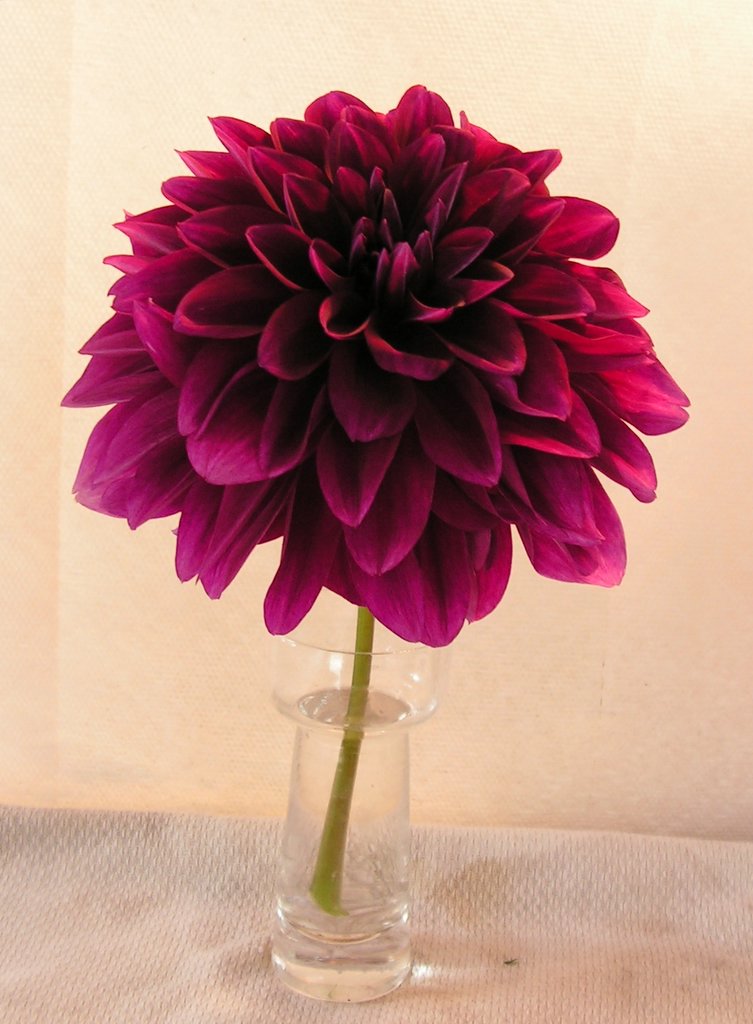

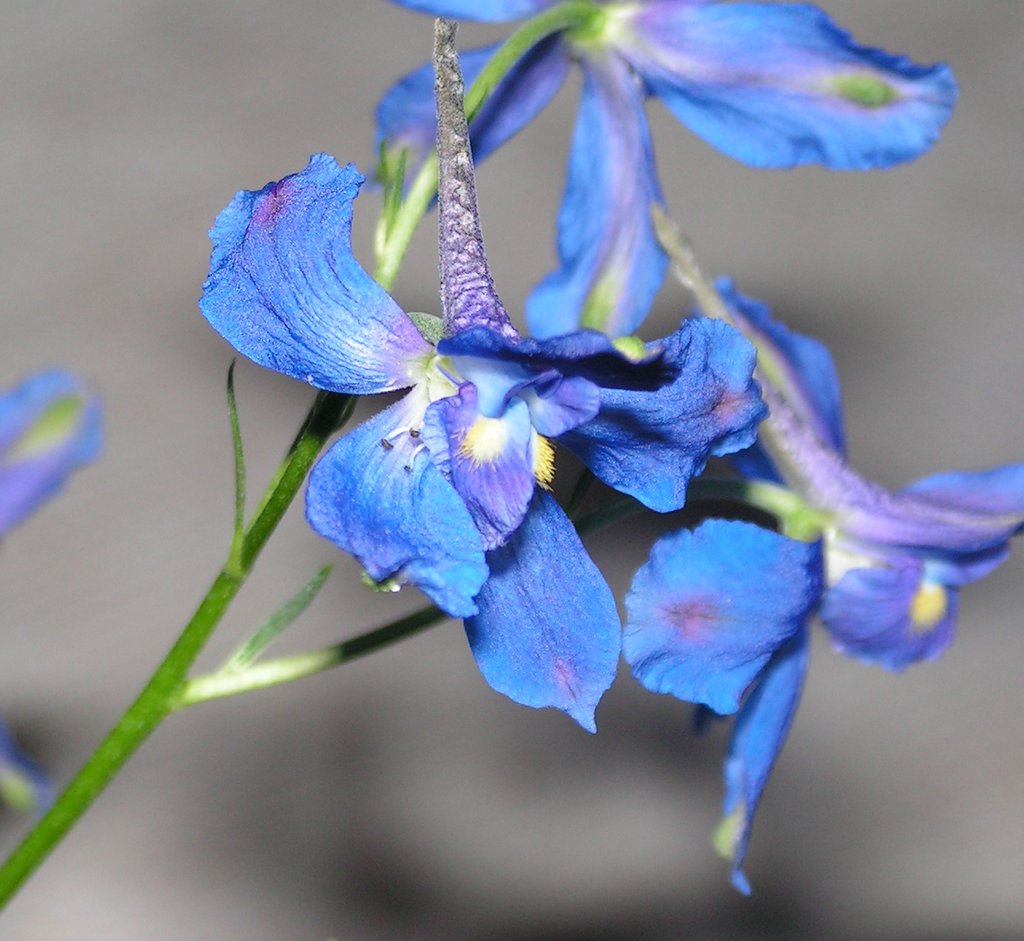 Mediterranean Seas (Delphinium tatsienense) from Thompson & Morgan. I started these a bit late, in February or March, but they seem to be going strong in the back of my bed. Not the tallest delphiniums at only 30 inches, but they're an intense blue and they seem to handle the heat with little complaint.