Tuesday, November 21, 2006

Seeds started on November 20

After half a week away at a conference, I was eager to get dirt under my nails... After a long day catching up in the office, I planted the following:
  • Nine KNIGHT peas (56 days)
  • Nine CASCADIA peas (48 days)
We like pea shoots almost as much as we like the peas themselves! If you've never eaten pea shoots, they taste just like peas, but have a slightly crunchy, somewhat elastic texture, not unlike spinach. Like spinach, the shoots can be cooked or eaten raw in salads.
  • Using the coffee-filter method, I planted some cool-season herbs: PARSLEY-PREZZEMOLO GIGANTE D' ITALIA, CHERVIL, DILL-DUKAT STRAIN
Right now, the only things doing well in my garden are lettuces (Red Sails in particular), Rocket, a mixed-leaf mesclun from Pinetree called MISTICANZA and mustard greens. My broccoli is growing reasonably vigorously, but has yet to form heads. Radishes are six inches high, but no bulbing yet (though it's been close to a month... I guess the thirty day to harvest promise doesn't hold true in November.). Herbs are flourishing. Cukes are healthy but have all but stopped growing during this record-break cold snap. My roses are lovely, but they are dragging their roots... After more than a month, the ranunculus I planted with my son in the rose bed have poked their crinkly heads out from beneath the mulch.

Thursday, November 16, 2006

Useful Florida Climactic Data


For serious home gardeners and hobby growers, and for lovers of arcane data like cooling hours, the best site I've found is the Florida Climate Center at FSU:
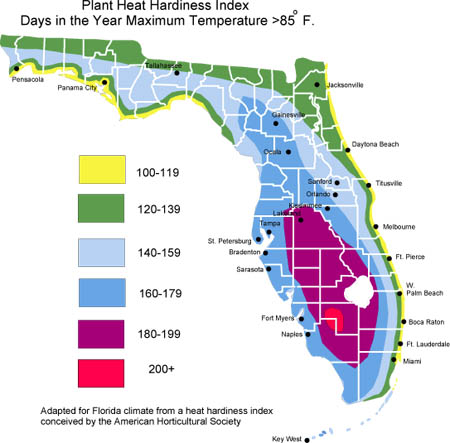
Table of Probabilities for first and last freezes and frosts.

Monday, November 13, 2006

DRYLAND TECHNIQUES AND MULCHES

I've started using this technique for my new vegetable and flower beds... It makes a lot of sense here in Florida: I'll report back how ti works out for me.
DRYLAND TECHNIQUES AND MULCHES

The first season. We began our no-till garden in an area of well-grassed lawn. In several years of continuous production, it was never plowed, cultivated, spaded or hoed. The first season it is necessary to do some extra steps if you start with an uncultivated area as we did. It is described in the March 1981 issue of Organic Gardening in an article by Jamie Jobb called "Tossing an Instant Garden." (ECHO will send a copy of this article to overseas development workers who request it.) A layer of newspapers is spread over the area. They should be no less than 3 sheets thick and well overlapped at the edges. Then organic materials of any kind are placed on top. We use either chipped wood that is given to us by the power company when they trim along the power lines, or grass clippings. You could experiment with other materials that may be available to you such as rice hulls, sugar cane bagasse, tall cut grass, leaves, coffee pulp, etc. The method works because weeds are not able to push their way up through newspapers and a layer of mulch, but roots can go down through wet newspaper. Wherever a seed is to be planted a small mound of earth is placed on top of the newspaper (or a narrow row of soil about one inch thick is used if seeds are small and to be planted closely together). The mulch is then pulled back against the earth and a thin layer put on top of it to prevent drying of the soil. The seeds must be watered more frequently than when planted in tilled soil because the thin layer of soil can dry out quickly. When we pulled mature plants at the end of the first season we found that some roots had gone through the paper and others had grown along the top of the paper to the first edge, then underneath for normal growth. Transplants do surprisingly well when simply planted into the sod through a hole cut in the paper.

Subsequent seasons. The procedure with newspapers is for the first season only. Before the season is over you will find that the newspaper and the sod have decayed and turned to compost. From then on if you keep a layer of mulch about 6 inches thick over the area, the soil beneath will be ready to plant whenever you wish. Our garden has been in continuous use since the day it was first planted. We use the word "no-till" because it is analogous to the system of farming by the same name in which herbicides are used just before planting, then seeds are planted directly into unplowed sod. However, this method uses no herbicides.

What are the advantages? (1) Gardens can be started in any area without the need to plough or spade. You can plant in areas that would be difficult to plough, such as around dead trees or in rocky soil. Grasses and other weeds are better controlled than if the ground had been cultivated. (2) There is much, much less work involved in controlling weeds. But it is a no-till, not a no-work, garden! It can take a lot of time gathering and placing the mulch periodically around the plants. And some weeds will come up that must be removed. (3) Less water is needed for irrigation. (4) The soil is kept cooler. This can be a disadvantage, however, for colder areas. If soil temperatures are too low, the mulch can be raked back in areas to be planted a few days before planting, so that the sun can strike the soil directly. The soil will be dark after a few months of no-till gardening and should warm up quickly. (5) Soil moisture and temperature are more uniform, an advantage for most plants. (6) Nematodes will likely be kept under control. The soil environment is much less suited to nematode growth than, for example, the hot dry sand found in our area. Furthermore, some fungi found in the decaying organic matter will kill nematodes. We have had some signs of root-knot nematodes in the no-till garden, but they have not been a problem after the first few months of operation. It is almost impossible to garden in the same plot for more than one season here without the heavy use of nematicides with normal gardening techniques. We have not yet had to use any nematicide. (7) The only need for a compost pile is for a small one to put large or diseased plants or weeds. When the mulch decays, it is automatically compost and is already in place! Earthworms will soon help carry organic matter down into the soil. (8) Soil erosion from sloping land should be less of a problem.
Sunday, November 12, 2006

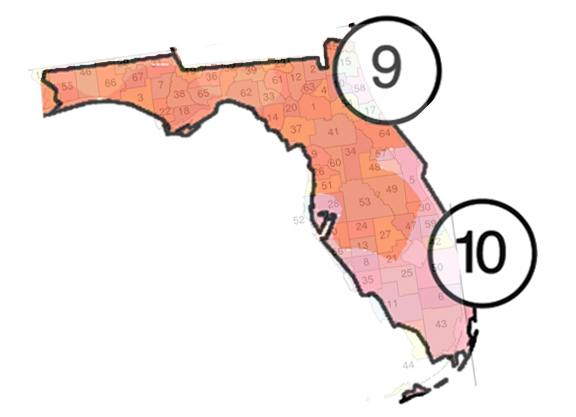
Do you know what zone you're in?

The National Arbor Day Foundation has a startling map that demonstrates the reality of climate change over a very short period of time. Based on the most recent fifteen year’s data available from more than five thousand National Climatic Data Center cooperative stations across the United States. In the period between 1990 and 2004, Zone 10 has crept significantly north in Florida, enveloping most of Brevard County and some of Seminole County. South Voludia County is now the southern-most border of Zone Nine, which has pushed its way north out of Florida and into coastal Georgia and South Carolina. I Photoshop-ed a map of Florida counties onto NADF's revised zonal map:

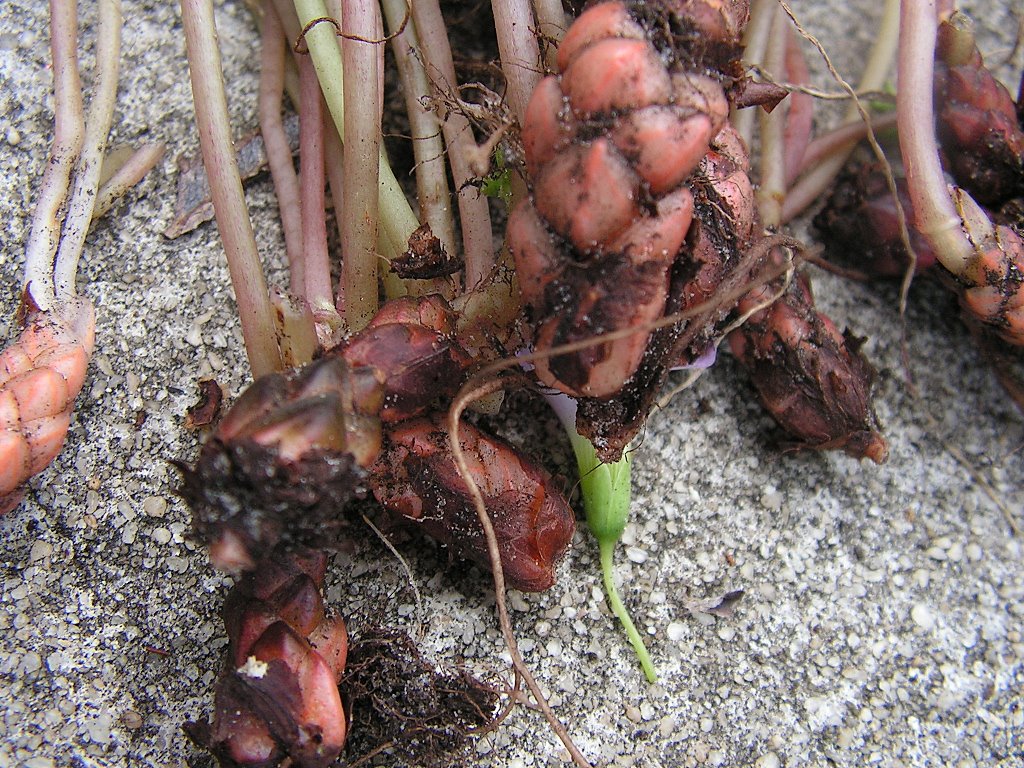
Oxalis triangularis


After a little less than a year growing in a smallish pot, my Oxalis triangularis needed to be repotted. I started with around a dozen corms in a nine-inch pot; with a little care and a lot of patience, I pulled no fewer than five dozen pencil-eraser-shaped bulbs from the pot today. Some I shared, some I transplanted to shady corners around my patio, some I gave away to friends. Posted by Picasa

Saturday, November 11, 2006

More seeds...

From Pinetree...
1 258. KNIGHT (56 days) 1.25 1.25
1 260. TALL TELEPHONE (Alderman) (68 days) 1.25 1.25
1 259. SUPER SUGAR SNAP (62 Days) 1.50 1.50
1 263. CASCADIA (48 days) 1.25 1.25
1 W228. FAVA BEAN-WINDSOR 1.25 1.25
1 W274. PARSLEY-PREZZEMOLO GIGANTE D' ITALIA 0.95 0.95
1 519. CHERVIL 0.80 0.80
1 52501. DILL-DUKAT STRAIN 0.90 0.90
1 W590. TOMATILLO 0.95 0.95
1 W128. EMERITE 1.25 1.25
1 W141. BIG SEEDED 0.75 0.75
1 W176. BONILLA 1.95 1.95

Friday, November 10, 2006

Seeds for November 3

In my seed starter, on November 3, I planted:
1, 2, 3: Pink Paeony Papaver
4, 5, 6: 'Rocket' Snaps
7: 'Sensation Cherry' Geranium
8: Dianthus 'King Salmon'
9: Alyssum 'Pastel Carpet'
10: Celosia 'Fresh Look Yellow'

I'd never grown Geraniums from seed, but got a few packets from Parks during their year-end sale. I think they must be pelleted, and they're not the cheapest seed, but they germinate readily and grow pretty quickly.

Thursday, November 02, 2006

National Clonal Germplasm Repository

National Clonal Germplasm Repository (Corvallis, Oregon) :

Where I found free cuttings of blueberries appropriate for Central Florida:
  • Gulfcoast
  • Pearl River
  • Aliceblue
  • Beckyblue
  • Bluegem
And blackberries:
  • Flordagrand
  • Oklawaha

Johnson Nursery Order

  • Climax Blueberry (2)
  • Misty Blueberry (2)
  • Apache Thornless Balckberries Pkg of 10
  • Arapaho Thornless Blackberries Pkg of 3
  • Sweet Charlie Strawberry Pkg of 25

Just Fruits and Exotics order...

Blueberries:
  • Woodard
  • Blue Gem
  • Brightwell
  • Gulf Coast
  • Sharpblue
  • Emerald (one not listed on their website but apparently well-adapted to my conditions)
&c:
  • 10 plugs of Sweet Charlie strawberries
  • 1 walking onion
  • Muscadine Grape

Great, intelligent customer service. The owner and I chattered for about half an hour about gardening
—she clearly knows her fruit!

The total came to just over $100, plus a packing charge and tax.

A bit pricey, but they have the market cornered!

Sunday, October 29, 2006

More vegetables...

[an update]: The Тurnip Тoppers were up nearly the next day and have already been moved to pots. It's Thursday (so a few days after sowing) and everything save the Nasturtiums has germinated and is growing merrily.

It rained here about an inch this past weekend, and again all day yesterday. That rain, the warm weather (mid-70s to low-80s) and a few days of bright sun have cheered my vegetables. The Fennel I planted two weeks ago is up and growing, the carrots have their first true leaves and the radishes seem almost ready to pick.

***
With guests in town and a busy week in front of me, I planted only a few seeds:

  • Turnip Topper: This variety is grown primarily for the greens. There tend to be 7 tops which are dark green, crisp, and delicious, particularly when harvested young. This variety is resistant to aphids and mildew. (35 days)
  • Red Sails lettuce: An early looseleaf type which has a very open head. It is relatively slow to bolt and succession plantings can be made through the summer.
  • Early Wonder Beets and Action Beets (50 days)
  • Tokyo Cross Turnips: The rapid maturation of this variety is absolutely amazing and they will get quite large if you wish. Harvest them young and they are usually worm-free without chemicals. Tops also have a nice flavor. (30 days)
  • Naturtiums
  • Some Cherry Belle radishes amongst the brassicae already growing in my garden
So far, everything except the fennel that I've planted the past two weeks has germinated & is growing vigorously in pots or in the ground. The many cukes that I planted a couple of weeks ago have finally developed their first, "real" serrated leaves.

I've started the guerilla raids of neighbors' oak leaves for compost. Strawberries are sure to be delivered in the next week. My fig tree has grown a foot in the last week, and my dwarf citrus love their new home... Can blueberries be far behind?

Wednesday, October 25, 2006

Cowpeas, California Blackeye #5

I'm planning to use these cowpeas as a cover crop around my new dwarf citrus and fig trees. Our family LOVES field peas, mixed in with greens or pasta. This particular cultivar does not attract nematodes, and can thus be grown and turned under year after year:

http://henryfields.com/product.asp?pn=12215

Cowpeas, California Blackeye #5: "Cowpeas, California Blackeye #5
65 days-Jet-black markings!

Rich, slightly sweet flavor, meaty texture. California Blackeye #5 Cowpeas disease resistant dwarf plants, 7-8 in. pods. Thrive in long, hot summers. These old fashioned Southern favorites are packed with good nutrition! The shelled 'peas' are rich in immunity-boosting folate and are a good source of fiber.

Monday, October 23, 2006

Sowing some more cool-weather veg

A quick note on a late Monday morning: I work late tonight, so I stayed home to clean up a bit and do some things in the garden. It's a very cool and overcast morning after a week of record heat, so I thought I should plant some seeds and take advantage of the perfect germination conditions: In peat pots, I planted Florence Fennel. (I don't expect to harvest much before the frost gets it, but I might get a few stalks... and the fronds are a lovely larval plant for butterflies.)

In another set of peat pots, I planted some Turnip Toppers to harvest their leaves later in November.

Finally, in a plastic windowbox, I planted two kinds of radishes: French Breafast and Cherry Belle. Both are very quick to produce (thirty days) and I plant to do a series of plantings if these turn out successfully.

One drawback to the lasagna-style gardening I'm practicing is that it's fairly difficult to sow directly, but perhaps I'll give it a try with these radishes: They'd be a way to use the bare spots in my butterfly garden. (I'll note that I (unwisely) put my vegetables next to my butterfly garden... I guess I'll end up losing a lot to the caterpillars, but I can afford some largesse to the winged sort.)

In the garden itself, I planted some large, healthy seedlings of broccoli among the mustard greens. I planted them all too close, of course, but they only came in packs of nine, and I want to keep this, my first garden plot, small for the time being.
The carrots seeds the kids and I planted last week have finally germinated, as have the cucumbers, arugula, and mixed "mesclun." My turnip greens that I bought as a six-pack from Lowe's have put out an impressive bit of growth, too. The only thing that hasn't put in its appearance is the Asparagus Pea.

In the flower gardens, I noticed Sparaxis from last year coming up, and a few Freesia that I planted earlier in October have forced their way through the mulch. I think I noticed a few of last year's Freesia in the back of the bed.

It was an extraordinarily hot week: several days in the low-90s, breaking records almost every day. This was one week after we set a record low in Daytona Beach the previous Monday. This week looks to be very cool, with low records distinctly possible tonight and tomorrow night: Lows in the mid-40s, which will put the kabosh on any true tropical.

Crazy weather.

Saturday, October 21, 2006

Blueberries for Central Florida

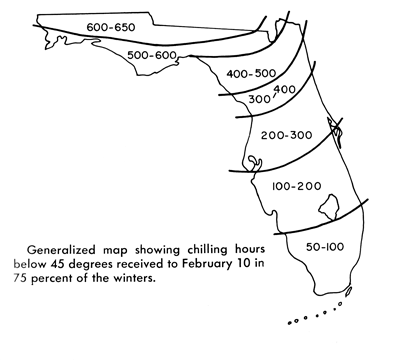
My criteria are simple: Under 400 chill hours and readily available at either Just Fruits and Exotics or Johnson's Nursery, two reliable mail-order retailers that deal with fruit for southern latitudes. According to what I've read, the more varieties of each species that you have, the better the pollination and fruit production. Many source recommend planting two varieties in the same hole.

Rabbiteyes
Native to the south, rabbiteyes lengthen out the picking season into August. At least two varieties are needed for cross pollination. Most of these need a minimum of 350 chill hours, making them marginal for the area. I'm going to give them a shot, though.
From IFAS: To increase cross-pollination and fruit set, mix two or more of the following cultivars from the appropriate group: 'Sharpblue'/'Misty'/'Flordablue'/'Avonblue'; 'Beckyblue'/'Climax'/'Bonita';'Tifblue'/'Climax'/ 'Powderblue'/'Woodard'/'Brightwell'

Southern Highbush
A new breed of early ripening blueberry, Southern Highbush (also called Tetraploids) are a cross between Rabbiteye and Northern Highbush blueberries. Everything is different about these guys: the plants are smaller, the leaves look different (thicker and more crinkly) and they ripen early and bear more heavily than Rabbiteyes. These beauties need a soil high in organic matter for best production. Most of these need 300 or fewer chill hours. (Descriptions are from here.)
  • Misty: Appears to be more susceptible to infection and death by blueberry stem blight than most other southern highbush cultivars. 'Misty' tends to produce very heavy crops, even as young plants. Over-fruiting predisposes blueberry plants to stem blight.
  • Gulf Coast: 1987 USDA release, very early harvest season (same as Sharpblue), 200-300 chill hours, medium-sized fruit, pedicels tend to remain attached to fruit at picking, otherwise a very good cultivar.
  • Sharpblue: UF release, the most commonly grown southern highbush cultivar, very early harvest (50% of fruit ripe by late April or early May in Gainesville), very early flowering, 150 chill hours, moderately productive, medium-sized fruit of high quality if handled carefully, susceptible to several fungal leaf spot diseases, although plantings containing only a few plants tend to escape serious leaf disease problems.
  • Windsor: is vigorous, with stout stems and a semi-spreading growth habit. Windsor appears to be best adapted to north-central Florida but has been grown successfully as far south as Hardee County.
The best reference I've run across on the web for blueberries is here, at the Home Orchard Society. Useful information, like the fact that blueberry roots never go deeper than eighteen inches and sound advice for dealing with the pH issue (blueberries require very acid soil).

Sunday, October 15, 2006

Dreaming of fruit trees...

Looking on Johnson Nursery's website, I put together this fantasy list of fruit trees for my backyard orchard... I will probably place this order, or one like it, soon:
  • Climax Blueberry
  • Austin Blueberry
  • Premier Blueberry
  • Powder Blue Blueberry
  • O’Neal Blueberry
  • Ozarkblue Blueberry
  • Pearl Rive Blueberry
  • Tifblue Blueberry
  • Sweet Charlie strawberries (100 plugs)
  • Arapaho Thornless Blackberries (10)
  • LSU Purple Fig (nematode resistant)
  • Alma Fig

Saturday, October 14, 2006

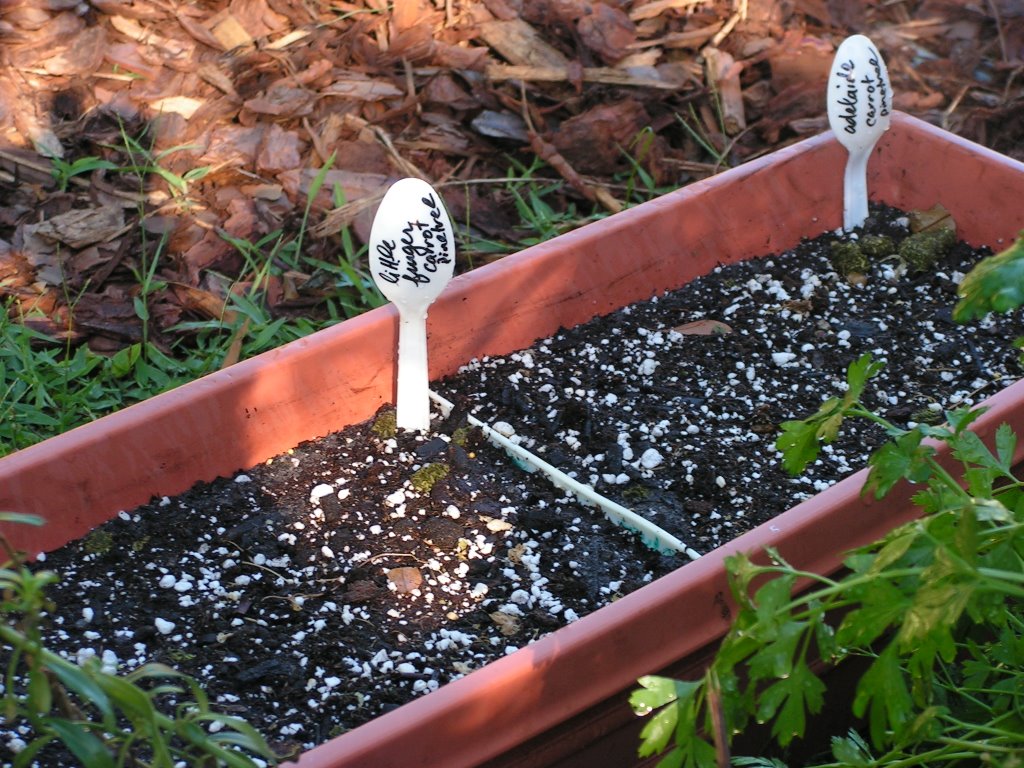
Miniature carrots 'Adelaide' and 'Little Finger':


Adelaide: "This Dutch hybrid is used exclusively for producing those baby carrots that are so attractive and command such a premium price at the market. An early, cylindrical, bright orange, coreless carrot that grows to about 3 ½ inches for harvest, Adelaide will retain its remarkably sweet flavor for quite a while. Use raw, in salads, for pickling, and in stir fries."

Little Finger: This is an excellent choice for succession plantings. The carrots are about the size of your index finger (@3 1\2 inches long) and not tapered much at all like a nantes. Plant quite densely, i.e. 20-25 seeds per square foot. This one also does great in containers.

Zephyr Lilies

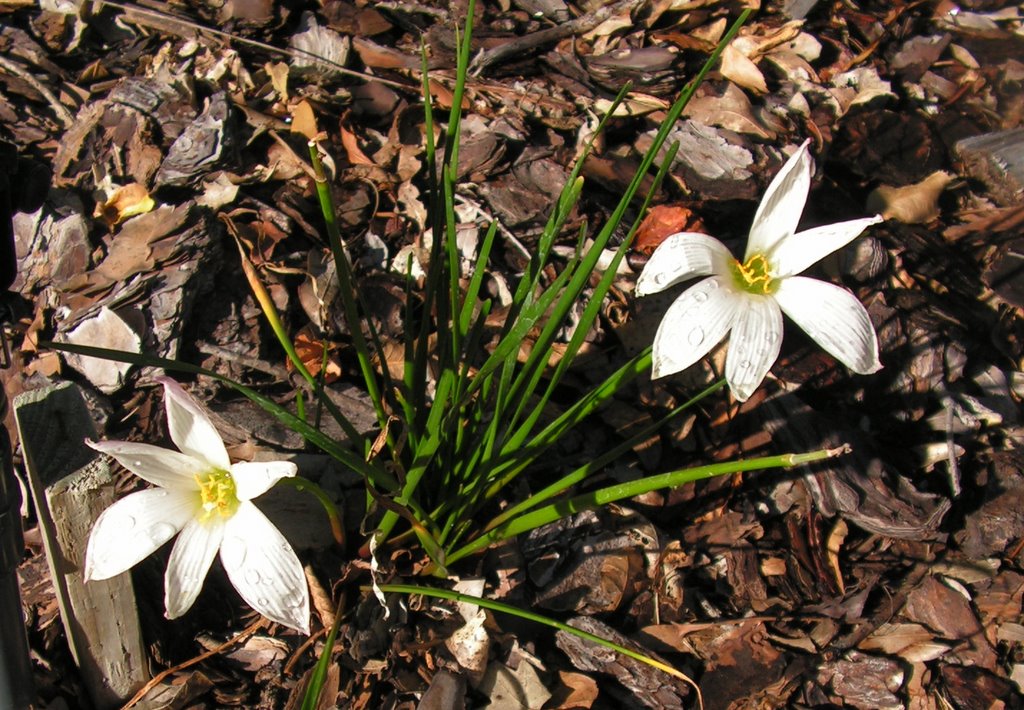
I wouldn't trade my Zephyr Lilies (Zephyranthes candida) for any stinkin' Daffodil in the world. When and why these bloom is always a mystery: Clearly, it's related to rain, since they don't bloom during the dry season or drought. The last time it rained here was ten days ago, yet all my Zephyrs are blooming today. During the hot and wet season, they bloom every couple of days. When not in bloom, they have a perfectly undistinguished grasslike foliage. Their motility is slow and not very far—the large, black and boxy seeds that form after pollination fall into my mulch and are slowly colonizing the area around my roses. I like one cultivar particularly: a double, frilly pure pink. Posted by Picasa