Saturday, October 14, 2006

The aptly named 'Prosperity', a hybrid-musk climbing rose. I've had it growing in my garden for probably three years—the main cane is now about the width of a wine bottle. It's always blooming somewhere, but when the fine weather of our dry season kicks in, the bush is just covered in huge hands of pure white blooms with vivid yellow stamens and anthers. The fragrance is really unremarkable, though my reference books say otherwise (and commonsense, too—musk roses have long been considered the most odiferous of the garden roses).

It's a very vigorous rose, growing on 'Fortuniana' stock here in Florida.
 Posted by Picasa

Planting the winter vegetables...

I'm a flower gardener: The bigger and brighter the bloom, the better. (People who murmur demurely about growing foliage and appreciating "textures" obviously cannot grow flowers!)

Vegetable gardening in Florida has many challenges, but if you can navigate the freezes, avoid the bugs, and ditch the 'soil,' you can grow a lot of veg here, just not the same way you might up north.

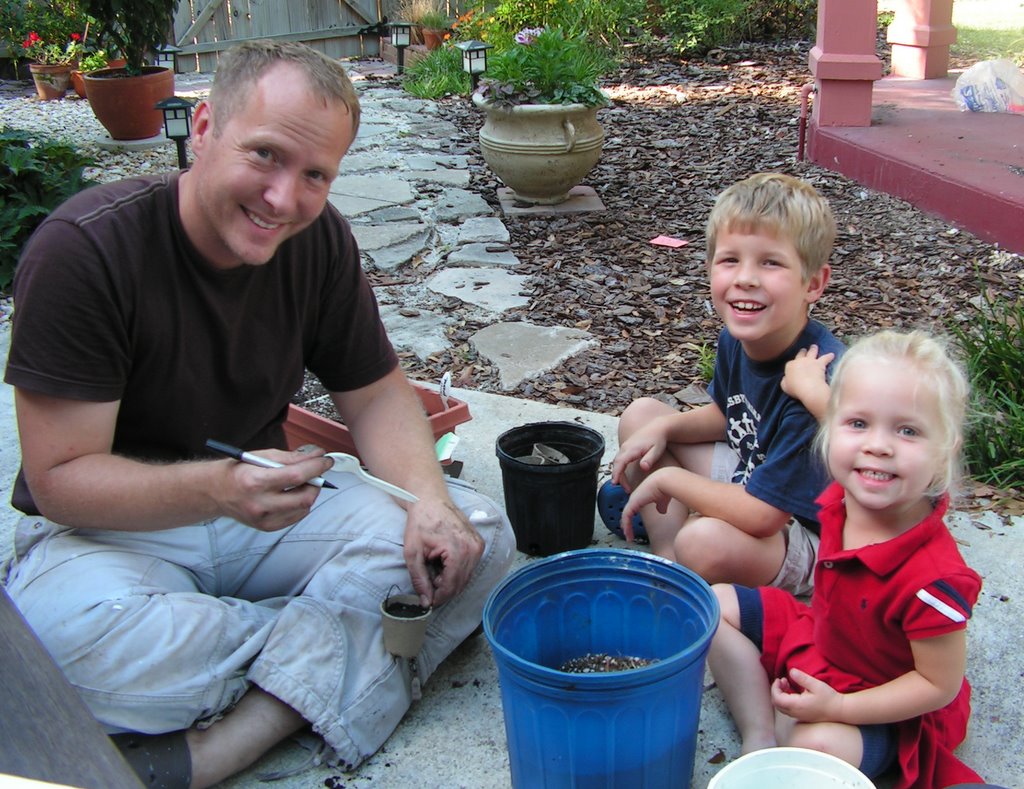
I'm giving it a shot this year: I've always found room in my garden to grow lettuces in the cool season, but this year I decided to try some pot culture: miniature carrots, bush cucumbers, and Thompson & Morgan's 'Asparagus Bean'. The kids lent a hand with the seeds on a fine, dry and cool day here in Florida.

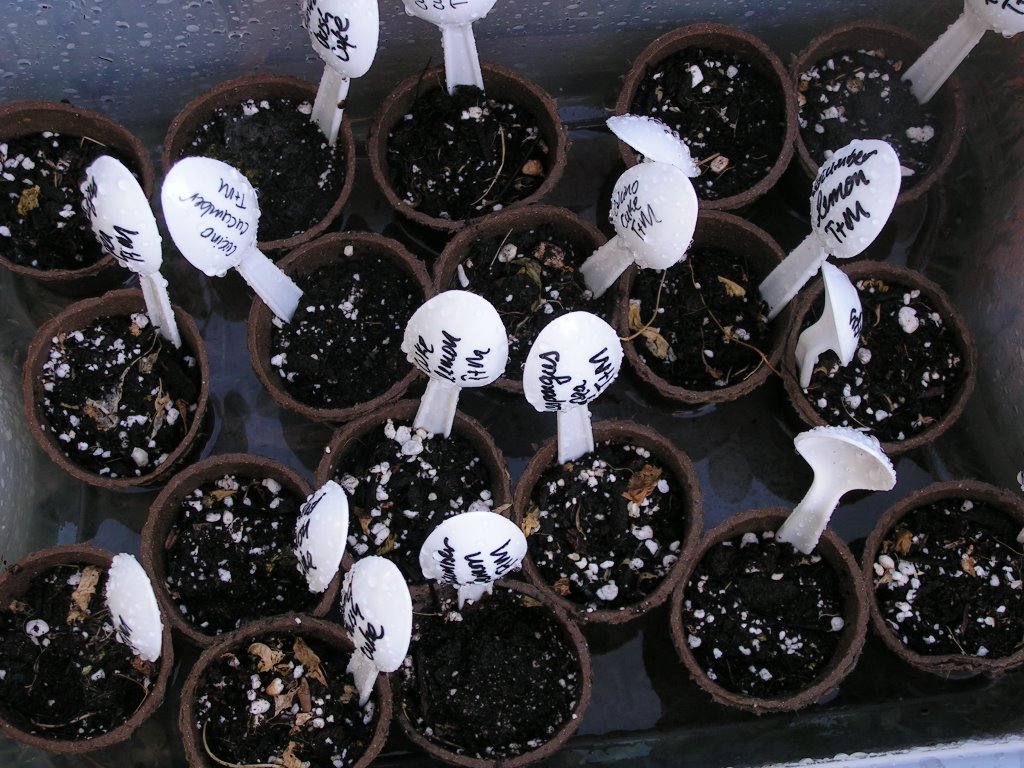
I planted the Rocket (Apollo from Thompson & Morgan) and the salad mix (MISTICANZA from Pinetree Garden) in a homemade, small-scale version of an Earthbox. The carrots (Little Finger and Adelaide, from Pinetree) went in some plastic windowbox containers (about ten inches deep, hopefully enough for these four-inch carrots). For the moment, the cucumbers (Salad Bush from Pinetree; Lemon and Cucino from Thompson & Morgan) are in peat pots: I'll put together another homemade Earthbox when they've outgrown the peat pots.

Saturday, October 07, 2006

I've decided to branch out into some select veggies, mostly for container growing in the cool season:

Pinetree Garden Seeds: Great selection, great prices....

140. BUSH CROP (55 days)
142. SALAD BUSH (F1 Hybrid 56 days)
67. ADELAIDE (F1 hybrid 65 days)
73. LITTLE FINGER (60 days)
W331. ARUGULA-RUCOLA SELVATICA
W361.
MESCLUN MIX-MISTICANZA

From Thompson & Morgan... PRICEY but very high-quality product.

1 of [136] Asparagus Pea
1 of [199] Cucumber : Lemon
1 of [355] Cucumber : Cucino F1
1 of [4258] Helianthus debilis Key Lime Pie
1 of [468] Rocket : Apollo

Freesia

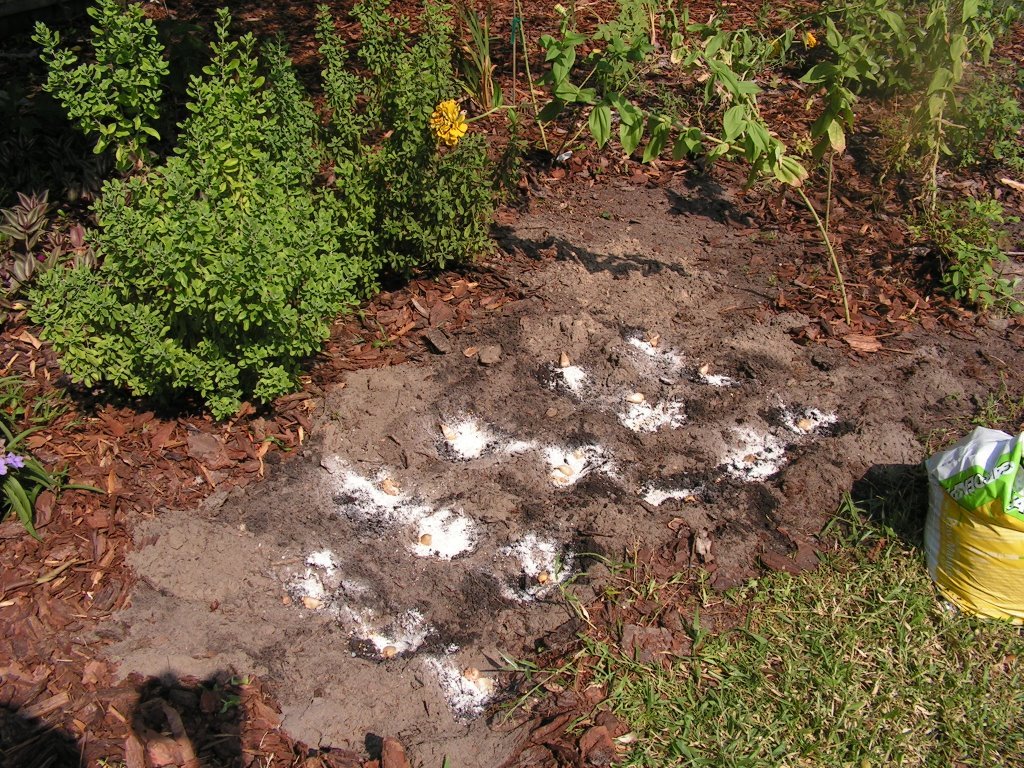
It was supposed to be much cooler today than it turned out to be. Despite the near-90° temperatures and humidity, I forged ahead and planted fifty Freesia bulbs and a dozen Amaryllis bulbs. As usual, I bought them from easytogrowbulbs.com, and their quality was exceptional: The Freesia were three-quarters of an inch in diameter, and the Amaryllis (which I got on special at around $3 per bulb!) were the size of cooking onions.

The Amaryllis (one of the toughest plants I know) went into the full-sun bed that lines the walk to my back yard with a little fertilizer and some water-retention crystals. I didn't enrich the soil much, since they're growing in more than five years of decayed pine mulch -- it's at least six inches deep. The Freesia, which went into a new bed that gets about six hours of morning sun, got a little more attention: Two handfuls of compost, a handful of bone meal, some water crystals and Osmicote. Both were heavily mulched in pine bark.

I had great luck with the Freesia last year: I planted them at the end of December, and they bloomed for six weeks, starting mid-March. I'm planting them much earlier this year, hoping that I'll extend my growing and blooming season by a bit. I left last year's bulbs in the ground, and I think I saw one of them poking its leaves through the mulch today.

My latest Park Seeds order

SUNFLOWER SONJA
VINCA
PARK
'S MOONLIGHT MIX
ZINNIA RUFFLES CHERRY
ZINNIA RUFFLES
ZINNIA DASHER MIX
SNAPDRAGON LABELLA HYBRID MIX

GERANIUM SENSATION CHERRY
CLEOME SERRULATA SOLO (SPIDER FLOWER)

COREOPSIS TINCTORIA

COREOPSIS TINCTORIA MAHOGANY MIDGET

ELEUSINE CORACANA GREEN CAT (GOOSE GRASS
)
LIATRIS SPICATA KOBOLD (BLAZING STAR)
ORNAMENTAL PEPPER CHILLY CHILI HYBRID

RUDBECKIA
CORDOBA (GLORIOSA DAISY)

Thursday, October 05, 2006

A very eary start to the dry season...

After a very dry wet season, we started the dry season about a month early... This earliness is a good thing for the garden, since it's late-September and early-October rains that wreck a garden (fungal diseases thrive on short days and lots of water). It's awful, though, for the water table and for local springs and streams, which were already about as low as anyone around here remembers.

Weather Discussion : Weather Underground: "Climate...(previous discussion)...it looks like the drier season arrived earlier than normal this year (sep. 27th at Orlando/Daytona Beach and Sep. 28th at Melbourne/vero beach). This means that the frequency of rainfall showed a marked decrease. Longer term forecasts into the middle of the month do not show significant moistening that would lead to a prolonged period of afternoon sea breeze showers/storms. "

Wednesday, October 04, 2006

Rosa 'Natchitoches Noisette'

I bought this lovely pink rose thinking it was a 'Blush Noisettte,' a cultivar created by a nurseryman in South Carolina in the nineteenth century that set off a revolution in rose breeding all over the world. During my trip to Seminole Springs a couple of weeks ago, though, I learned that it had been mislabeled, and was instead 'Natchitoches Noisette' (apparently pronounced knack-uh-tish!), named after the city in Louisiana where this rose was found growing in a cemetary.
Whatever its TRUE identity, this rose has flourished in my garden, where it pokes out from within and behind a large Guara. The description at helpmefindroses remarks on its clove scent... Not something I've ever noticed.

Another weekend day spent at Leu Gardens. My apiphilia at work. Posted by Picasa

Sunday, September 24, 2006

My latest easytogrowbulbs order

Freesia Single Mix
Amaryllis White Christmas
Oxalis Grand Duchess Veriscolor
Ranunculus Flower Fields Collection

Those Amaryllis were only $3 per bulb, quite the bargain! I bought a dozen and will put them into my new bed along the walk in the side lot, next to the Amaryllis I found growing next to the house.

Biosphere Nursery & Seminole Springs Roses

I spent yesterday, along with my son, visiting a couple of excellent nurseries in the area. The day started with Biosphere Nursery, an excellent, native-oriented nursery:
  • 2x Russelia: An interesting cultivar (or perhaps a species) of the Firecracker plant, with leaves that are oblong rather than fern-like. Nice.
  • 2x Summer Cassia: I saw this grown as a standard at Leu Gardens this week. Lovely small tree, and someone recently called it "crack for butterflies."
  • 2x Sparkling Showers Durante: I have the species of this plant, which has tiny lavender flowers. This cultivar has rich purple flowers that are dappled or striped in white.
  • 2x (red) Milkweed: I brought home a Monarch caterpillar hiding out somewhere on one of these, but I fear the birds got it.
  • 2x (bronze) Fennel: Beautiful plants, and a favorite of Swallowtails.
  • 2x Confederate Rose: Why isn't this stunning plant grown more often? A member of the Hibiscus family (Hibiscus mutabilis). The blooms start out pale pink, almost white. By the end of the day, they're a rich cerise-pink. By evening they've closed and contorted themselves into tight whorls.
After a stop in Zellwood for sweet corn, we headed for Seminole Springs Nursery:
  • 'Maman Cochet': "Orange-pink & orange-pink blend [op] blooms. Strong fragrance. 30 petals. Blooms in flushes throughout the season. " 1935.
  • 'Maitland White' ('Puerto Rico'): Bermuda Found Rose. "White, near white & white blend [w] blooms. Sweet fragrance. Blooms in flushes throughout the season."
  • 'Madam Lombard': Very double, pink-orange.
  • 'Smiths Parish Yellow': "The ivory/yellow flowers sometimes yield a petal that is pink or red or perhaps displaying a stripe across the yellow. A tidy shrub with few thorns it's thought that like many of the Bermuda Mystery Roses it has a strong Tea influence. We have found that this rose performs fairly well in light shade."
  • 2x Lavandula multifida

Plants For Texas® Texas Born, Texas Tested For Texas Gardens™

Plants For Texas® Texas Born, Texas Tested For Texas Gardens™

The plants offered on the Plants for Texas site are in almost all cases also appropriate for Central Florida, which enjoys the same deluge-drought cycle and intense sun of our neighbor across the gulf:
Every year gardeners go to their local garden centers and walk out with armloads of plants. After planting, mulching, trimming, watering, fertilizing, and generally babying the purchases they disappear. By July the only thing left of some of those plants is the plastic tag. Where do they go? Most likely they melted in the Texas heat. In many cases dead plants only came as the result of picking the wrong plant, Not having a "brown thumb".

Wednesday, September 20, 2006

But what of the lilies in the field?

Add the $20 hole to my long list of "conventional garden wisdom" that needs to be debunked.

You'll often hear about the importance of lavishing organic materials on the planting hole, amending the soil in a plant's future home with lots of organic material, bone meal, blood meal, kelp, fish heads, sacrificial virgins, etc. etc.

The idea makes sense, of course: We all know how important it is to have rich, humusy soil full of nutrients and capable of retaining moisture. So it makes sense, right, to mimic good soil by sparing no expense in improving the soil nature has provided with organic materials, etc.

However, as is usually the case with Conventional Wisdom, the seemingly-sound idea behind the $20 hole does not match reality. Quoting from the University of Florida IFAS-Extension literature:
A common procedure for transplanting container-grown plants involves amending the backfill around the root ball with an organic material such as peat. However, a significant amount of research over a range of irrigation schedules, plant materials, and soil types provides no evidence that this practice is beneficial. In fact, incidences where roots remain in the amended backfill soil and do not grow into the undisturbed field soil have been reported. The argument for amending backfill soils centers around the fact that peat increases the waterholding capacity of a sand soil. What actually happens is the water in the adjacent landscape soil is held at greater tensions than the water in the amended backfill. The result is a drying container root ball as water moves from the container medium and the amended soil into the adjacent landscape soil as it dries.
Plants transplanted in very rich holes do not, as expected, thrive; instead they are actually harmed by the over-abundance of organic material. This is clearly an example of too much of a good thing, and a waste of money, at that.

I've known about this debunking for some time, but came across it again today while exploring UF's extension website, which offers a lot of sound gardening advice backed by a good dose of empiricism. I don't enrich my planting holes much, usually removing a spadeful of Florida "dirt" and replacing it with compost from my pile, a fork or two of peat, some ground pine bark, granular, slow-release fertilizer (Osmocote), some Milorganite (for a weak but quick boost of NPK) and, lately, some water-absorbant crystals. No pretensions for science or consistency. Whatever suits my fancy and whatever is at hand.

Then, lots of mulch.

In annual beds, I pull the mulch back, empty a couple of wheelbarrows full of compost and spread it evenly. Then I plant my seedlings in the compost, heaping the compost up into little, low mounds. The mulch goes back, and that's it.

The mounding serves two purposes: It raises the plants higher, so the mulch doesn't cut their stems. And, since everything sinks in Florida over time, it prevents the plants from being "drowned" or rotting from too much water. (This is the nature of an inert sandy soil: organic materials decay, but the sand does not.)

At least once or twice a year, for all my bushes and new trees (particularly for roses), I pull back all the mulch from the beds and put down a thick layer of compost and shredded leaves and a sprinkle of Osmocote. Then I push back the mulch.

I think this slow and dispersed amending of the soil, from the surface down, avoids the pitfalls of the too-rich hole while still improving the general health of the soil.

Landscape Mulches: Will Subterranean Termites Consume Them?

Landscape Mulches: Will Subterranean Termites Consume Them?

Little is known or mentioned in the literature about mulches and termites. Warnings about not leaving pieces of wood or stakes as termite attractants after house construction are common though. One publication noted that when construction is complete on a new house, every "piece of wood that can be picked up between the tines of a common garden rake should be removed"(Moore 1979). Another publication notes that moist warm soil containing an abundant supply of cellulose material is a termites optimal environment (Johnston et al. 1972). They define "cellulose material" as scraps of lumber, stakes, stumps, and roots left in the soil. One of the prerequisites for subterranean termites and wood-decaying fungi is for the wood to be in reasonably close proximity to the soil surface (Moore 1979) as mulch is. Yet, most houses in Florida with many trees and other landscape plants may already have plenty of food available for termites, and mulch may just be one more additional food source.

Further research on mulches and termites is warranted to determine if we should be concerned about using mulch around houses. Also, research is needed on possible repellent mulches such as melaleuca which might serve as an additional barrier for household protection against termites. At this time the benefits of mulches such as water conservation, reduced used of herbicides, and reduced soil erosion are very apparent while the risks to termite infestations due to mulches are unknown. Homeowners will continue to use mulches in landscaping around their houses and buildings. Our current recommendation is to be vigilant and up-to-date with termite inspection and treatment.

Monday, September 18, 2006

Commercial Floriculture

The Commercial Floriculture site at the University of Florida is oriented (obviously) at commerical growers. However, it contains a wealth of information for the home gardener, including plant trials and very specific recommendations on cultivars, plant care, and fertilizers. Of particular interest are the Sunflower trials and Statewide Plant Trials. The latter section won't win any awards for ease of access or organization, but the important material is digested here in the research papers section. What you'll find is very precise and detailed information on cultivars of common bedding plants like Larkspur, Geraniums, Snaps, etc.

Saturday, September 16, 2006

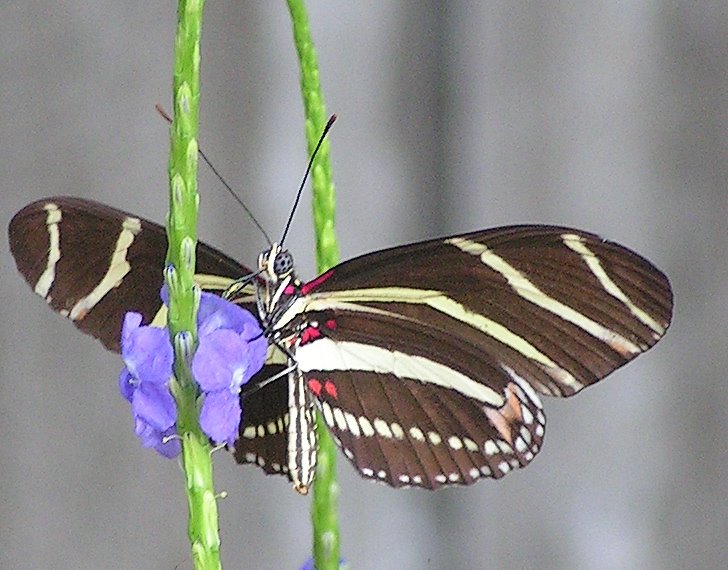
Porterweed and a Zebra Heliconian

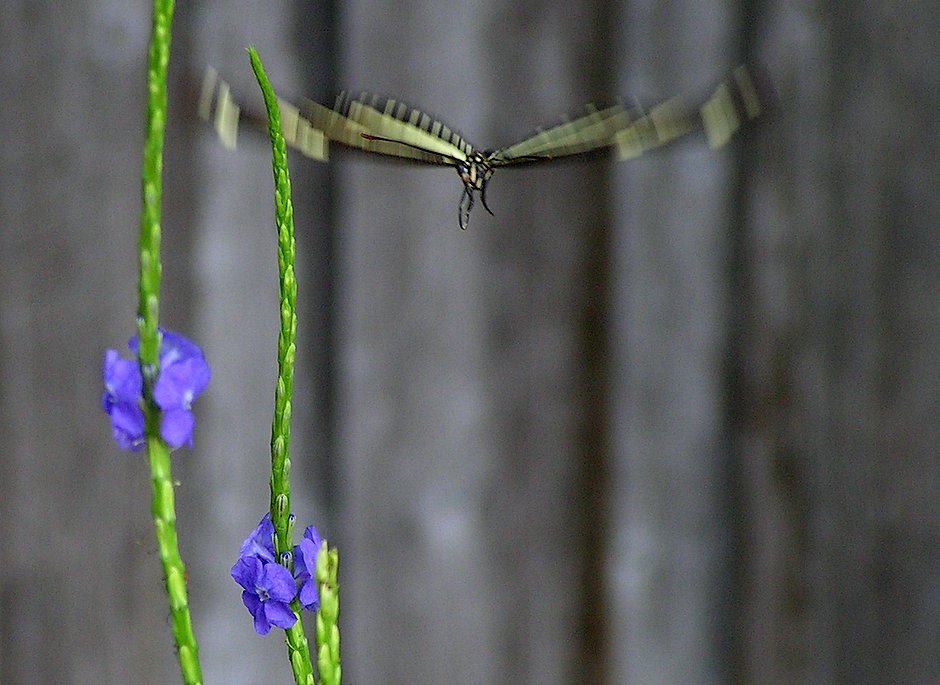
Drinking coffee, looking out the kitchen door, I saw this Zebra Longwing flopping about my garden this morning. I followed it for a bit as it flitted around my Blue Porterweed. For what I was trying to do—capture something in motion in filtered light—my aperture was too wide and my f-stop too slow, but it turned out a pretty cool effect. They're such slow-moving, easy-going butterflies (unlike most Swallowtails), it's easy to get a closeup shot, as I did below.

Wednesday, September 13, 2006

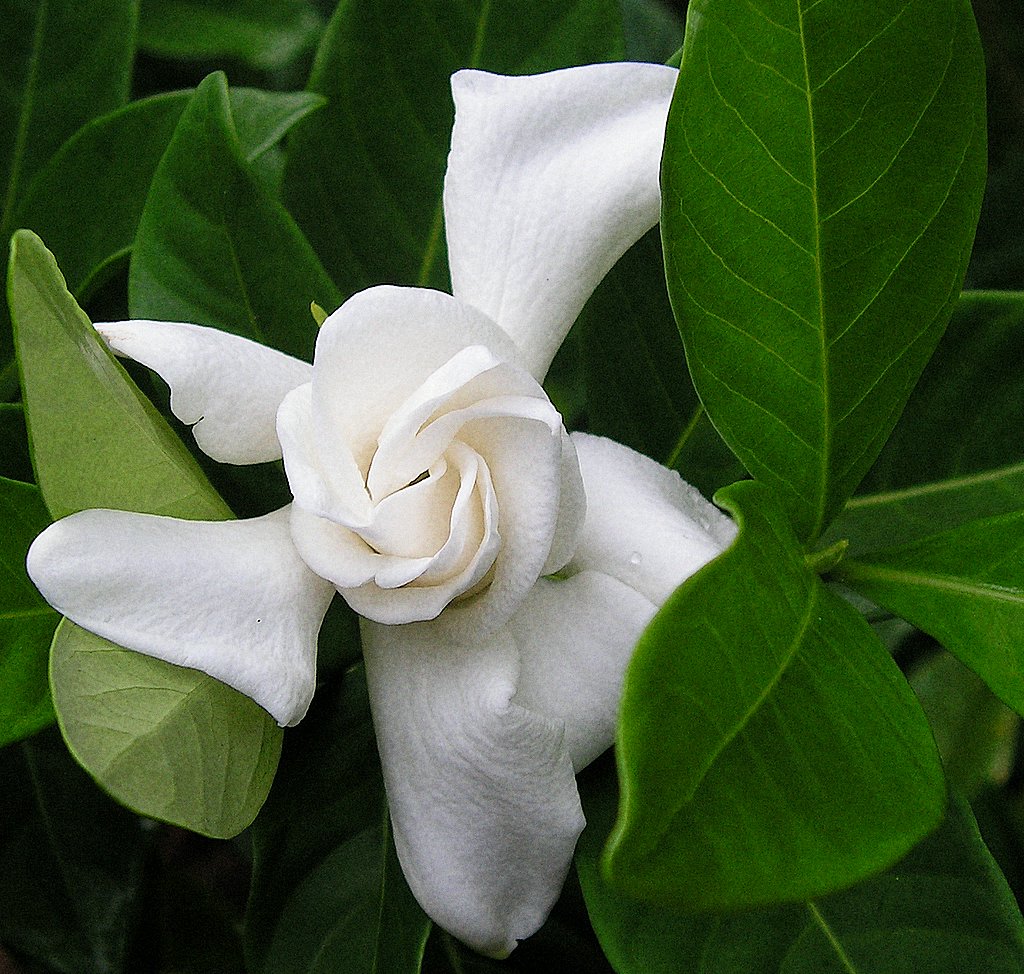
Gardenias in September...

It's been an odd summer... Very dry, if you check the monthly averages. However,you wouldn't know it to see it: Longish periods of drought, then heavy rainfall right in the nick of time, greening everything up for a time, only to return to more dry weather. Instead of daily or near-daily rains, we've been getting one rain shower a week. South of us, say Sanford and down, has seen plenty of rain after a dry spring. North of here is just plain parched, with drought conditions in north-Volusia county.

Anyway, what with the odd weather, some cool breezes, and shortening days, many of my plants think it's springtime: Many of my orchids (dendrobiums and oncidiums, mostly) have spiked, and this morning I noticed a bloom on my Gardenia, which typically blooms the first week of May. Roses are budding profusely, and by the middle of October they, and many other plants in my garden, will have shaken off the doldrums of sub-tropical climes. In the evening, sitting blowing bubbles with my daughter, I can catch from time to time soft, cool puffs of air, promising more clement weather. Posted by Picasa

Zone 9 Tropical Plants

I need to check this place out:
Zone 9 Tropical Plants - Offers Exotic Tropical Plants: Flowering and Fragrant Vine Shrub

Some of their offerings:
Jatropha multifida - Coral Plant (qt)
Bauhinia purpurea - Purple Orchid Tree (gal)
Bauhinia tomentosa - Yellow Bauhinia (gal)
Bauhinia grandidieri - Dwarf Orchid Tree (gal)
Duranta Sweet Memories (qt)

and some interesting Gardenias...

Thursday, September 07, 2006

My Trade List

For GardenWeb devotees, my trade list...
I always have potted up for trade...

Stachytarpheta jamaicensis 'Porterweed'
Hamelia Patens 'Firecracker Shrub'
Star Jasmine
Rex begonia
Ruellia elegans
Alternanthera 'Purple Knight'
Numerous Old Garden Roses
African Purple Basil (awesome plant)
Blue-Eyed Grass (another winner)
Helianthus debilis 'Dune Sunflower'
Spicy Jatropha (J. integerrima)
Various keikis from Dendrobium orchids
Seedlings:
- Thunbergia alata (blackeyed susan vine)
- Pot marigolds (various vigorous cultivars)

Monday, September 04, 2006

Leu Gardens in September

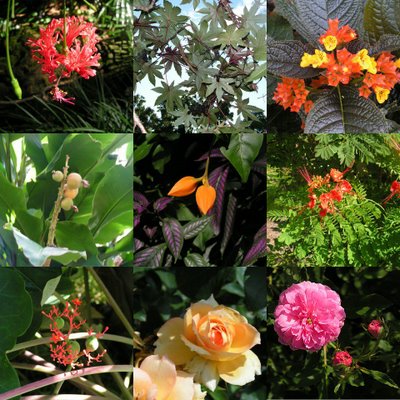
Leu Gardens, about forty miles south of me, is a family favorite destination during the cooler months. Today, Labor Day, we decided to make a quick run through the garden, the heat be damned.

I was struck by how different the gardens look at the end of summer from how it looks in, say, January: The camellias, azaleas, perennials,
and globulus citrus have all faded into a background, a canvas of green; in their place, front and center, a tropical vision of fringes and cups painted from a combustive palette of oranges, reds and yellows. The trip today reminded me—a timely reminder, amidst the doldrums of subtropical "fall"—that Central Florida is a special place for gardening: At 30° latitude, with a bit of stubborness and know-how, we can grow practically anything: Camelias, Azalaes, Orchids, citrus, Hibiscus, Rosa, bananas, figs, Delphiniums, Papaver, Daisies, Dahlias, Crotons... Where else are hard-pressed to decide when a garden looks best, December or August?

(Clockwise, from far left: Hibiscus schizopetalus, Ricinus communis 'Red Spire', Chrysothemis pulchella 'Black Flamingo', Caesalpinia pulcherrima, Rosa 'Pink Pet' (China, 1928), Rosa 'Fragrant Apricot' (Floribunda, 1998), Jatropha podagrica, Alpinia latilabris, Center: I have no clue.)

Saturday, September 02, 2006

The Sunshine State


If you've gardened for a while here in the Sunshine State, you quickly learn to be leery of the advice to plant anything "in full sun." Every newbie who's planted a geranium in June in full sun, because that's what he did in Jersey, learns that full sun is a death sentence for all but but a few plants. Aside from trees and some large shrubs, I'm hard-pressed to think of many plants that actually do better here in Florida in full sun than they do in high shade.

For instance: Even roses, plants famous for their love of sun, are taxed in June and July by noontime's glare. You'll read that roses need at least six hours of full sun and do best with ten, but that's for Yankees. Here in Florida, roses will thrive with just four or five hours of direct sun, especially if they continue to get some additional time of bright light. My main rose bed, where 'Prosperity', 'Don Juan' and 'Abraham Darby' compete for place of honor, gets about six hours of sun in June, and some bright light in the late afternoon. This amount seems pretty optimal. I have other roses, interplanted with herbaceous perennials, in a border that get ten hours of sun: They need additional water, and don't seem to do any better than their less-sunny comrades.

I could provide plenty more examples of plants famous for their love of full sun elsewhere that quite prefer a little shade here in Florida. So why is this? Why does "full sun" elsewhere, farther northward, so often mean "partial sun" here? Of course the answer is: The sun is just stronger here in FLA. But that's like responding to the question: Why does the train move? with the answer: Because the wheels turn.

Why is the sun stronger?

DeLand, where I live, is located at 29° of latitude, which makes it about two-thousand miles from here to the equator. (Each degree of latitude is approximately 70 miles. Traveling northward, two-thousand miles is roughly the distance between here and the Hudson Bay in Ontario. So, Central Florida is midway between the Hudson Bay and Columbia.) That relative proximity to the equator has a profound, positive relationship to the amount of insolation—the amount of radiant solar energy—any given point of earth receives.

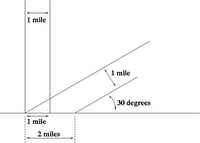
Of course, everyone knows that the equator is where the sun is strongest, where the day is more or less the same length all year long, and where there are no seasons. But returning to our earlier question: Why is the sun stronger at the equator? Largely, this difference is due to the axial tilt (23°) of the earth. The sun's rays hit the earth at a higher angle—more perpendicularly— at the equator than anywhere else on the planet. Twice a year (the autumnal and vernal equinoxes), the equator is directly perpendicular to the rays of the Sun: At noon on the equinoxes, the sun is directly overhead and the rays of the sun hit the earth perpendicularly. On those dates, at every point along the equator, the earth receives its greatest amount of radiant energy.

So, here's the rule: The closer one is to the equator, the more vertically the Sun's rays fall on the earth. The amount of radiant energy is directly correlated with the degree to perpendicular that the Sun's rays hit the earth: The closer to perpendicular, the great the radial energy. This correlation has to do with both simple geometry, and with atmospheric effects: When the sun is at a lower angle (closer to the horizon), as it is the farther north one goes, a given point on the earth's surface receives a lower density of incident light. This difference in density of incident light is, fundamentally, similar to the difference in intensity between, say, early morning light an noontime sun. The higher the sun in the sky, the more intense the solar radiation, and the more solar energy made available to photosynthesis for conversion into sugar. Furthermore, the lower the Sun's angle relative to the earth, the more of the earth's atmosphere that the sun has to pass through.

So, what's this all mean to the Central Florida gardener? The map to the right gives a rough idea of the difference in insolation: If you click it and look carefully, you'll notice that Central Florida receives, annually per day, about 25% more insolation, more kilowatts per meter per day, than, say, Boston.