Saturday, April 29, 2006

Gardenias

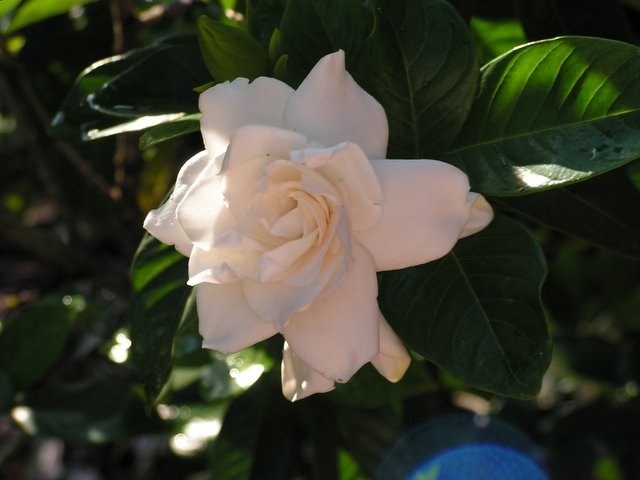
My gardenias came into bloom last week. I have a love-hate relationship with them. I love them because they're low-maintanence, elegant plants with beautiful, pinwheel-like flowers and an exotic, tropical, seductive smell. I hate them because more than a few moments in the same room with them can be too much. (I have a bunch sitting less than a foot from me as I type, and I have breathe through my mouth.) As they bloom then decline, their scent goes from exotic to just plain slatternly and strident. What's more, they don't drop, and I have to deadhead them daily or my bushes are covered in brown, gnarly-smelling blossoms.
As white flowers that bloom during the dry period, they're also constantly under attack by scale and the subsequent black soot. (Scales, tiny insects whose excretions create the ideal medium for black, sooty mold, are attracted to white flowers, particularly magnolias and gardenias.) It's fairly easy to deal with the disease, though: Soap spray and a blast from my watering gun.
Interestingly, I bought two (genetically) identical bushes (grafted Miami Supreme) two years ago. One gets a lot more sun, and seems to suffer more from the scale and mold than the other, which is in partial shade. What's more, the one in more shade is generally healthier (thicker trunk, fuller shape), with deep green leaves and abundant blooms. Supposedly gardenias should be planted in full sun, but my experience indicates otherwise.

Gaura lindheimeri

Gaura lindheimeri ("Dancing Butterflies") is a reliable herbaceous perennial here: One of the few plants that gets better every year. It's only OK as a cut flower (useful as a filler), but the bees and butterflies love it, and in my experience it's fairly drought-tolerant. It gets 8 hours of summer sun in my bed, and grows in such a way that it makes a wonderful companion for roses (pink or white).

Sunday, April 23, 2006

The end of spring...


It's been much hotter than usual for this time of April: Every day for the last week, it's gotten up into the upper 80s, often with very dry air and typical Florida sun. My ranunculus had a few more blooms before giving up the ghost (they're very heat-sensitive). The freesia in partial shade continues to bloom, but I don't see any new spikes, so my guess is in a week or so, they'll be spent. They've performed remarkably well: They started to bloom on March 6, and six weeks later I'm still cutting flowers. I plan to buy a few dozen bulbs next year.

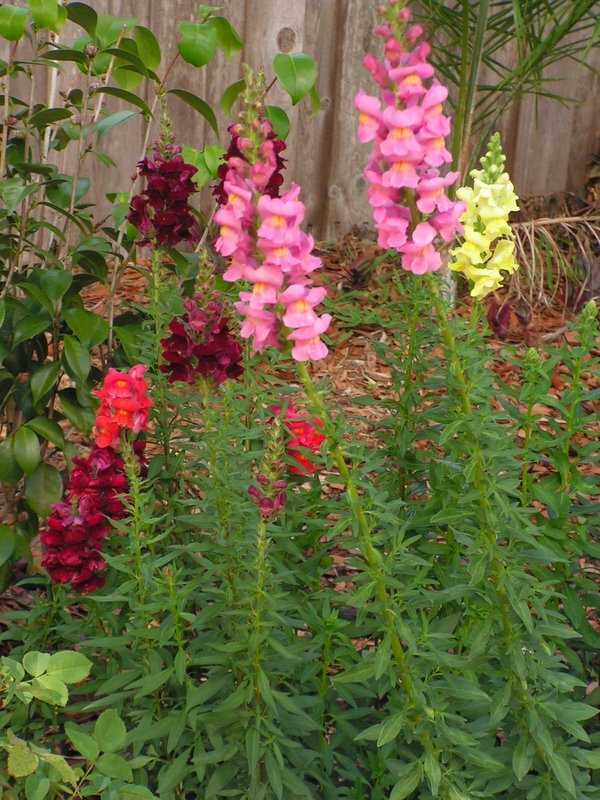
Some things are doing better than I would have expected. The "Rocket" snapdragons (from Park's) are still blooming away -- they're advertised as being very heat tolerant, and I haven't seen them droop yet this season (I do water every morning). The colors in the mixed set -- bronze, pink, pastel yellow, deep burgundy -- are rich, and the burgundy ones are very fragrant.

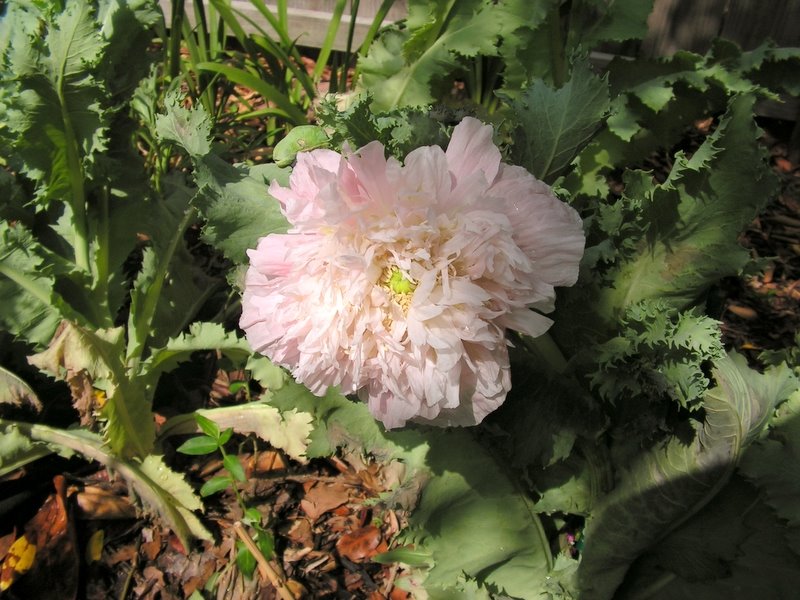
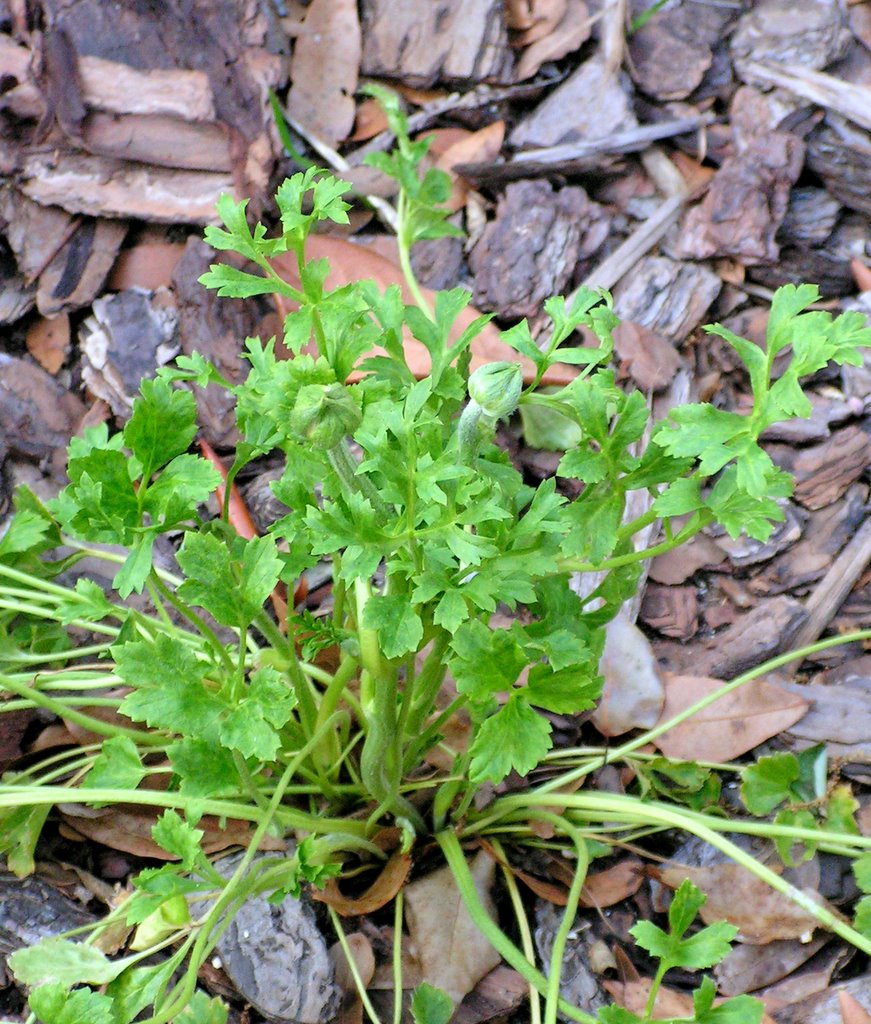
Two new blooms in my garden: The Pink Paeony Papaver (poppy) (right) that I started from seed in December and planted out into the back of my bed at the beginning of February bloomed for the first time today. I wish I'd gotten it out earlier -- it's very cold-hardy and I fear that I won't have long to enjoy the blooms. I forgot earlier this week to water one morning, and I came hope to these poor plants lying flat and wilted. It took a couple of days for them to regain their form. I planted some Papaver rhoeas, too, and they bloomed fleetingly: Beautiful and exotic, but not well adapted to spring's tendency towards heat waves. I'll definitely find the room to plant more of these Paeony poppies next season.

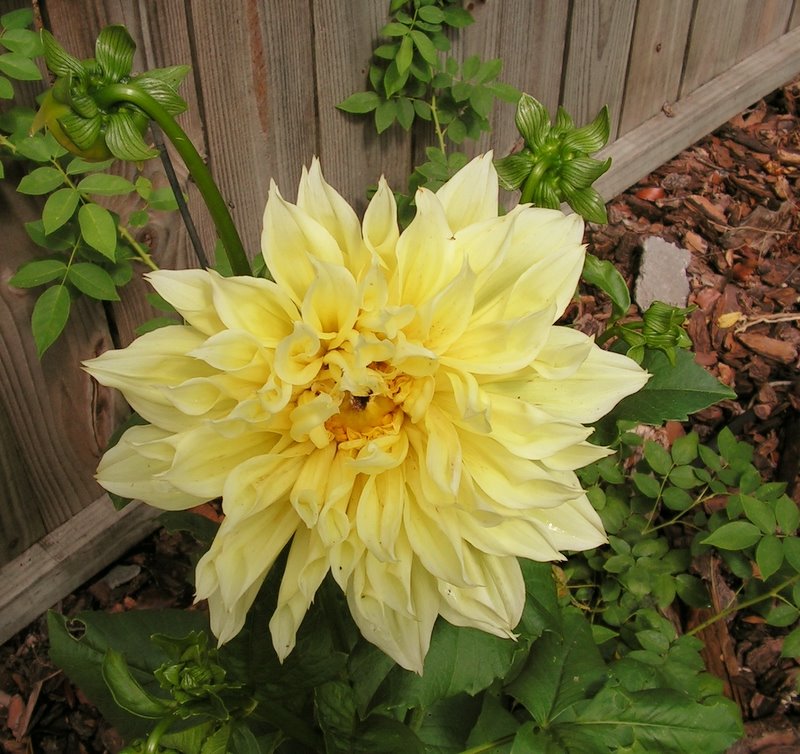
I bought some cheap dahlia tubers from Lowes this winter, more out of curiousity than anything else. I've never grown dahlias before and made some mistakes when I planted them mid-February, but I still have six plants growing in the back of bed. They seem to do fairly well in the sun, but they're plagued by insects on the lower leaves. They've grown vigorously -- the largest came into bloom today after only six weeks. The pale yellow is perhaps not my favorite, but given the ease and the size of the blossom, I won't complain. There are another half dozen buds on this plant, so I'm glad I staked it well early on.

There's a burgundy one in full bud now: Not as tall as the yellow, but bushier. I can't wait to see it when it opens.

Tuesday, March 14, 2006

Spring in Central Florida, Part II


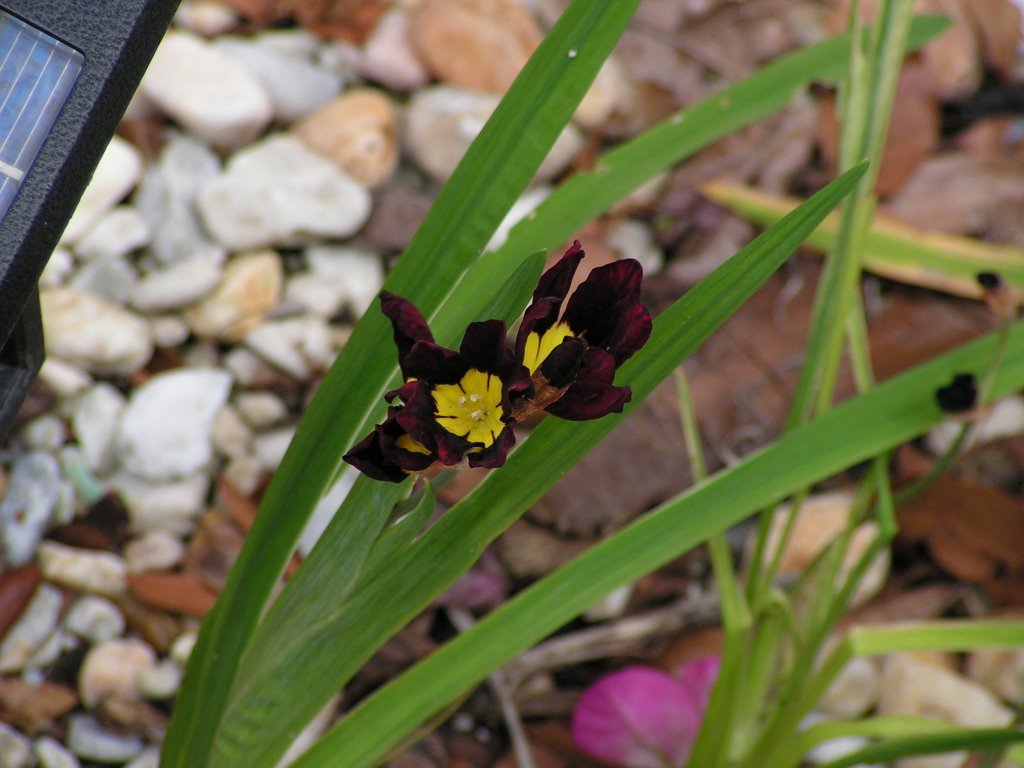
We've had some record-breaking heat (mid 80s) this past week, prompting me to finish running my water line to a spot nearer the garden, making watering a much easier task. The Chinese wisteria and Cherokee Rose (Rosa laevigata) are in bloom together at the back of my property, my Sparaxis has finally come into bloom (a meager first spike, but the flowers are beautiful), as have my Alliums and Ranunculus. My 'Blush Noisette', which I cruelly yanked from its original home back on September and plunked into a hole with little nurturing, has thrived. (The Noisettes, as a group, were developed not far from here in Georgia -- though they are known by the name of the Frenchman who popularized them.)

The spring flowers, sprouting up among the cool-season blooms and the roses, make the garden a particularly exciting place: Every day, something new comes into bloom.

Monday, March 06, 2006

Spring in Central Florida


I've been too busy, in the garden and at the office, to write much about gardening during the last month. Spring is here -- azaleas, sometimes stately and sometimes garish, are in full exaltation. Even the shabbiest house in the area is temporarily vindicated. Citrus is in bloom, with its exotic, almost cloying perfume coming in waves and making you pause in anticipation of something. The blue-eyed grass has sent out its tiny flowers that bob in the air at the ends of sometimes impossibly long stolons. The Cherokee roses in the neighborhood (but not mine) have started blooming in fits, and will continue to do so for more than a month. My ranunculus and aliums have come into bud (see below). Sweetpeas have started to flower alongside the indefatigible pansies.

The roses are taking a break -- I cleaned them up removing the deadwood and untamed canes in my OGRs, and defoliated the hybrid-teas and removed all the small canes. My climbers I leave alone, though this year they've been hit hard with blackspot and are all but bare. The canes on all the roses are already erupting in reddish-bronze new growth and the promise of blooms.

Sunday, February 05, 2006

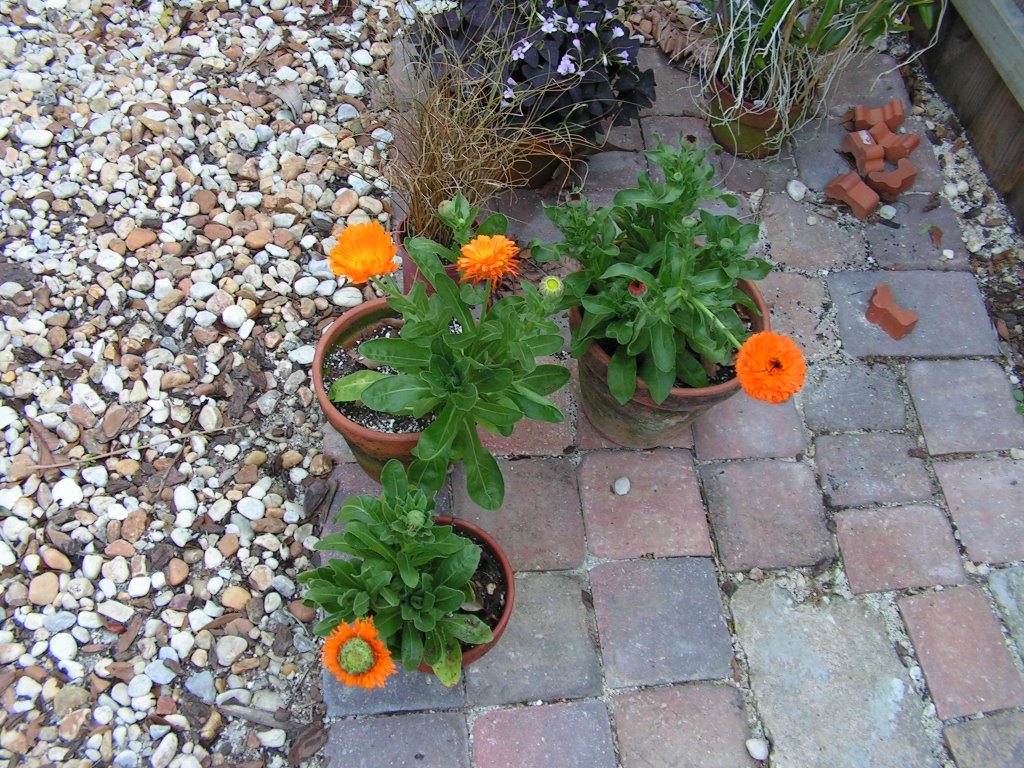
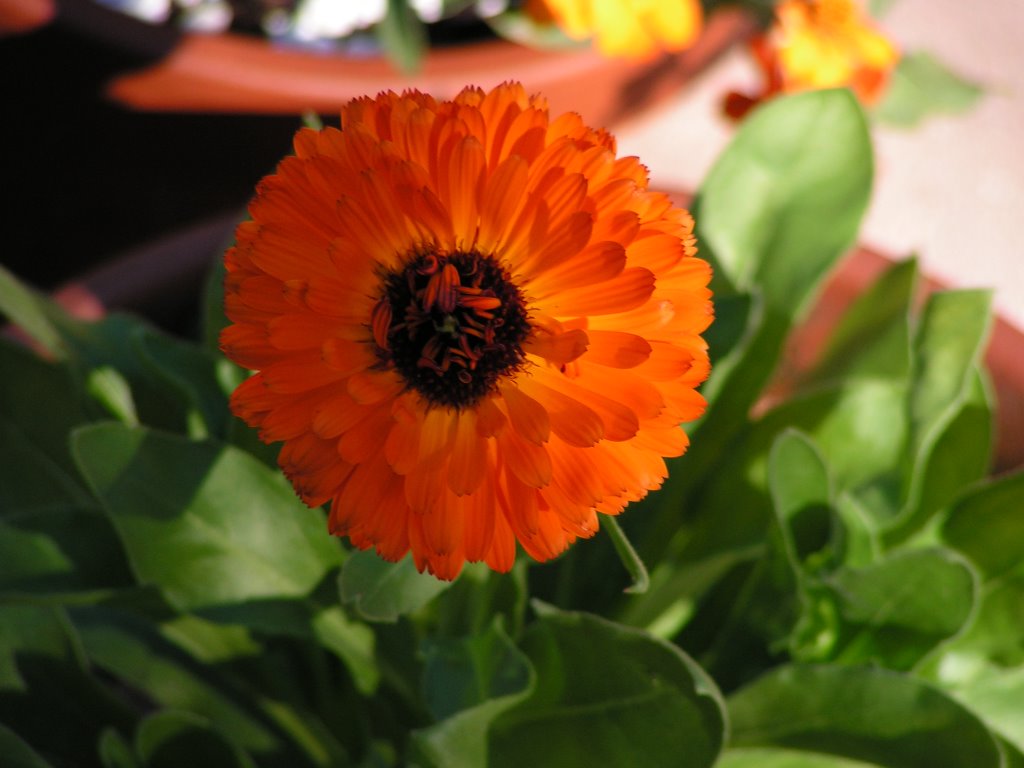
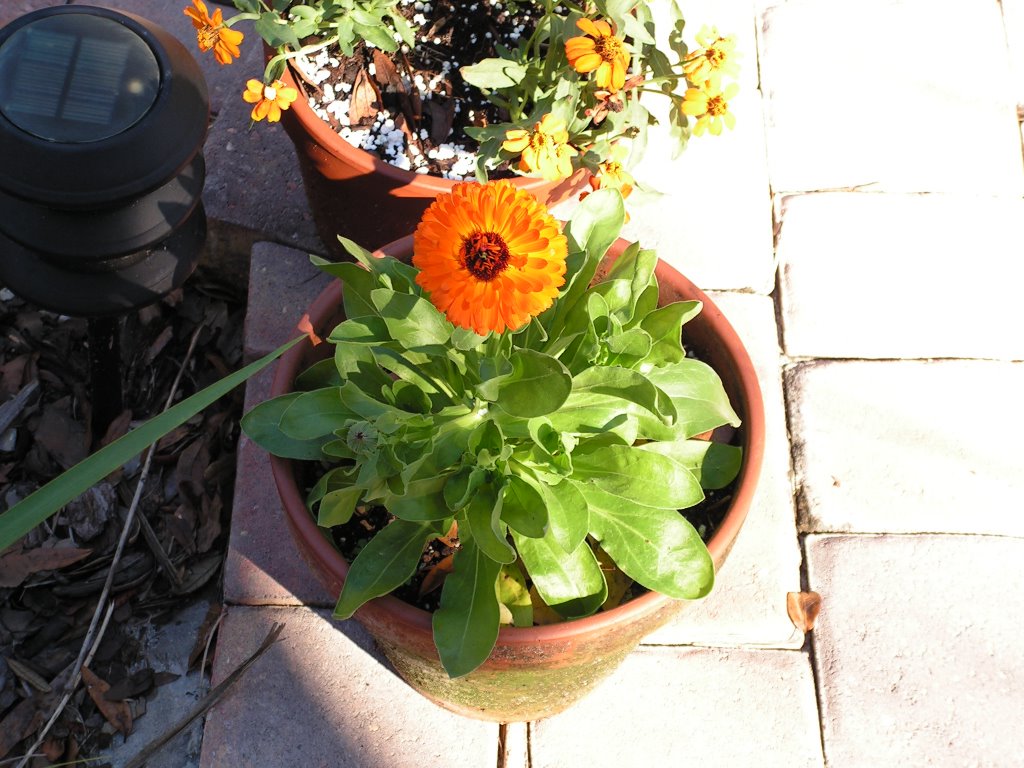
Calendula officinalis, "Pot Marigold, 'Greenheart Orange'"


Some photos of my 'Greenheart Orange' Pot Marigold, which came into bloom a couple of days ago. I don't know if I get the first part of the name, but the bloom is still opening, so perhaps it'll make sense. But I had some seconds to photograph and write about it today.

I planted Calendula seeds after reading about it in A Cutting Garden for Florida. I bought the seeds from Thompson and Morgan. I've had pretty mixed results with them: They germinate readily, but have a tendency to grow very lanky and floppy. Recently, when pricking and transplanting into Jiffy pots, I've taken to transplanting them into deep divets, with only the leaves at the level of the soil, burying most of the stem. I was worried that they would rot, but this seems to have done the trick. Of the three dozen or so of these seeds I have sowed over the past 3 months, only about a half dozen of them survived. From seed to bloom it takes about ten weeks in cool weather.

From what I've read, these do poorly in hot weather, but I figure I'll have three months of blooms from them before the May heat or June rains kill them.

Tuesday, January 10, 2006

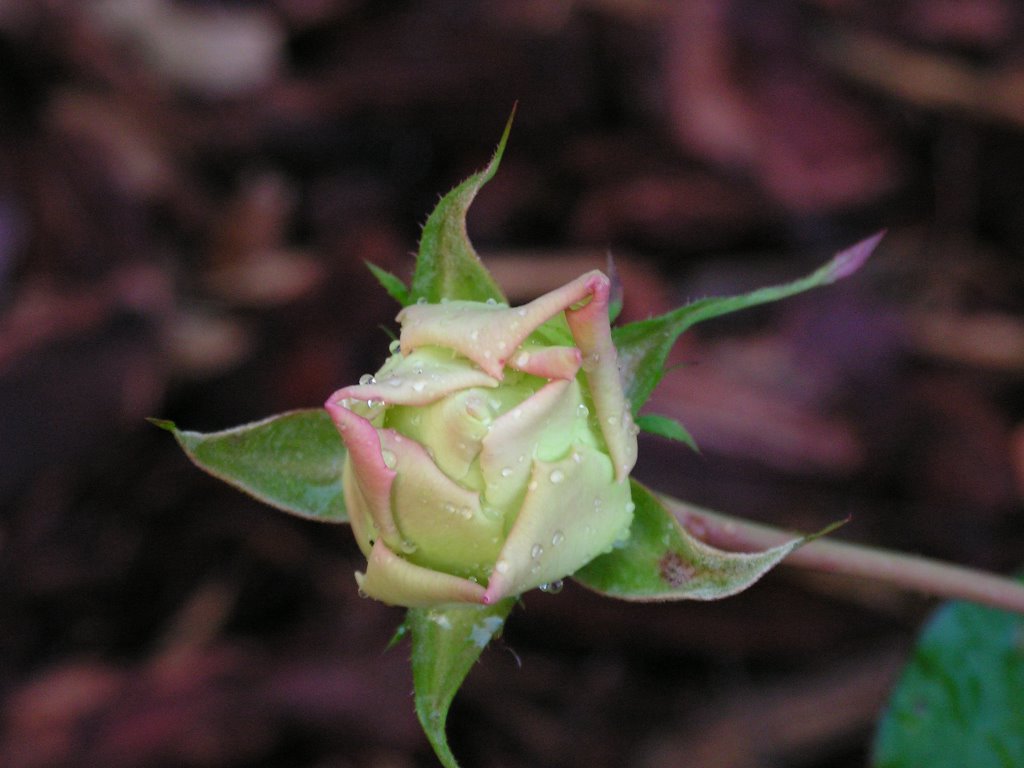
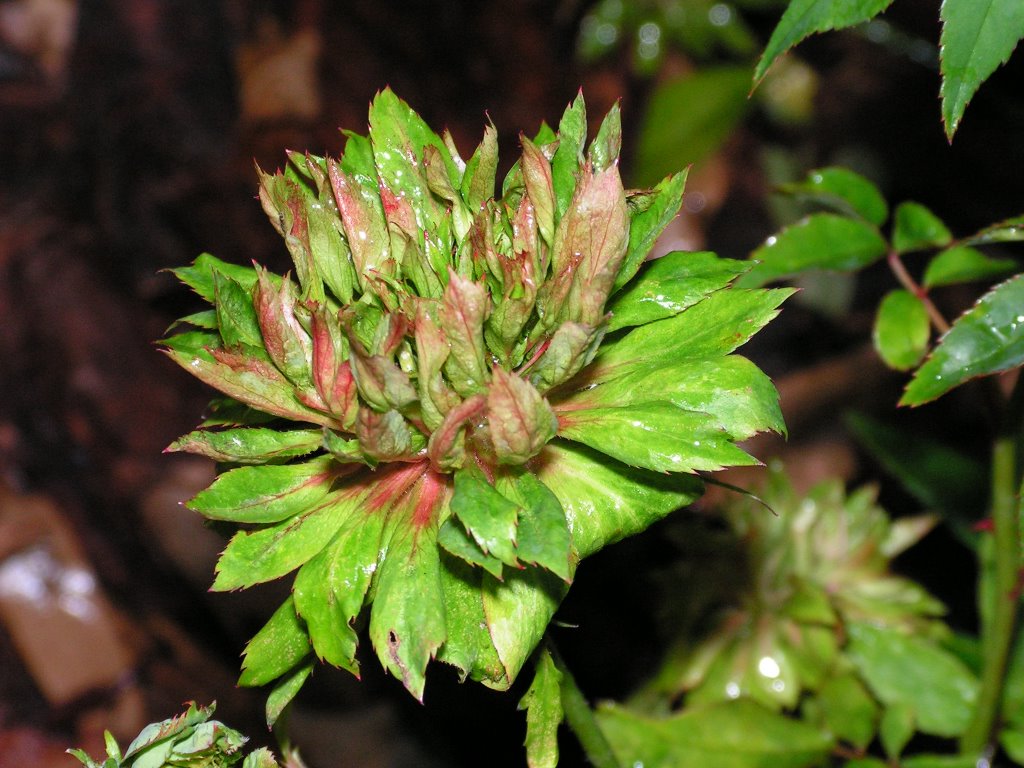
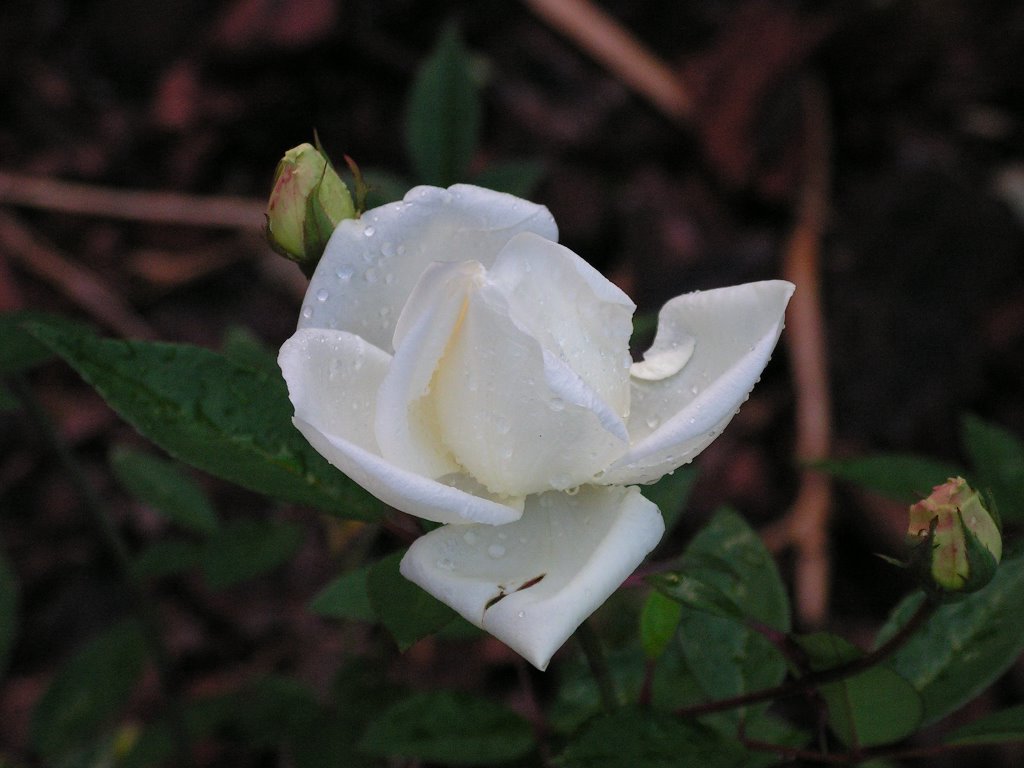
The past week has alternated between cool, crisp and clear days and warm, sunny ones. Lots of new growth in the garden, including my roses. I got a new camera recently, Konica's Dimage -- a remarkably flexible and inexpensive camera. Below: 'Saint Patrick,' 'Ducher,' 'John F. Kennedy," R. chinensis 'Viridiflora' (a.k.a., 'The Green Rose'). I love that 'St. Patrick' is nearly as beautiful fully blown (below) as it is in bud. That's a good thing, since 'St. Patrick' is a remarkably long-lived rose, lasting two weeks on the bush and nearly that long in a vase. 'Viridiflora' is a much underappreciated flowers -- the warmest most books say is "an oddity." I really love green flowers, and this one, with its reddish hints and its strong peppery smell, is very striking. Note that the flower really isn't one -- it's just a freakish conglomeration of sepals.


Sunday, January 01, 2006

EarthKind Roses from Texas A&M

This site at Texas A&M has a comprehensive list of OGRs and some modern shrub roses that are suitable to the climate in North Texas. The photos are useful, but the data is limited. I don't have a copy of Power Point on my home computer, so I haven't had a chance to view their slide show.

Dallas' climate isn't too far removed from Florida's: they get less rain overall, their summers are drier, less humid and much hotter, and their winters significantly cooler than ours.

Saturday, December 31, 2005

New roses...

On Dec. 29, I planted in my garden:
  • 'Celine Forestier,' 1842 (own root, from Seminole Springs). A one-quart plant that I placed near the hinge-post on my gate.
  • 'The Green Rose' (R. chinensis viridiflora)
  • 'La Reine'
On Dec. 31, I planted in my mom's garden:
  • 'Mlle Franziska Kruger,' 1880 (own root, from Seminole Springs). Full sun, middle of the bed.
  • Prosperity, 1919 (own root, from Seminole Springs). On an arch, replacing a failed bougainvillea.

Friday, December 30, 2005

Wishlist from easytogrowbulbs.com

Crocosmia George Davidson Item# 692005
Canna Lily Journey's End Item# 673203
Canna Lily Lucifer Item# 673003
Gladiolus Albus Item# 724925
Gladiolus Hardy Easy to Grow Mix Item# 724625
Gloriosa superba Party Streamers Mix Item# 803606
Dahlia Sunshine Item# 703803
Dahlia Lavender CheerItem# 704103
Crocosmia Red Hot Mix Item# 699910
Lily, Oriental Garden Mix Item# 789906

Wednesday, December 28, 2005

New bed


Turning the corner of my main flower bed, I planted today:
  • Camellia 'Dr. Tinsley'
  • Camellia 'Don Mac'
  • Camellia 'Professor Sargent'
  • Rosa 'Green Rose' (own root)
  • Rosa 'Glamis Castle' (near garden fountain, next to gazebo) (own root, I think)
  • Rosa 'John F. Kennedy' (on 'Fortuniana')
  • About a dozen Antirrhinum majus 'Rocket Mix' (from Parks Seed) that I started from seed mid-September

Abraham Darby

A rule for roses here in Florida: There's an inverse ration between heat and bloom size. Hot weather means frequent flushes but smaller blooms, and cooler weather results in fewer flushes but much larger flowers. In the heat of July and August, those roses in my garden that are still blooming (like my Bermudas and OGRs) have relatively small, short lived flowers that come and go in cycles of two weeks or so. These blooms also tend to be less fragrant. During the cool and dry Florida winters, the flowers are slow to form, but they are much larger, longer lasting and more fragrant.

Here's an example: Abraham Darby, a David Austin (English) rose that does quite well in my garden. A likeable apricot, yellow and pink bloom with a fruity, slightly citrusy fragance that fills the kitchen. The most recent flush took a long time from bud to flower (about a month) due to the fairly cool, December weather we've had. Darby's a wonderful rose with a significant drawback -- with one to four blooms per stem, the bush is just nowhere near strong enough to hold the blooms upright. The stems are pretty short, too, making cutting difficult. Still, if I put them in a narrow-necked vase like in the picture, they are very striking.

I complain about the difficulties of growing flowers in Florida, but where else could I, at the end of December, pick blooms like this (and, while I'm at it, pick a juicy orange)?

Sunday, November 27, 2005

Oxalis Triangularis


Oxalis triangularis, about four weeks from the time I set it out into the pot. The flower is slightly pinky. Very striking.

Miniature Roses

I succumbed to temptation and bought a yellow miniature rose, Millenium Yellow, from Lowes. Given its growth habit, I wanted to put it somewhere where it could hang and be admired from a nearby. I drilled a couple of holes in a nice pot, strung some stiff aluminum wire through the holes, and mounted it on the fence at the gate to our backyard.

Friday, November 25, 2005

Bargain Roses

At the beginning of November, I stopped by Lowes to buy some paving base for a project, and noticed the clerk rolling out a cart of $1.50 roses... stunted, fungus-covered, one dollar and fifty cent roses. All were Jackson & Perkins roses, most of them rooted on Fortuniana. I have long considered converting my annual bed in the backyard to a mixed annual/rose border. I had planned to buy a eight or ten roses in the spring, each at $25 each. Considering the bargain, I didn't really mind that they weren't perhaps my ideal roses.

I bought the six healthiest, five of which I've nursed back to health with the aid of Ferti-Lome systemic anti-fungal spray applied once a week, very weak fertilizer applied every other day, and lots of morning sun. One, a "Peace", died. I transplanted three of them today: "Love Potion," a deep lavender, raspberry-scented Floribunda on Fortuniana; "Gold Medal" (aka AROyqueli), a deep yellow Grandiflora (my first), also on Fortuniana; and an own-root, Portland Damask (OGR) "Rose de Rescht." The first two roses are pretty standard fare, but the latter is a bit more exotic. Here's what Paul Barden has to say:
Being of the Portland group, Rose de Rescht is capable of several flushes of repeat bloom throughout the season. It does not repeat constantly like a Hybrid Tea though, but repeats in distinct cycles. It blooms, pauses briefly, then makes a new burst of growth, and flowers again. It is actually a very nice habit. You have to wait a bit between cycles, and I find that it is just long enough to make me long to see another bloom.
In growth, this shrub is much like a Gallica in form, reaching a height of about 3.5 feet, always remaining a tidy, domed bush, well foliated and neat looking. It requires little pruning, except that apparently it performs best when old wood over 5 years old is periodically removed. It is quite disease resistant, and healthy. It does not tend to sucker like a Gallica though, which is best for most gardeners.

The bloom is not very large compared to some of the roses we know; about 2.5 to 3 inches across. It is a beautiful opening bud, that quickly grows to reflex into a pompon form. The scent is exceptional in quality; pure sweet Damask, but not always the strongest ( for me, anyway)
.
This is the rose that is often recommended to people who are contemplating buying their first Heritage Rose, as it is trouble free, well behaved, and very rewarding. Try it and you will not be disappointed.
Given its relatively petite size (3-4'), I put the Rose de Rescht towards the front of the garden.

"Gold Medal," "Love Potion," and "Rose de Rescht"

"Gold Medal" in the garden. I should have pinched those blooms whil the plant was convalescing, but couldn't bring myself. They're about 4.5" in diameter.

Update 11/30: My 'Rose de Rescht' bloomed today and its slightly spicey aroma perfumes my entire back walk. Very nice.

Wednesday, October 19, 2005

More orchids in bloom.

The cooler, drier weather and the shortening diurnal cycle triggered many of my orchids to bloom.

Left, Cycnodes 'Wine Delight'; and below a
Brsdm. Longlen, 'Orchid Man', just covered in dancing flowers.

Note the beautiful gynostemium in the center of the flowers. Anatomically, it's the combined male-female sexual organs, the stamen and pistil. You can see, perhaps, why Orchidaceae have always been perceived as sexually ambiguous, provocative flowers. (Orchis in Greek is testicle, apparently a similarity to the pseudo-bulb of some species.)

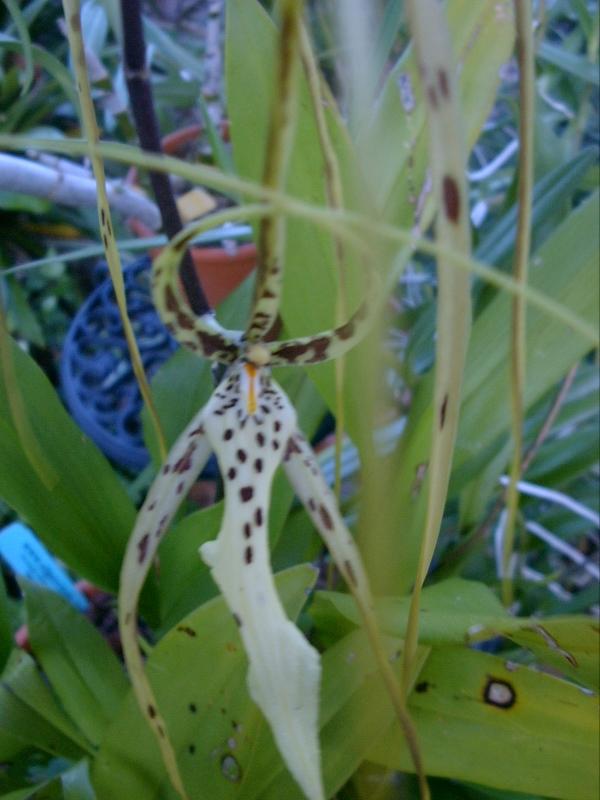
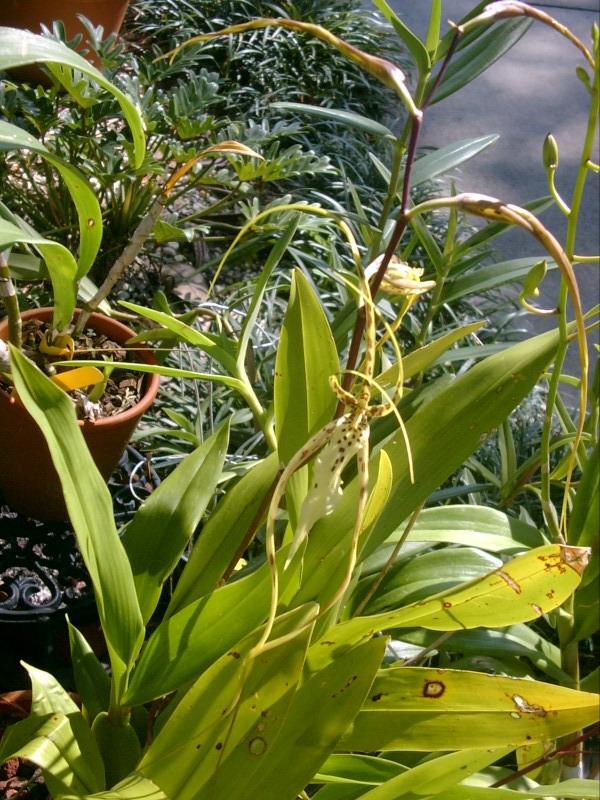
The flower of the Brassidium below, though the hybrid is called 'Orchid Man', looks very feminine to me -- striking a "come-hither" pose... Like other Oncidium-tribe I grow, this one is truly a no-maintenance plant, save for its weekly weak fertilizing.

Sunday, October 16, 2005

Brassidium Longlen 'Orchid Man'


A new orchid blooms today. Like some lithe dancing insect. Brassidium Lonlglen 'Orchid Man.'

Tuesday, October 11, 2005

A few words about Cherokee and Fortuniana

With Central Florida's sandy, hot and nematode ridden soil, most roses are doomed to a few years' lifespan before losing vigor and eventually failing. You can buy a nice rose at the local Home Depot for $10, and that rose will return dozens of blossoms for a modest investment in that short span. Not a bad bloom for your buck.

However, it really takes several years before roses come into their prime: Their canes thicken at the base, they grow and flower more expansively, they require less water. I've only lived in this old Spanish Revival house for a few years, but the roses that have been growing in my garden for two years are remarkable for their vigor and floriferousness. Some roses, like my hybrid teas 'Elegant Beauty' and 'St. Patricks' bloomed only fitfully during their first year. Now that they've adapted and grown a bit, they bloom freely and stand up to the heat and humidity better than initially.

While there are dozens of Old Garden Roses that can survive growing on their own stocks, your money is well spent investing in plants that are grafted onto 'Fortuniana,' an OGR (Old Garden Rose), believed to be a natural cross between two Rosa species, R. banksiae -- the 'Lady
Banks' rose -- and R. laevigata, the 'Cherokee Rose.' (One of the other common names for 'Fortuniana' is 'Double Cherokee.' Notice the resemblance between 'Fortuniana' above and 'Cherokee' below. )

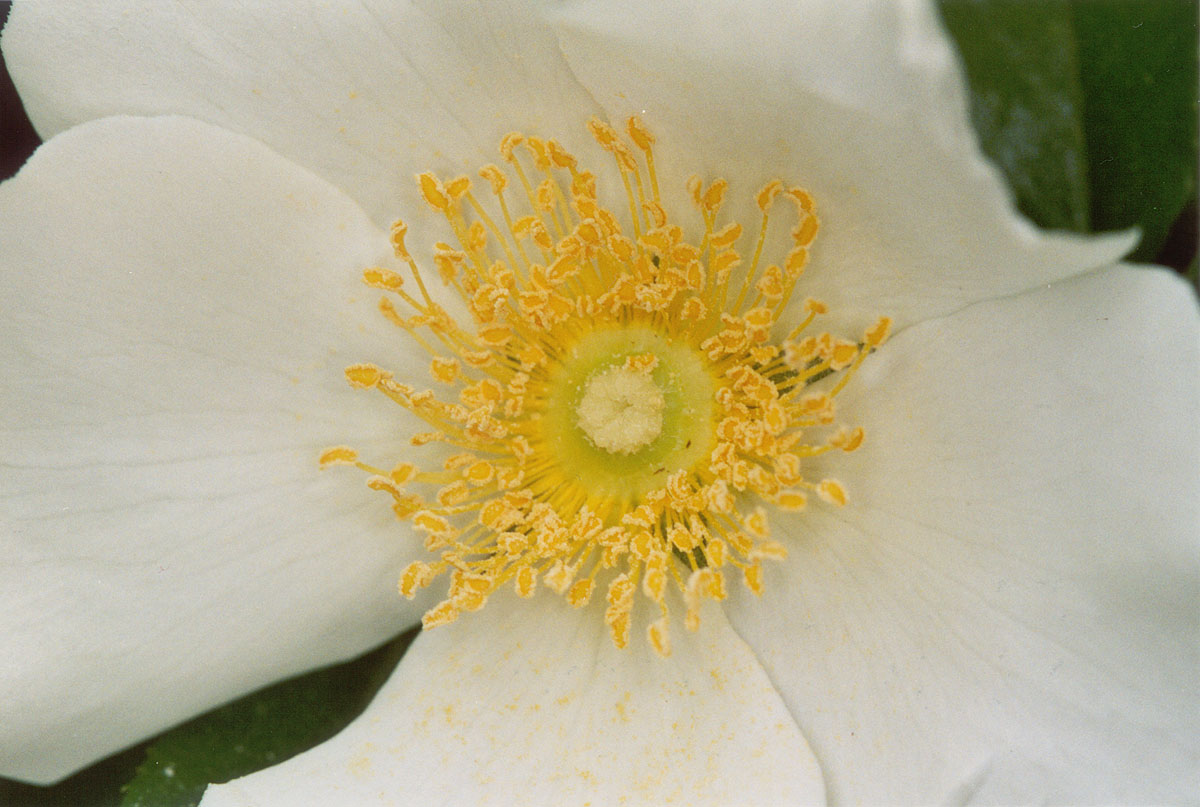
A few quick words about the latter patriarch in 'Fortuniana's' lineage. The Cherokee Rose is the state flower of Georgia (though it is not native there), and grows here in Central Florida on old brick fences around my neighborhood. The beautiful old Mediterranean Revival house to the east has 'Cherokee' growing as a twenty-foot hedge, the tips in the morning wind wave madly at me against the bleached blue sky while I putter about my business. Early in the spring, mid-March, those long and thorny canes are covered with simple but charming white flowers with yellow stamens and anthers (right). It's a likeable rose in its own right -- zero maintenance, and amazingly vital. I started several cuttings of it last year by just sticking them in sand in the spring, and they've quickly mounted my gazebo's roof, where I imagine the temperatures reach well over 130 degrees in the heat of summer. The canes are already 15 feet long -- in one year.

Anyway, back to 'Fortuniana.' Robert Fortune introduced the rose in 1850 (hence 'Fortuniana'), and wrote of the rose:
The white climbing rose referred to is cultivated in gardens about Ningpo and Shanghai, and is held in high esteem by the Chinese; indeed it is one of the best white kinds which I have met with in China. It is frequently seen of a large size covering trellis-work formed into alcoves or built over garden walks. For this purpose it is well suited, as it is a luxuriant grower, and it blooms profusely and early. This Rose was amongst my first importations to the Horticultural Society and is no doubt well worth cultivation in English gardens. It may not please in every respect Rose-fanciers, but it is very beautiful nevertheless, and it has some advantages peculiar to itself. (quoting from the Rosarian Malcolm Manners, who is quoting from Willmott's monograph "The Genus Rosa.")
The lineage of 'Fortuniana' is not uncontested. Quoting from Climbing Roses of the World by Charles Quest-Ritson:
'Fortuneana' syn. 'Fortuniana' [=Rosa x fortuniana]. Crepin considered 'Fortuneana' a hybrid between R. Laevigata and R. banksiae, but this parentage is questionable because no one has ever succeeded in crossing R. laevigata with R. banksiae. Its flowers are larger than other Banksian roses, about 6 cm across, although 'Fortuneana' flowers at the same time as they do, very early in the season. It was named in honor of Robert Fortune (1812-1880) by John Lindley in 1850. 'Fortuneana' is an important rootstock in Western Australia where heat, drought, and poor soil are a challenge to cultivation.
Fortune's rose never caught on in England, as he had hoped. It turns out the rose has poor cold tolerance, and never grew well in a damp, cool continental climate. It was, however, popular around the Mediterranean basin at the end of the nineteenth century.

However, 'Fortuniana' is perfect for Florida: It is very heat and drought tolerant, and develops remarkable root growth. I've dug out 'Fortuniana' with six-foot roots after only a year's growth. (That's prodigious growth by rose standards.) The roots also trend out and near the surface, rather than down, which allows greater absorption of water and soluble minerals in Florida's sandy soil. Finally, the rose is apparently immune to the nematodes that infect much of the soil here. (Though, frankly, I've looked for the telltale signs of nematodes on plants, and never found any where I live, though I'm not botanist.)

All these adaptations mean that roses grafted onto 'Fortuniana' will grow more quickly and larger, be less susceptible to drought and disease, and live for much longer, than they would were they own-root roses. Even OGRs that grow well here in Florida grow better on 'Fortuniana' stock. (That said, I grow a half-dozen, own-root roses.) The only drawback I've found is that 'Fortuniana' is such a vigorous rose that you end up with a lot of suckers (offgrowth from the stock). They're easy to identify (three leaves, different color) and pinch off, though.

Two other facts about 'Fortuniana': Many people wonder why they graft roses onto such long 'Fortuniana' stocks. Usually the rootstock is about a foot high, much much higher than 'Dr. Huey' up North. (You can always indentify 'Fortuniana'-grafted roses by their rootstock length.) I've heard various explanations, including "just to make them look unique," but I'm pretty certain the reason for this practice is to allow for heavy mulching, which is absolutely necessary in rose culture here. (I try to keep a minimum of four inches of pine bark mulch around my roses, and several inches deeper of old, well-composted mulch and biological debris like leaves.) As I've pointed out, 'Fortuniana' is a tough and disease-resistant plant, so it stands up to the rot problems (which are ultimately fungal) that would plague a more delicate rose. The 'Fortuniana's' stock length keeps the grafted rose out of the mulch. The other fact about 'Fortuniana': Because its roots tend to grow outward, rather than downward, I've heard a lot about the importance of staking roses. I think that's a load of bunk. Some of my roses are well-staked, others not at all. We had three hurricanes pass through here last year, and I had absolutely no damage to my roses, including a 'Prosperity' that was ten feet high and was blow n and buffeted for ten hours straight during Frances. Based on that experience, I can say without equivocationg that 'Fortuniana' does a fine job hunkering down, and needs to be staked no more nor less than another rose.

Unlike those $10 roses from Home Depot, a rose grafted onto 'Fortuniana' will set you back at least $20. One reason for this premium is that 'Fortuniana' is relatively difficult to propagate, so it costs more than own-root or roses grafted on other stocks. (You'll often find roses in Florida rooted on 'Dr. Huey' for much less than those rooted on 'Fortuniana.' Don't bother with Huey here, though -- it might buy you a year over own-root, but it's not worth the cost.)

I know of two growers that use 'Fortuniana' in the area: Merrygro farms in Eustis and Nelsons' Florida Rose. At Merrygro, the prices are low but you have to mail order them or find them at Home Depot or a local nursery. I've bought nearly all my roses from Nelsons', at plant fairs or through their distributors. They've recently opened their doors to the public, though I haven't visited. Merrygro's prices are a little lower and their selection a bit wider, but Nelsons' is a family-run business that has led the industry in introducing Florida roses. In the end, it comes down to who has the rose I want to add to my garden.

Speaking of buying from nurseries: I can't recommend highly enough developing a good relationship with your local nursery. I shop at A Garden Fair or at the DeBary Nursery. Both of them excellent, full-service nurseries with a wide and appropriate selection of plants, roses included. I've learned much of what I know about Florida gradening from chatting with the owners of these businesses, and other nurserymen at plant shows.