Friday, May 30, 2008

Grazing in the garden...

From a post I did over at the Florida Forum on GardenWeb:

Lately I've been grazing:


left to right, top to bottom.

okra: My gardening buddy Nicki gave me a plant. I usually wait until at least July, when nothing else grows, to add okra.

blueberries: 'Sharpblue' blueberries are ripening. I've eaten a bunch of Emeralds this season (they ripened at the end of April). So far, emerald has been the best blueberry. This is the second year they've been in the ground -- I'm expecting lots more berries for next year. I won't bother with rabbit eyes any longer -- Southern Highbush are the best for Central Florida.

herbs: Basil, thyme, mint, thyme, parsley, savory. This time of year, mostly shade, in pots, and lots of water.


'Sea Foam' chard. The only chard i consider growing. Way more heat tolerant than any other; and slugs really can't deal with the savoy-leaf.

pomegranate! -- Bill, another gardening friend, gave me a seedling sometime last year. I don't think this one's edible, but i have a Grenada cultivar that should bear sometime next year.

eggplant 'Little Fingers" from Tomato Growers Supply. Second year in the ground (buried pot, actually), still producing heavily.

'Jet Setter' tomato. Blasted thing's only set one fruit. Not much of a setter...


Michael's crazy squash. I found this volunteer last year in my garden, in August. Just popped up. No idea where it's from. produced ridiculous (20+ from one plant) winter squashes. Sneers at diseases. apparently invincible. Ill behaved. I love it.

Malabar Spinach I have a bunch of these seedlings that I plan to grow them up ropes.

Sorrel. It's been going nonstop all winter, and the hot weather doesn't bother it in the least.

Goose Creek Tomato. Really vigorous tomato. Tasty, too. I'm also growing 'Tiffany' (tgs), Sungold (an excellent cherry), 'Matt's Wild Cherry,' 'Pomegranate.' I have several plants of some of those varietals.


Tabasco Pepper. I've grown this one plant for years in a pot. I dry most of the peppers, but there are always a few handfulls for fresh use, too. Incredibly hot. It's starting to fail this year -- I'll probably get a new one.

Mississippi Silver Cowpea. From Southern Exposure. Just starting to yield. Grows in sand, no water needed. A handful of plants will provide you with all the delish cowpeas you care to eat... and I eat them with wild abandon in August and September, when nothing else really seems to grow in the garden.

Collards. I've been pickin' at these all winter. Still going strong. Not at all bitter. My wife makes delish green "pies" from these -- a calzone dough, wrapped around a mix of these greens, feta, and olive oil.

Goose Creek Tomato: What a vigorous, wonderful, pest-free tomato bush!


Lettuce crop: 'Appollo' arugula and 'Summer Glory' lettuces (Parks). The shade cloth helps a lot. The arugula deals just fine with the heat. This is the first time i've tried salad crops this late into the summer. Growing in straight-up mushroom compost. Full sun plus shade cloth and lots of water. So far, so good.

Basils: I grow six or seven kinds of basil -- genoa, greek columnar (thanks, tony_k!), african, thai, purple...

Another crazy squash plant

Lagos Spinach: An edible amaranth from echo. does very well in the heat and humidity. Nutty.


Sweet Potatoes. These are volunteers from last year. A mix of Japanese white and traditional orange. My plan is to let the crazy squash and sweet potatoes fight it out for street cred in the sunniest, driest part of the garden.

Tromboncino squash. Just getting started in my garden, but Bill had a bounty of them in his garden already this year. He complains about the taste, but the ones i stole were incredibly tasty -- only squash i've ever eaten that tastes good raw. Dense, sweet, crisp. a single squash has to weight in the 2-3 pound range. Great cooked, too.

Italian Peppers. Another plant from Bill. May and June are the best months for peppers in my experience. Come June, i'll have so many I can't eat them all. I have eight or nine peppers in my garden.

Cassava. Looks just like pot, no? My gardening buddy Felix gave me cuttings. I got six plants from the one branch he gave me, and I've added some variegated ones i found on sale as a foliage plant. First time I've grown them in my garden. I love cassava.

In addition to these vegetables, I have Malanga, Okinawan Spinach, Cachucha peppers; and of course figs, citrus, bananas, and grapes coming along towards harvest at the end of summer.

Summer flowers for Florida

I had a couple of bare patches in the flower beds, so yesterday morning before work I planted...
  • Four pots purple Pseuderanthemum laxiflorum (since there were multiple plants in each pot, I divided the pots into six plants). A new-to-me plant from a grower called "Florennials" -- claims to be perennial in Florida.
  • One pot "Victoria Blue" Salvia farinacea (divided into two plants)
  • Two pots of a pinkish Gaura, a tried-and-true perennial in my garden.
  • One pot of blue and white AngelMist Angelonia
  • Three small pots of blue Scaevola hybrid
  • Some Purple Queen (Tradescantia pallida 'Purple Heart'), transplanted from my garden
  • A bunch of Black and Blue Salvia (Salvia guaranitica 'Black and Blue'), transplanted from my garden
  • I transplanted some yellow Gazanias to coordinate the beds.

The photographs were taken after I got back from work, when the plants were pretty droopy. Taking pictures of beds is problematic, the moreso since I lack right now any background foliage from this perspective.


4-H project...

My son and I worked on his first 4-H project last weekend -- a pair of citrus trees (Murcot). The rules of the game state that we have to grow the trees in the approved black, two-gallon containers. Unable to resist the urge to tinker, I came up with these cache-pots, four-gallon food service containers that used to hold hard-boiled eggs (who knew?). The cache-pots should reflect some of the heat, an important consideration since roots typically stop growing when the temperature rises above ninety degrees. I used "Al's mix" (from GardenWeb) -- two parts pine fines, one part perlite, one part peat, lime, micronutrients, and slow-release fertilizer. There are two wicks in this set-up: One wick connects the medium in the black containers to a small reservoir of water in the white bucket/cache-pot (self-watering). The other wick runs from the black pots and out the white bucket (through a small hole I drilled two inches from the bottom of the white buckets; the hole serves as a drain for the white buckets). This wick makes sure that the medium never gets too wet. So, there are two "opposed" wicks: one brings moisture into the medium, the other wicks excess moisture away. (If you are interested in container growing and the use of wicks, Al's post is the place to start.)
Posted by Picasa

Monday, May 26, 2008

Eating sweet potato leaves...

Holy cow, this sounds like a tasty way to forage the leaves of sweet potatoes.

Chao Fan Su Ye.
One of the signature dishes of Taiwan!

I don't usually cook Asian food, but I can imagine this dish with garlic and olive oil. After last year's success, I've expanded my sweet potato bed.

And another tasty sounding recipe, African Stew with Sweet Potato Leaves. I'm unsure what makes it African, since the sweet potato is indigenous to South America, and I associate neither peas nor potatoes with African cuisine. Still, the recipe as an idea is appealing.

Memorial Day Blooms


The banana is a twenty-foot "dwarf" Cavendish (mislabeled at the DeLand Plant Faire). This bloom is only the second off this Vanda, though once they start to bloom, they tend to bloom pretty continuously during the hot season.

Saturday, May 24, 2008

Rain!

It rained two inches in about twenty minutes yesterday. I have a happy garden and one-hundred gallons of rain water in barrels.

Cool site...

Homegrown Evolution:
Erik Knutzen and Kelly Coyne write Homegrown Evolution, a blog that explores a fast-growing new movement: urbanites are becoming gardeners and farmers. Kelly and Erik are the authors of The Urban Homestead coming out in June of 2008 from Process Media. They have researched and experimented with small scale urban agriculture since moving to their tiny bungalow in Los Angeles ten years ago. Since 2006, in this practical, hands-on blog, we have shared our successes and failures and include step-by-step directions and links to resources that will get you started urban homesteading immediately, whether you live in an apartment or a house. Contact us at survivela [insert “at” symbol] sbcglobal.net.

Friday, May 23, 2008

Some seeds I'm considering from Evergreen

  • Coriander, Slow Bolt Winner
  • Korean Radish, Hybrid Sweet
  • Chinese Radish, Red Skin
  • Daikon Radish, Miyashige Green Neck
  • Korean Squash, Hybrid Green BT
  • Edible Amaranth, Tender Leaf
  • Komatsuna, Hybrid Kojisan
  • Japanese Squash, Hybrid Tetsukabuto

Thursday, May 22, 2008

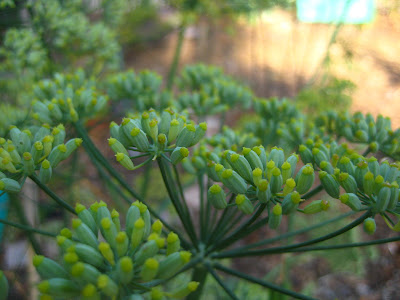
Fennel seeds from Florence fennel

I planted this fennel last November or so, in what was then my butterfly garden. It made it through the frosts and inundations and droughts and now has been blooming for a couple of months. I pick the seed caps as they dry, separate out the seeds, let them dry, and add them to my spice jar. My three or four little plants have produced easily two cups of seeds this season.

Monday, May 19, 2008

Weather Discussion : Weather Underground

Yep, basically six weeks without a drop of rain. It's been getting into the low 90s every day. Incredibly dry.
Weather Discussion : Weather Underground: "The last major rain event occurred on Apr 6th when much of east central Florida received between 1.50-2.00' of rain. Since then... all of the major reporting stations (kdab/kmco/kmlb/kvrb) have received less than a quarter inch of rain total."

Sunday, May 18, 2008

The Greywater Guerrillas

The Greywater Guerrillas: "Recycling Water the Greywater Guerrillas' Way

Greywater is water that flows down sink, shower, and washing machine drains--but not the toilet. Greywater may contain traces of dirt, food, grease, hair, and household cleaning products. While greywater may look “dirty,” it is a safe and even beneficial source of irrigation water. If released into rivers, lakes, or estuaries, the nutrients in greywater (mainly phosphate from detergent) become pollutants, but to garden plants, they are valuable fertilizer. Aside from the obvious benefits of saving water (and money on your water bill), reusing your greywater keeps it out of the sewer or septic system, thereby reducing the chance that it will pollute local water bodies Reusing greywater for irrigation reconnects urban residents and our backyard gardens to the natural water cycle."
These guys are the real thing...

Saturday, May 17, 2008

Drip system installed...

I spent the morning finishing up the installation of my micro-sprinkler system. I like the simplicity of the system, and it's very effective at watering and minimizing wasted water, though it does require a bit of meticulousness and patience to install (compared, say, to a wand sprinkler on the end of a hose). I have two zones, connected to timers.

It should, therefore, pour today. I'm sure there's some law about it.

Friday, May 16, 2008

Stone Pylon Garden

I liked this list of summer temperate/tropical veg, from a hobby gardener in South Florida. The site as a whole is pretty interesting, though it looks to be neglected.

Tuesday, May 13, 2008

Nesbit Grapes

Nesbit, Vitis rotundifolia. From a large vine I transplanted this summer.
Posted by Picasa

Alstroemeria rhizomes

I got a pot of alstroemeria back in 2006, and they've been blooming happily every year in a big fiberglass urn, from November through April. This year I decided that I needed to repot them (and I needed that urn). I've never seen the tubers before -- they're fleshy and come in crowns, like dahlias. They seemed evenly distributed throughout the pot, and didn't seem to be oriented in any particular direction, so I just tossed them back into some nursery pots full of potting mix. If they don't come back next year, I'll just buy some new tubers.
Posted by Picasa

Monday, May 12, 2008

A quick update in mosaics...

Posted by Picasa

New compost barrel


Our compost situation was, well, squirming. Seething might be a better word. Wriggling works.

I have a very high threshold for such things, and even I quaked, when it came to be MY TURN to take the accumulated scraps to... the swarm. Caught some nice bluegill, though, using the soldier fly maggots as bait.

So for Mothers Day (in addition to buying a new super-efficient fridge to replace our 1995 model), I built my wife (and myself, of course)... a drum composter!

Fifteen bucks for the barrel. Twelve for the hardware and 4x4x8's. I used a salvaged steel rod from our old awning (very very strong), and the top from an old trashcan. Four conduit brackets hold the barrel onto the posts.

I still need to add a doorknob to make turning easier, and rig up some way of keeping the door closed when turning. Oh, and i need to finish painting it and clean it up some. But otherwise, I'm pretty satisfied.

It's at exactly the right height to empty into my wheelbarrow, and I have the option to add a second barrel, above the existing one, if we decide we need it. We could start compost in the top, transfer to the bottom when that load is finished.

The hardest things were cutting the plastic neatly (it's seriously stiff plastic -- I broke a jigsaw blade and wore out two power drill batteries cutting the holes) and digging the four foot holes for the posts (dry dry dry sand and no posthole digger). Otherwise, an afternoon project. It turns the compost beautifully, and drains well, which should help the soldier fly maggot problem. Too hot and dry for them to flourish.

Cachucha peppers

Finally poked up to the surface this morning. A week or so from planting to germination. Nice warm window.

Monday, May 05, 2008

Seed update

From Isaac's observation journal...

Column 2, 3 (Summer Glory) -- lots of sprouts, some large, some small.
Column 4 (Epazote)-- no germination yet
Column 5 (Amaranth) -- two cells sprouted
Column 6 (Lagos Spinach) -- spotty germination
Column 7 (Basil) -- great germination
Column 8, 9 (Queensland Lettuce) -- fair germination
Column 10 (Cachucha) -- no germination yet

Friday, May 02, 2008

Augusta Duelberg


A Salvia farinacea from PDN. I can already tell this salvia is going to be one of my favorite. Tough as nails. Already blooming its head off.

Gardenias!


Queen of the garden, this time of year. I planted these in 2004. Miami Supreme rootstock. If I had to do it again, I'd plant them somewhere out of the way. The blossoms must be regularly deadheaded, and, let's face it, the whole yard is loaded with this tropical sweet smell. It's fine in small doses, but, really, overwhelming sometimes when you have several hundred blossoms. (The pictured plant is the smaller of two bushes I have right out my back door.)
Posted by Picasa

Seeds for summer harvest...

Parks dome, rows:
10 Cachucha pepper (thanks, Felix!)
8, 9 Queensland lettuce
7 Basil
6 Lagos spinach
5 Amaranth
4 epazote
3,2 sumer glory lettuce blend
(IAD)

Sunday, April 27, 2008

Jefferson on new plants in the garden...

"The greatest service which can be rendered any country is to add an useful plant to its culture especially a bread grain next in value to bread is oil."
(SERVICES OF JEFFERSON i 176 FORD ED vii 477 1800)

Raising Cane


From my new-found gardening buddy, Felix, I got a five-foot length of freshly cut sugarcane lst Saturday. I dutifully stuck it in a pot of wet compost in the shade. I checked today for fungus and rot, and was amazed to find that the canes had already put out impressive roots. I promptly transferred them to the garden. I've never grown sugarcane, and I don't really have plans for it (what DOES one do with sugarcane, other than chew on it?), but I have space in the summer garden, and failing anything else, I can use the canes as green manure.

PlantFiles: Detailed information on Spotted Dead Nettle Lamium maculatum 'Anne Greenaway'


PlantFiles: Detailed information on Spotted Dead Nettle Lamium maculatum 'Anne Greenaway': "PlantFiles: Spotted Dead Nettle, Lamium maculatum 'Anne Greenaway'"

I got this at a GW plant swap recently. Very pretty, I think, for the shade garden. It's zone-nine hardy, or so my friend says.

Thursday, April 24, 2008

Lunar Light

I live in downtown DeLand, on a busy street with streetlights, it seems, every few feet (two on my small property zone alone). I've never understood why we have so many lights, generally speaking: Walking at night along a dark beach or a quiet road, I'm always struck by how little artificial light is really necessary to navigate and feel safe, especially when it's clear. My son is into stargazing, and a month or so ago we spent a new-moon night at Woodruff Preserve stargazing with the local high school astronomy teacher. It was as dark as one could imagine, but we had no navigating the alligator-infested, boggy area.

I have also noticed how street lamps, while illuminating their narrow radius, cast deep shadows at the periphery. It seems to me that outdoor lighting, which makes our eyes so less sensitive to ambient light at night, makes areas more dangerous: The perfect place to hide for a thug would be the wells of darkness beside houses and overgrown lots, taking advantage of our purblindness.

Give me full darkness any night.

Anyway, this entry's not technically on gardening, but it's Earth Day, and I often dwell here on the intertwined issues of sustainability, localism, and the need to appreciate the beauty of the world around us. Click through to read about a civil engineering idea that would change outdoor lighting for the better: "What if streetlights could respond to ambient moonlight, dimming and brightening each month as the moon cycles through its phases?...." But what was most striking was this (unsubstantiated but unsurprising) assertion:
Lunar Light: Perhaps the most fascinating fact that the collective’s research revealed, however, is a little-known detail about the history of electricity: in the 1930s, with the spread of electrification and the consolidation of utilities, streetlights became a convenient way to off-load excess energy from the grid at night, when power demands dropped significantly. This intentionally inefficient system determined the norm for nighttime outdoor lighting levels, a standard that has not been revised since, even though the need for off-loading ended in the 1970s. What we now assume is a safety measure is in fact the forgotten remnant of an obsolete energy practice. Next Gen juror Fred Dust, head of IDEO’s Smart Space design practice, says the jury found this part of the proposal both shocking and compelling. “It’s such an archaic concept that it seems like science fiction,” he says.

Questioning current lighting standards and asking what level of illumination is actually necessary brings some sur­prising answers. Willis explains that the human eye, with its com­-ple­mentary systems of rods and cones, evolved to adapt to both full-sun days and moonless nights. “We can see an incredibly broad range of intensities,” he says. “The difference between sunlight and starlight is something like a hundred thousand orders of magnitude.” Bright moonlight is in"

Tuesday, April 22, 2008

Sandhill milkweed (Asclepias humistrata)


Asclepias humistrata, the Sandhill Milkweed. Growing in full sun, in sugar sand, here in Central Florida. I see it pretty regularly while fishing out at Lake Woodruff. Beautiful and tough as nails.
Posted by Picasa

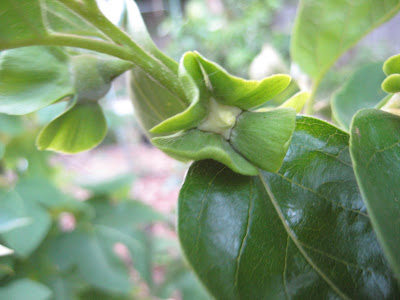
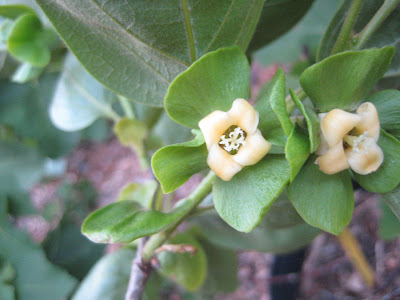
Persimmon Buds and Blossoms

Very subtle, the flower of a persimmon. They point down.


My tree grows in a container. It's about five feet tall, so probably will drop any fruit that manages to set. But I can hope, right?

Blueberries in Florida


On impulse, a friend and I stopped by a u-pick blueberry farm outside Ocklawaha. Five bucks a pound for some delicious berries. It took, maybe, five minutes to pick three pounds. My wife made an absolutely amazing pie.
It's hard not to love Florida in April.

Onions!


I got onion sets in December -- seventy-five onions for a couple bucks.
The onions are sweet (like red onions from the store) but with just a bit of heat on the finish. These are the first I've harvested. Very tasty.

Sunday, April 20, 2008

The Green Issue - Climate Change - Environment - Energy Efficiency - Consumption - New York Times

The Green Issue - Climate Change - Environment - Energy Efficiency - Consumption - New York Times: "But there are sweeter reasons to plant that garden, to bother. At least in this one corner of your yard and life, you will have begun to heal the split between what you think and what you do, to commingle your identities as consumer and producer and citizen. Chances are, your garden will re-engage you with your neighbors, for you will have produce to give away and the need to borrow their tools. You will have reduced the power of the cheap-energy mind by personally overcoming its most debilitating weakness: its helplessness and the fact that it can’t do much of anything that doesn’t involve division or subtraction. The garden’s season-long transit from seed to ripe fruit — will you get a load of that zucchini?! — suggests that the operations of addition and multiplication still obtain, that the abundance of nature is not exhausted. The single greatest lesson the garden teaches is that our relationship to the planet need not be zero-sum, and that as long as the sun still shines and people still can plan and plant, think and do, we can, if we bother to try, find ways to provide for ourselves without diminishing the world."

Saturday, April 12, 2008

Thursday, April 10, 2008

Something in the way of vegetables & fruit...

Chard ('Sea Foam' from Pinetree -- an excellent cultivar), carrots, sorrel, tomatoes & coriander. In a bed that I designed in circles.


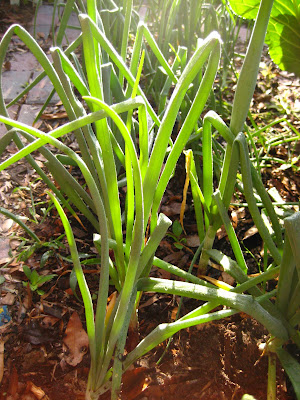
Granex onions finally starting to bulb up. First time I've grown onions: Found a huge bunch of starts for sale in a hidden corner at Lowe's this winter. I've been thinning them and eating the young ones as scallions. Like most short day onions, these are sweet and therefore keep poorly, so I plan on leaving them in the ground as long as possible, pulling them as I need them. In a bed fmade from leaf mold.


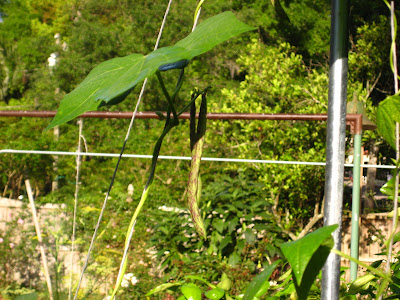
My Rattlesnake Beans have kicked into high production. Last year, I didn't even plant these May, and they continued to produce well all summer, though the late summer beans were really only good as cannelinis (white beans). Very tasty, in any case -- a lot of rich, soya-like umami to them. Stay tender even when large, except in August and September. Grown up wires to an electrical conduit. I have a tomato growing up the conduit.


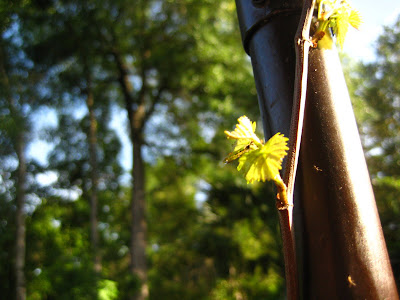
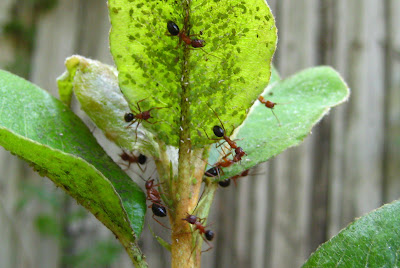
I was relieved to see this Nesbitt grape finally starting to leaf out. I moved it this past winter. My god, what a root ball! I had read that they are difficult to transplant, but it was harder than I'd expected. I root pruned it severely and cut the vine back dramatically, so I was a bit concerned that it hadn't yet broken dormancy. It's growing on my trellis, and these leaves are almost at the tip, which means that the vine survived well. It, too, has a bit of an aphid problem.


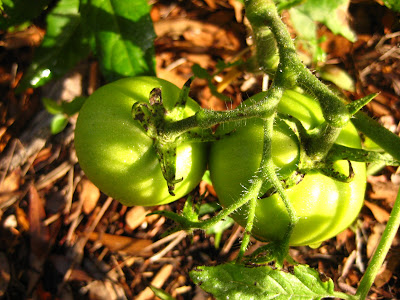
I'm vexed. I have no idea what tomato this is, but I planted the seeds back in January.

Aphids on my fruit trees...

A bit of an aphid invasion of my pear and apple trees. The trees are tough, and the aphids don't last long around here. I gave them a good spray with a mix of neem and peppermint soap. The smell alone should chase them away. Ladybugs, where are you???

On my pear tree:


A quick garden update in pictures


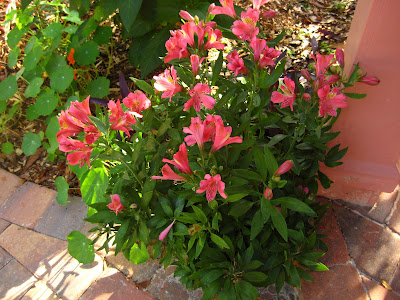
anyone else grow alstoemeria? in pots, it's very perennial for me, coming back better every year. i put it in full shade, partial cover from the rain (under the eaves of my gazebo). it dies back completely every hot season, but bounces right back and blooms through winter, tho it really doesn't get going until the first batch of hot weather.

Monday, April 07, 2008

Common or Asiatic Dayflower


Common or Asiatic Dayflower: "Common or Asiatic Dayflower: Commelina communis"

I hate this weed more than any other in my garden.