Sunday, April 21, 2013

Some quick shots from the excellent you-pick called Green Acres in Yalaha, just minutes from the excellent bakery... 

These trees are just two years old!
Kerry, the owner of Green Acres, tells me that they picked eighty-thousand pounds of blueberries last year. I've never seen such healthy plants!


My Chioggia beets meet my pressure cooker...

My wife's amazing blueberry pie...

Saturday, April 06, 2013

Chioggia beets


I have a long row of these. I've grown all sorts of beets, but these are the best, especially as their greens are perfect for cooking.

Tuesday, March 26, 2013

Sugar snap peas...

From the comments... something I wrote responding to someone who wanted to know more about sugar snap peas. They're easy, and as you can trellis them, they make a great "between the row" crop in small spaces like mine. It's hard to see in the pictures below, but I have four crops growing in what is essentially a single three-foot row: Broccoli right next to a trellis full of peas, which is itself right next to a row of hybrid, multi-color carrots, and then, mixed alongside the carrots, a few dozen parsnips. So long as you have a lot of compost and a lot of water in play, you can plant this densely. Probably everything is slowed down and there's some compromise for each individual plant's optimal production/size, but maybe not... I get a LOT of broccoli out of this row, and as you can see, a lot of peas. The carrots (there's a picture of them, too) are about ready for harvest, but will continue to grow happily for at least another month. I don't know why I grew the parsnips... I've grown them in the past. They do OK here in Florida, but not as sweet as the ones from up North. I'd be better off growing more carrots, but parsnips make a nice change, and they grow well enough here... 

OK, anyway, I don't have time to write this entry, so, here's what I said earlier about peas...
hmmm... well, let's see:
1) i use a hybrid, super sugar snap. i like them. sometimes i grow them out to have peas, sometimes we just eat them as snow peas.
2) plant them anytime in the late fall/winter. they get nipped by frost but usually always bounce back.
3) plant them DENSE... i mean, like, three peas per inch, in a zigzag. then, oversow as they grow. the ones hanging on the support you see in the picture below are the result of three distinct plantings, about a month apart.
4) use a lot of compost but little or no fertilizer. mine are growing between carrots and broccoli. really dense planting there--lots of crops in about a 2' wide row. so, you need lots of organic material. but peas don't produce well if there's too much nitrogen, so here, in this case, i just fertilized on the outside of this triple row, along the rootline of the broccoli and carrots. right?
5) water generously.
6) be sure to pick them before the peas get too big and then dry... i think that makes the plant 'turn off' and stop producing, but maybe that's just superstition.
7) full sun, ideally with a little afternoon shade, which will buy you a week more fruit.
8) they burn out eventually, when it starts to get too hot. but until they do, they're really easy and tasty.

Monday, March 25, 2013

Broccoli

Since someone asked... from the comments:
lgj... i put out two sets of broc, and the second set is still producing. i think the second set is blue wind, but i don't recall for sure. couple observations about broccoli:1) it has a long life, but not forever.2) if you put out a late set (say, good seedlings before march 1), you can harvest through april and into may.3) when the plants are winding down, the florets get really small. treat it like berry picking. they remain perfectly tasty, but if you don't pick them very small (thumb-sized, smaller), they'll flower.4) if you have the room and no other inclination, leave them to bloom. brassica blooms are probably a bee's favorite bloom. and they're kinda pretty. in europe they grow big fields of rape (aka canola) and leave them to flower all early spring. it's beautiful. then they plow it under for green manure or harvest it for silage. maybe they do it here in the states, but i've never seen it. 5) if your broc goes to flower quickly, even if it's young and the weather's not over warm, then YOU ARE NOT WATERING ENOUGH. generally, few people in fla water enough. in for a dime, in for a dollar, right?

Sunday, March 03, 2013

It's winter again...

I cannot believe that I'm covering plants on March 3! We had just enough of a cold start to the winter to send everything dormant, then a long hot spell that caused everything to bud, and now a couple weeks in a row of near-freezing nights. My citrus is all in bloom, my peaches are budded... My plum crop is totally shot. My beans are burned. My prickly pears (cactus) fruits are ruined. Everything tropical is brown.

I guess this is the new normal. It's not so much the warming, at least for the moment, as the unpredictability of the new weather patterns. 

Saturday, February 09, 2013

Mexican Flame Vine


Yeah, it's a Mexican Flame Vine. Not really right for our zone. I've had it in the ground for three or four years, and this is the first time it's bloomed well. In the past, a late frost would always get it right before it was about to bloom, and it would only bloom, spottily, for a couple weeks in late spring. If we really avoid any late-season frosts this year, this vine will really explode come April or so. Anyway, it's a pretty well-behaved vine that needs really, really minimal care. So if you have a protected area for it, then you should find one. It's a classic passalong plant--it roots readily, and anyone with a vine can usually find a rooted piece to give away. The best vine for Central Florida, in my opinion, is the Coral Honeysuckle. Slow to start, once well established it needs nothing at all, and blooms all the time, and is very well-behaved. I have so many naughty little hummingbirds in my yard because of my large vine over a bell post. 

Sunday, January 27, 2013

A few shots of the late-winter garden


January in the Central Florida garden...

Not a lot of posting lately. Lots going on in the garden, including several new peach trees, a new mulberry (Pakistan), and two new pear trees.

It's been very warm all winter long. My plum trees are in full bloom, and my established peach is budding out. All that activity is at least a couple weeks early. I dread a late season freeze!

I started tomatoes, cukes, squash and peppers last week. That's well ahead of my schedule. One reason I typically wait until late in the winter is that these Solanaceae require a lot of warmth to germinate. No problem this year.The seedlings are already up.

People ask me often what varieties of tomato I grow. I'm rather indifferent. I go to Tomato Growers Supply, and select late-early- and early-mid-season round red tomatoes with lots of letters after their names that the catalogue lists as decent in flavor. Surprisingly few fit all those parameters! Applause, Mountain Magic, and Bella Rosa this year. Some of those are determinate, some indeterminate; the difference isn't as notable in our relatively short growing season (early May to late-June for fruit... maybe 4 weeks of heavy production).

Some determinate tomatoes I've grown in the past have even defeated my indefatigable tomato trellis! So, i don't really pay much heed to whether they're determinate or not...

I wish I had had some Tomande on hand, but I forgot to order them.

Juliet and Sungold are two very reliable small-fruited tomatoes. Juliet distinguishes itself in both yield and disease resistance. If I had to grow only one...

The typical winter crops are doing well: Hakurei turnips, lettuces, chard, spinach, peas, broccoli, cauliflower, cabbage, radishes, cress.

Anyway, going with the whole "it's going to stay warm" thought, I've planted a long row of beans. 

Friday, October 12, 2012

Sweet potato season!

A beautiful morning here in Central Florida! First day of the dry season. (I'm sure the wet season isn't completely over, but every dry day eats away a little at the wet-season's dominance...)
Out of curiosity, I dug a little around the walk through my sweet potato patch. I found these humdingers about a foot from one another... if this offers a sign of what's in the patch, I think it bodes well... (The beer can is, of course, there for a sense of scale...)


Posted by Picasa

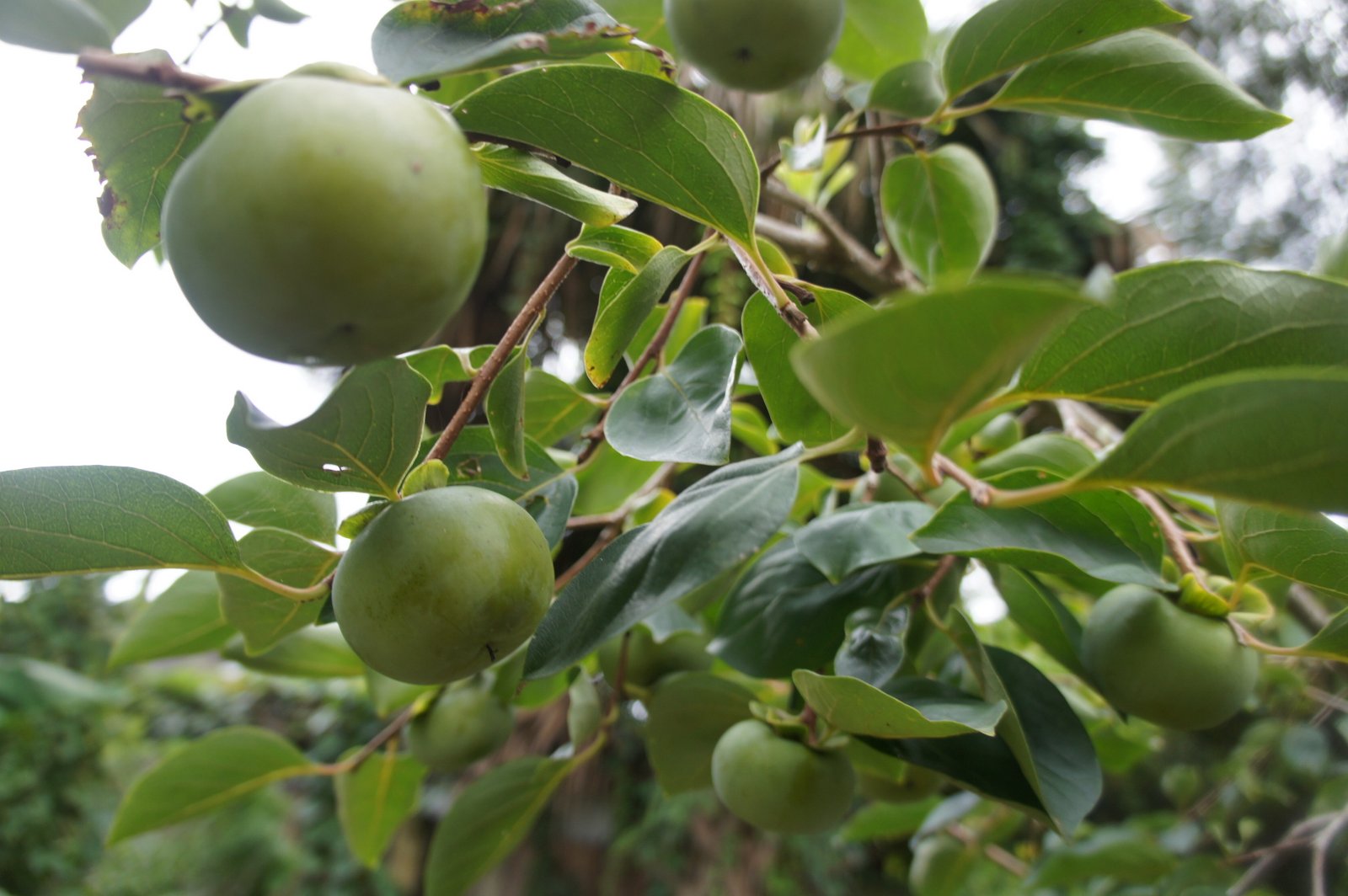
Persimmon season!


Posted by Picasa

Monday, October 08, 2012

Some quick shots around the garden...


I need to get back to regular blogging! Dug out my front summer bed and transplanted my (sorry little) seedlings into it. Also planted seeds of the usual suspects: Onions, kale, cauliflower, broccoli, and some hardier salad greens (arugula, cress). 

Wednesday, August 22, 2012

Very brief update for August...

I've been traveling for the last three weeks, so nothing much going on in the garden. More eggplants than I care to eat. Lots of sweet banana peppers. My Tabasco peppers are finally ripening. Grapes continue to produce well (Nesbit), but they're winding down. Lost some more persimmons with all the rain we've been having (three inches in the last couple of days alone)... and it looks like Isaac might hit next week! Herbs continue to do well, but they're beginning to struggle with the heat, rain, and declining sunshine. (That combination is a perfect trifecta for the fungal problems that knock back my herbs like oregano, thyme, tarragon and parsley.)

Anyway, I managed to get a bunch of onion seeds started at the end of July. My first attempt at cruciferous seedlings failed, predictably. So, today, I started:
a/b: Cassius cauliflower
c/d: Bluewind broccoli
e: Winterbore kale
f: Moneta beets
g: Gonzales early cabbage

We'll see...

Sunday, July 22, 2012

Seeds...

I'm travelling heavily in the coming weeks, so I'm not too optimistic that these seeds will survive the weeks before transplant, but... on the off chance that the bugs don't eat them, the storms don't wash them, the kids don't trample them, and the sun doesn't bake them... I planted White Crown cauliflower, Blue Wind broccoli, Cajun Red onions and Pumba yellow onions today... We'll see.

In any case, it's ideal to have good sized seedlings ready to go into the garden on August 15. Even if these survive the following weeks, I doubt they'll be quite ready for transplant in three weeks. Ah, well, the ideal and all that.

Tuesday, July 17, 2012

What's going on in the late-July garden?

A few shots of the garden... Besides the eggplants and peppers, I still have a few healthy tomato plants producing cherry tomatoes... The Nesbitt grapes are ripening, and the persimmons should be ready by the end of August at the latest.


Posted by Picasa

First grapes!

Nesbitt. Very nice muscadine--thinner skin, pips aren't bad (hardly noticeable). Strong Concord/Fox flavor (a good thing for eating grapes). Matures over the course of several weeks. I picked three today. Looks to be a huge harvest. I'll need to use the bird cloth once they notice...

Really sweet this year, though the fruit seems smaller than in the past. 

Tuesday, July 10, 2012

Quick remark on late-season figs...

For the first time, my Alma fig is setting and retaining summer fruit. You'll often see Almas and other southern fig trees described as everbearing. For years, my tree has sporadically set fruit during the summer, only to drop them before they ripened. (And an unripened fig is not a pleasant thing...) Now that I guess it's reached maturity, my tree is pretty regularly holding onto these summer fruit until mature. I ate a couple perfect figs from its branches yesterday morning, and there's another half dozen on the tree. In California, mature trees produce two crops a year. I wonder if my tree will ever produce a second large harvest? I doubt it, given its propensity to develop rust late in the summer and defoliate, but I can hope, right?

Anyway, it's been interesting to cultivate this tree over the past five years, from a tiny cutting in a pot to its present ten-foot height. I need to prune it this winter, as it's growing out of bounds...

Monday, July 09, 2012

Responding to a question...

I try to respond to questions in the comments... Sally from New Orleans asked a question in the comments to an earlier post.

I'm in New Orleans, hot and humid like you are. Do you prefer Johnny's seeds for our areas? I've bought a lot from Burpee and have had reasonable sucess, except for tomatoes. They just like to die. Unless I stop being organic, I have to accept that. I put in various Kales and they'll go almost all year. I put in more flowers this year, half died. It's quite a change from the northeast where I was. I really enjoy your blog, I't helped explain a lot and given me a better idea of how the seasons run. Alien to what I'm used to. Thanks, Sally 
and my quick response...

i like johnnys because they have a large selection of hybrids & reasonable prices. (shipping is steep, though... but probably reflects the true cost.) moreover, i have never been disappointed with the germination and performance of their plants, and never felt that i'd been sold the 'wrong' seed.
that said, i don't tend to buy my tomatoes from them, as tomato growers supply has a much better selection. (i still think they sent me the wrong seeds for sungold this year...)
tomatoes in our climes--just tough to grow. i grow mostly organic (i use chemical fertilizers because i think they are actually more ecologically friendly here in florida). i guess a couple points, based on my experience:
1) hybrids. forget the darn 'heirloom' varieties. NONE OF THEM is as good as an f1. not in terms of flavor, performance, nothing. buy small or medium sized, early or mid-season tomatoes with as many letters after their names as possible. seriously,that's how i tomato shop.
2) better too early than too late. i don't know enough about nola's clime, but here in fla, we have windows. missing the window by a couple of weeks makes a huge difference. tomato seeds are easy and cheap. stagger your seeding schedule so you have some to go in really early, and others in reserve. if you get a freeze, or if the fall-season crop gets blasted by a hurricane--you'll have backups. 

Adding: An interesting and unintended experiment. I had a dozen of "reserve" seedlings at the end of March. Some Mountain Magic and Juliet. Big seedlings, but stressed as they were in small pots. So I transferred them to a somewhat shady corner of the garden with no real expectation that they'd offer much crop. Right now, they are produce heavily and look healthy compared to my almost-dead, nearly-defoliated main crop of tomatoes. I reckon their performance is due a bit to the shade, a bit to being held back. What it tells me, though, is that my main crop of tomatoes is burning out not only because they are suffering from a myriad of diseases and bug issues, but also because they must be reaching the end of their useful lifespan. This discovery lends me to think that there might be a bit more flexibility in planting schedules than I'd long assumed. Maybe a staggered planting scheme is the way to go--the second will surely miss out on the main production time (May and June), but I might be able to eke out a few extra weeks of tomato harvest by planting some seedlings at the end of March. In any case, this strategy would only work with small-fruited tomatoes, which can set fruit during our hot nights. (Larger tomatoes need a few hours of sub-70° temperatures at night to set fruit.)

Sunday, July 08, 2012

Johnnys order...

Getting ready for my winter/spring garden... I'll plant these mid-July for transplant into the garden in mid-August... Of course, half the seedlings will die... it's Florida!

Pumba (F1)-Packet
Vegetables > Onions > Hard Storage > Yellow – Full Size
Desert Sunrise (F1)-Packet
Vegetables > Onions > Hard Storage > Red – Full Size
Alibi (F1)-Mini
Vegetables > Cucumbers > American Pickling
Sweet Mojo (F1)-Mini
Vegetables > Tomatoes > Small-fruited > "Grape"
Fortex-Packet
Vegetables > Beans > Beans, Pole
Chioggia Guardsmark-Packet
Vegetables > Beets > Specialty
Touchstone Gold (OG)-Packet
Vegetables > Beets > Golden Beets
Belstar (F1) (OG)-Packet
Vegetables > Broccoli > Hybrid
Snow Crown (F1)-Packet
Vegetables > Cauliflower > White
Arugula (OG)-Packet
Vegetables > Greens > Arugula/Roquette > Salad
Red Cross Butterhead Lettuce-Packet
Vegetables > Lettuce > Butterhead/Boston > Red
Hakurei (F1)-Packet
Vegetables > Turnips
Watercress-Packet
Vegetables > Greens > Cress
Javelin (F1) (Pelleted)-Packet
Vegetables > Parsnips