Friday, July 28, 2006

'Cecile Brunner ' Climbing Rose for Florida

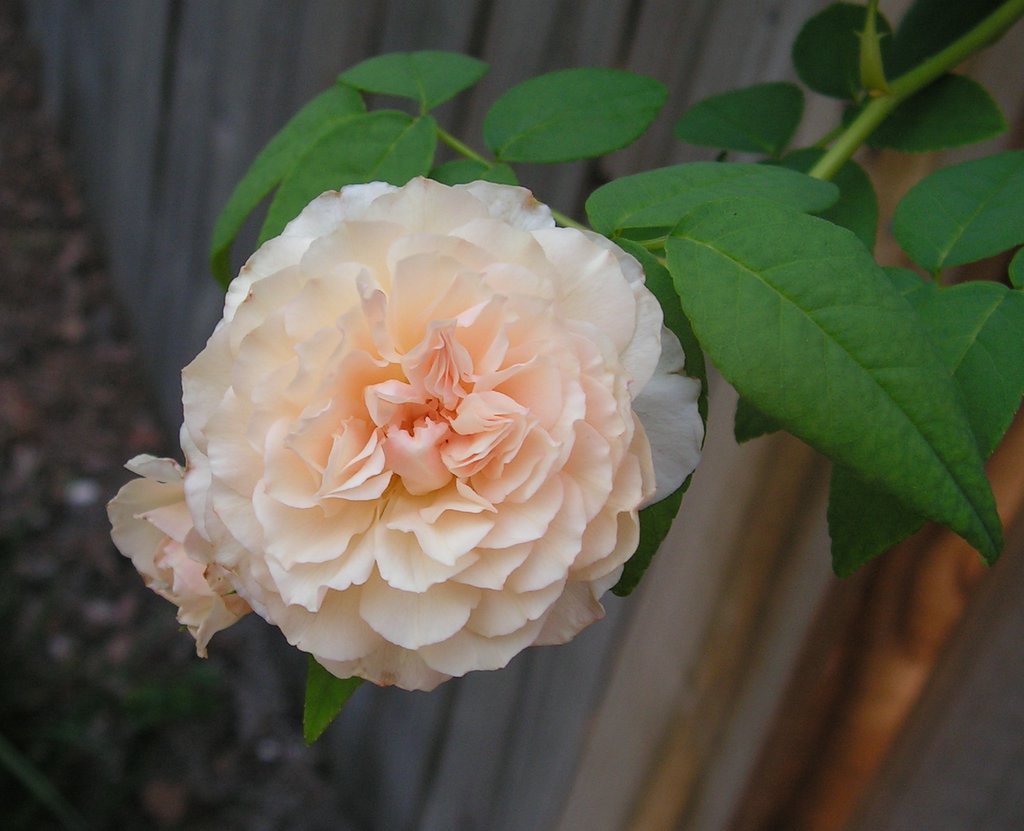
One of the recommended roses from the Central Florida Rose Society, this 'Cecil Brunner' took a long time to come to bloom, but even in the heat of late July, its blooms are winning. The descriptions of this rose (apparently a climbing sport of a cross between a Tea and a Polyantha) are so varied and contradictory as to make one suspect that there are many different roses sold under the same name.

My bush, in any case, has quickly hit eight feet from a cutting I planted in December from Seminole Springs, and finally put out its first small flush of blooms, each absolutely perfect and double, though not deeply. It starts out a nice blush-pink, more intense in the center. Very quickly it picks up a yellow tint, and by the time its completely blown, is distinctly yellow. No one notes this shift in color, which likely means that its just Florida weather affecting the blooms. Many flowers here react to the intensity of the sun and heat unlike they do elsewhere. The scent is, well, a bit odd -- not at all rosey, more spicey, almost a curry. But not unpleasant.

An update: It happens. Sometimes tags get switched at the nursery. I'm convinced, after a bit of research and reflection, that the rose that I bought labeled 'Cecile Brunner' is, in fact, 'Céline Forestier': The blooms are too large (this time of the year) for Cecile (which are nearly miniature), they're too yellow, and they're clearly quartered and deeply cupped. Plus, there's the spicy tea-rose fragrance.

It simply cannot by Cecile, and looking on Seminole Springs' website, the only rose that fits the profile is Celine. I'm not unhappy with the error, as today, in the doldrums, I have a dozen roses in bud, waving madly in the afternoon breezes.

Sunday, July 16, 2006

Thinking about a fruit orchard...


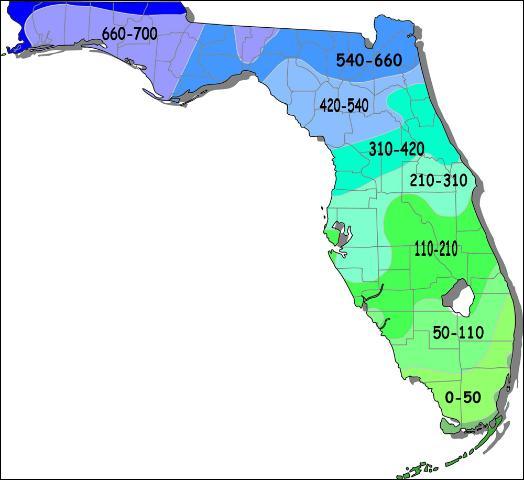
One of the innumerable reasons I complain about living in Central Florida is that I've always wanted a large fruit orchard, and growing fruit trees here in zone 9B is fairly difficult: Most deciduous fruit trees require 800+ chilling hours a year, but here, north of Orlando, we get around 400. And we cannot grow mangos and avocados because of our once or twice yearly frosts. Of course you can grow citrus (my property is at the center of Henry DeLand's original grove from the 1870s); and, if you're lucky, you can eke out a hand of bananas every once an a while. I like an orange now and again, but our one tree usually supplies more oranges than a small family like ours could care to eat.

Coming across the outfit Just Fruits and Exotics has really got me dreaming about what I can do to the rest of the backyard. They appear to specialize in species and cultivars that thrive in our hot, humid growing conditions. I'm already planning a long row of fig trees along the back fence, fronted by several hedgerows of blueberries and pomegranates. Maybe I'll mix a dwarf jujuba and into my large, eclectic bed in the center of the backyard. Perhaps I'll fill in the partly shady side lot (where our old grapefruit grew until some fungus felled it last year) with some persimons, bananas and mayhaws.

I doubt I'll have a hard time convincing the wife and kids to rent a trailer for the MINI Cooper and head out to Just Fruit in Crawfordville, FL at the beginning of November, just in time to enjoy the Florida Seafood Festival in nearby Apalachicola.

Monday, July 10, 2006

Going Bananas!

I'm out of town, away from my garden. In place of visits to my garden, I've been surfing the 'net and finding lots of useful links...

Florida Gardening Forum
Lots of good advice here.

Just Fruits and Exotics
I just discovered this site, which contains an exciting array of Florida-friendly fruits, including olive trees, peaches, figs, pomegranates, quince, etc. I'm already planning a trip there with a borrowed pickup in October!

Going Bananas!
Our 5 acre nursery/grove is exclusively devoted to growing nearly 100 varieties of banana plants and multiple cultivars of lychee and longan trees. Because we specialize in these plants only, we can give you the very best quality of plant material at economical prices. We grow the plants ourselves and oversee every aspect of the growing, plant selection, and shipping. We are certain you will be happy with your plants once you follow the simple growing instructions. Banana plant varieties and lychees & longan trees can be purchased on location, along with banana blend fertilizer. Mail order items are limited to banana plants and corms.

Saturday, July 08, 2006

Rosa laevigata


The Cherokee Rose is a particularly thorny rose with a liana (scrambling, upright) growth pattern. Even its heps, which turn russet in the fall, are covered in quite sharp prickles. I started some from cutting a couple of years ago at the base of the gazebo in our back yard (the rose is very easy to start from cuttings), and the canes have proved more vigorous than I necessarily care for. Posted by Picasa

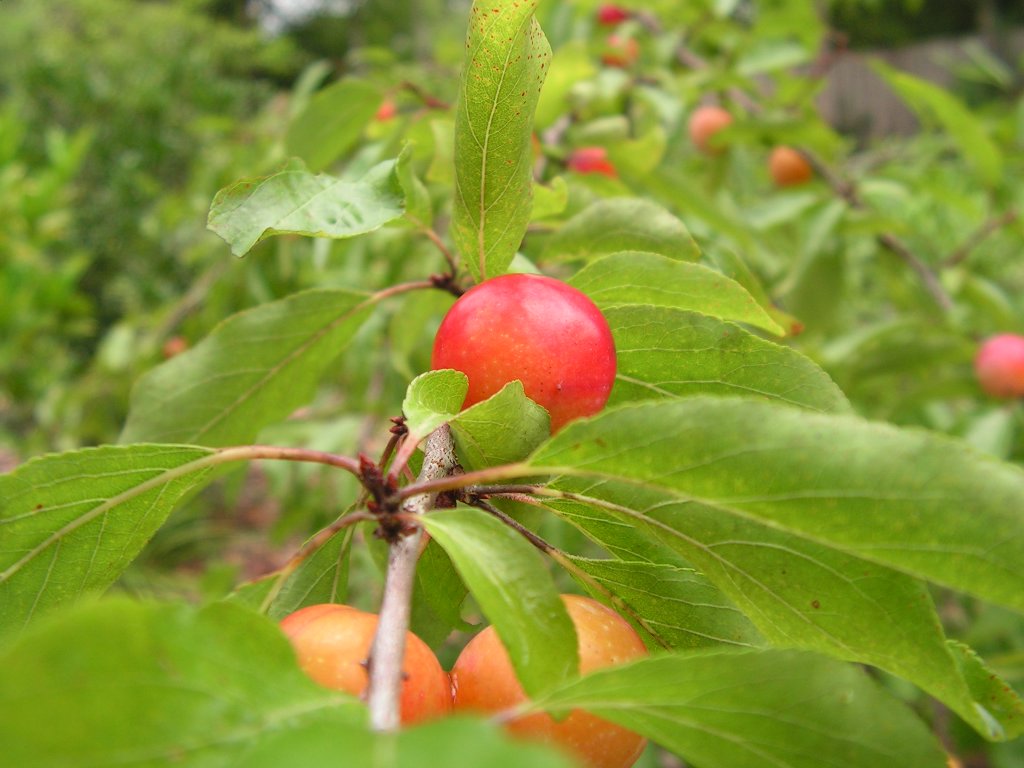
Chickasaw Plum

Below: Plums on a Chickasaw Plum ( Prunus angustifolia)

Central Florida Gardening in July

(Above: Buds on a tuberose)
The rainy season started in earnest while I was away on a research trip from mid-June to the Fourth of July. I came back to an overgrown, weedy garden that needed a few hours of care and a sharp mower blade. Considering they were sprayed very irregularly, my roses have done superbly, particularly the OGRs, which have grown considerably. 'Mr Lincoln', a grandiflora, wins the prize for the most growth: It has four basal breaks and is now almost five feet tall. (I bought it back in November for $1.50 from a local home improvement store. It was stunted and leafless then. Clearly this plant loves growing on 'Fortuniana' and lots of water.)

Zinnias and Cosmos that I started from seed in April are blooming madly, and those I started in May and transplanted mid-June are just now coming into bud. The Crepe Myrtles I planted last spring are in full bloom and have reached about fifteen feet, though they still look a bit gangly. The 'Knock-Out' Roses (not the cherry red ones, but the light pink sports) that I planted this spring are thriving: They've grown from one foot to three feet and doubled their spread since March, when I planted them. They show absolutely no signs of black spot, despite having never been sprayed. I managed to start two cuttings, which are merrily growing in pots in partial shade. I'll plant them out in fall, when things cool down.

Many plants have flourished: Buddleia davidii, Spicy Jatropha (Jatropha integerrima) and Thryallis (Galphimia glauca). Bulbs like Gladiolus callianthus (the Peacock Orchid) are up and ready to bloom. The Dune Sunflowers (Helianthus debilis) that I've planted around the property have spread broadly and are in full bloom now. Other plants that seem to thrive in the heat and rain include Alternathera 'Purple Knight', Ruellia elegans, and African Purple Basil.

However, with the hot and very wet weather, many plants are easing into dormancy in the coming weeks, to reawaken when the first cool, dry breezes begin to blow in November. I lost a camellia, a Professor Charles S. Sargent. It was growing with other camellias that I planted at the same time - these other camellias are fine. I don't know what killed this one.

It's a good time to start plants from cuttings, which is what I am heading out to do right now on this hot and sunny Saturday...

Thursday, July 06, 2006

The Southern Bulb Company Storefront

The Southern Bulb Company Storefront: "...RARE AND HEIRLOOM BULBS...
In many cases, our bulbs have survived naturally (unmaintained) for over 100 years! Many were brought over by the first Southern settlers and have adapted, multiplied and thrived outside the bulb trade for their entire existence. We rescued them from old homesites, construction sites and abandoned lots so the Southern gardener (Zones 6-10) can (finally) enjoy success with flower bulbs."

Wednesday, June 14, 2006

Blossom to Table: Honey Grows Up - New York Times

I'm reading Robbing the Hive right now, so this article in the NYT piqued my interests. I love bees: Every morning, I spend a few moments near my gaura and basil plants, listening to their contented hum. Another symptom of my biophilia.

I hope this interest in artisanal honey continues -- by the nature of its production, it tends to be a small-operation and local agricultural affair, readily available practically anywhere there are flowers.

The article errs when it remarks that tupelo honey is a product of Georgia: It's produced everywhere in the Florida panhandle, where the tupelo tree grows abundantly in the marshy river flats. There are native tupelo trees in North America, but I'm fairly sure that most of the ones in Georgia and Florida are introduced species from Asia.
Blossom to Table: Honey Grows Up - New York Times: "June 14, 2006
Blossom to Table: Honey Grows Up
By DANA BOWEN

TED DENNARD, founder of the Savannah Bee Company, says 2004 produced the best orange blossom honey the South has seen in decades.

But you never know. 'Last year was an awful year for basswood,' said Zeke Freeman, owner of Bee Raw Honey, blaming an early summer drought in New York.

And Neal Rosenthal, who imports Mario Bianco brand honeys from Italy, in rare flavors like dandelion, lime blossom and eucalyptus, wistfully recalled, 'We still talk about the remarkable chestnut honey of 1983.'

It's apt that Mr. Rosenthal imports wine as well as honey. Many of the same factors that distinguish a reserve cru from a pitcher of house red — a distinct varietal, a particular place, propitious bursts of sun and rain — determine whether honey is packaged in a costly jar or pumped into a plastic bear-shape bottle. And with more single-flower honeys on store shelves and farmers' market tables, chefs have been dispatching their wildly different flavors to dishes the way sommeliers pair wine with food."

Wednesday, June 07, 2006

Joe Freeman's Favorite Roses

Not long ago, I condensed and reproduced a list of reliable and easy to care for roses for Central Florida. Here's another list of favorite roses, this one from the excellent book, The Florida Gardener's Book of Lists by Lois Trigg Chaplin. Joe Freeman, according to the book, is the chief horticulturalist at Cypress Gardens. I've starred the roses that were also mentioned in the Orlando Sentinel's best rose list.

Abraham Darby* (English)
Belinda's Dream* (Shrub)
Carefree Beauty (Floribunda)
Chestnut Rose (Rosa rosburghii)
Gold Medal* (Grandiflora)
Heritage* (English)
Louis Phillipe* (China)
Maitland White (Noisette)
Mr. Lincoln* (Hybrid Tea)
Mutabilis* (China)
Nur Mahal (Hybrid Musk)
Old Blush (China)
Othello (English)
Pink Pet* (Polyantha)
Prosperity* (Hybrid Musk)
Smith's Parish (Bermuda)
Sombreuil (Climbing Tea)
Spice (Bermuda)
St. David (Bermuda)

Thursday, June 01, 2006

Figs Believed to Be First Cultivated Fruit - New York Times

I love figs! Our old neighbor has a truly massive brown fig tree planted in her swale. It never gets irrigated, and receives full-day direct sun. She doesn't eat figs, which meant they were ours for the picking. I recently bought a small fig tree; when the rainy season starts (if it starts!), I'll plant it out at the corner of our property.

Figs Believed to Be First Cultivated Fruit - New York Times

On This Old McDonald's Farm, A First Hint of Agriculture: Figs

In the ruins of a prehistoric village near Jericho, in the West Bank, scientists have found remains of figs that they say appear to be the earliest known cultivated fruit crop, perhaps the first evidence anywhere of domesticated food production at the dawn of agriculture. The figs were grown some 11,400 years ago.

Presumably that was well after Adam and Eve tried on the new look in fig leaves, in which case the fig must have grown wild in Eden.

Two botanists and an archaeologist, who describe the discovery in today's issue of the journal Science, said the figs came from cultivated trees that grew about 1,000 years before such staples as wheat, barley and chickpeas were widely domesticated in the Middle East. These grain and legume crops had been considered the first steps in agriculture.

The researchers uncovered nine small figs in the ruins of a burned building. The fire left the figs charred, preserving them in a condition for detailed analysis. The researchers established the age of the cache by dating the fire's remains.

A comparison with modern wild and domesticated varieties, the scientists said, led them to conclude that the ancient figs had undergone a mutation in the wild that produced a sweet fruit but no fertile seeds.

Because these trees were a reproductive dead end, the botanists reasoned, they could have been propagated only by people planting shoots of the variant strain again and again. A piece of stem stuck in the ground will sprout roots and grow into a tree, which could explain why figs were domesticated much earlier than grapes, olives and other fruit plants.

The archaeobotanists who conducted the study were Mordechai Kislev and Anat Hartman of Bar-Ilan University in Israel. Their co-author of the journal report was Ofer Bar-Yosef, an archaeologist at the Peabody Museum of Harvard.

In an interview by telephone from Israel, Dr. Bar-Yosef said that he was ''confident about the identification of the figs as being of a domesticated variety'' and that they were probably the earliest known domesticated crop. The cultivation technique, he said, seemed to be well enough advanced to suggest that people had thus been intervening in nature for several centuries.

Dr. Bar-Yosef noted that the experimental technique of repeated plantings was similar to the methods by which hunter-gatherers collected wild grains and legumes and gradually developed cultivated crops.

Over the last century, scientists have scoured the Middle East for traces of the origins of agriculture and argued over what the first crops were and where they were grown. Dr. Bar-Yosef contends that the first cultivated grains were introduced in what is now Israel and north into the upper Euphrates River valley. Other researchers think the most likely origins were in southern Turkey.

But scholars agree with Dr. Bar-Yosef that the beginning of agriculture, whether with the first sweet fig or ripe grain, was pivotal in human cultural evolution.

''Eleven thousand years ago, there was a critical switch in the human mind -- from exploiting the earth as it is, to actively changing the environment to suit our needs,'' Dr. Bar-Yosef said in a statement from Harvard. ''People decided to intervene in nature and supply their own food rather than relying on what was provided by the gods.''
Sunday, May 28, 2006

The Best Roses for Florida

The Orlando Sentinel published a list of favorite roses from the Central Florida Rose Society. The criteria included:
  • Continual bloom (good luck!)
  • Floriferous
  • Disease resistance
  • Relatively carefree (I have no idea what that could mean – all roses here have roughly the same needs.)
Here goes the list, with the top seed in bold:

Hybrid Tea
  • Double Delight
  • Mr. Lincoln (I grow it – a very vigorous, wonderful plant.)
  • Veteran’s Honor
  • St. Patrick (An excellent, very upright narrow bush with tight buds. The best rose for cutting, lasting a remarkable week or more.)
  • Elina
  • Loise Estes
  • Bride’s Dream
  • Gemini
  • Moonstone
  • The McCartney Rose
Shrub Roses
  • Knock Out (I grow both the original cherry red and a very pretty light pink sport. First-rate landscaping rose, seemingly immune to black spot (not just resistant to it). Low water needs.)
  • Belinda’s Dream
  • Dortmund (A Kordes rose. Reputedly very disease resistant. I’ve not seen it for sale on Fortuniana rootstock, though.)
English Roses
  • Abraham Darby (A standout in my garden, too.)
  • Heritage
  • The Prince
  • Charlotte
  • The Dark Lady
  • Graham Thomas
  • Molineux
Grandiflora
  • Gold Medal (I bought under the name of AROyqueli. It was so diseased and stunted I got it for $1.50. So far, it’s doing well, but not many blooms.)
  • Queen Elizabeth
  • Cherry Parfait
  • Tournament of Roses
Miniature Roses
  • Bees Knees
  • Butter Cream
  • Fairhope
  • Jean Kenneally
  • Jeanne Lajoie
  • Figurine
  • Miss Flippins
  • Kristin
  • Pierrine
Climbing Roses
  • Don Juan (An exceptional, vigorous, disease-tolerant rose. Don Juan is an oddity: At any point, it will have all stages of flowers, from new shoots, to bud to blown. The vast majority of roses go through cycles of bloom, where all the flowers are roughly in the same stage of bloom.)
  • Prosperity (Another great recommendation. Extremely vigorous and disease resistant.)
  • Fourth of July
  • Cecile Brunner (Very vigorous, growing on its own rootstock. I bought mine for $4.50 from Seminole Springs Nursery. I planted mine a few months ago, and though it hasn’t bloomed, it’s already mounted my six-foot fence.)
  • Altissimo
  • Clotilde Soupert
  • Red Cascade (I’d classify this as a rambling miniature rose. Perfect tiny red blooms. It grows very well in a small cage or tripod. Floriferous and the toughest rose I’ve ever grown.)
  • Champney’s Pink Cluster (Bred by Champney in South Carolina. It’s the parent of the Blush Noisette and all the innumerable offspring of that rose.)
  • Marechal Niel
Old Garden Roses: I grow many of these, all of them purchased from Seminole Springs Nursey.
  • Louis Phillippe
  • Mrs. B. R. Cant
  • Souvenir de la Malmaison
  • Mutabilis (There’s a wonderful example of this rose growing at Freedom Playground here in DeLand.)
  • Pink Pet
  • Blush Noisette
  • Duchesse de Brabant
  • Paul Neyron
  • Cramoisi Superieur
Floribunda Roses
  • Our Lady of Guadalupe
  • Iceberg (My first rose!)
  • Playgirl
  • Sun Flare
  • Miss Ada
  • Hannah Gordon
  • Betty Boop
  • Europeana
  • French Lace

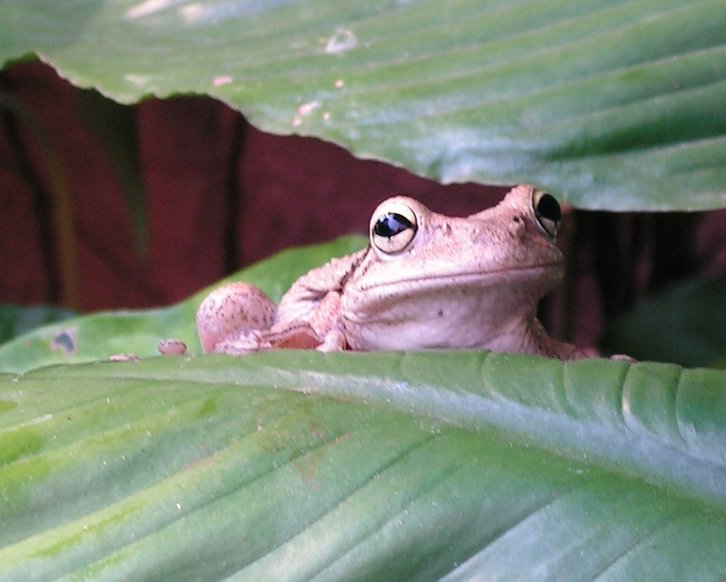
Garden Visitor

We have several species of tree frogs living around our house. This is one of two who live behind a wall fountain on the patio. They usually come out only at dusk, but it's mating time. The utter wreck of a garden fountain I installed this winter (I must replace it!) is full of tadpoles at all stages of maturity, to the constant entertainment of my son.

Tuesday, May 23, 2006

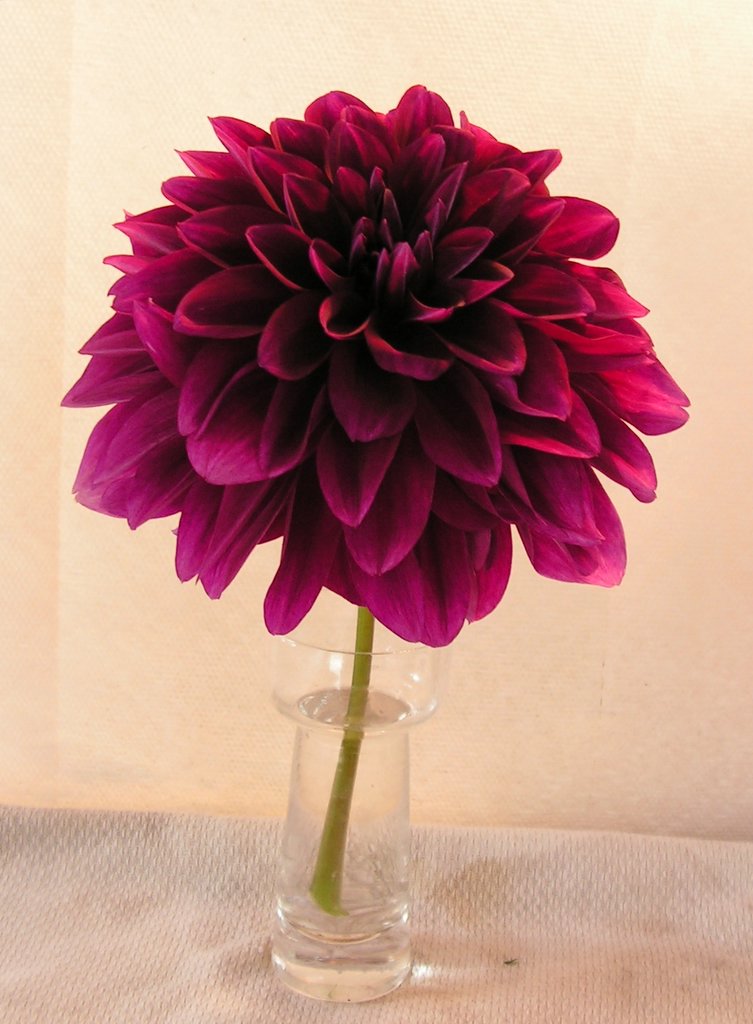
Dahlias in Central Florida


My dahlias continue to thrive... This is a lateral which I should have disbudded, but given that this is new territory for me, I opted for more flowers earlier with shorter stems.

Sunday, May 21, 2006


A brown anole (Anolis sagrei) inflating its dewlap early one May morning. The plant in the background is an African Blue Basil, a 2006 FNGLA Florida Plant of the Year, and one of my favorite plants in the garden. It is somewhat camphory (like Thai basil, though Thai is more minty), and I don't care much for its culinary uses, though I still use it when my Mediterranean basils have burned out in September. The African basil grows from spring to frost, covered in long blue spikes. The flowers themselves are small, bluish white and short-lived, but the blue calyces (modified sepals that look like flowers but are not) last for weeks. It sprouts readily in a glass on the windowsill, and has always come back from the root after a frost. Mine was hit hard by the cold here in January, and is just starting to come back into bloom.

The reason I love the plant, beyond its landscape value, is its attractiveness to honey bees. I visit my basil corner every summer morning, to marvel at the seething buzzing multitudes that hover about it.

Tuesday, May 16, 2006

Delphiniums in Florida

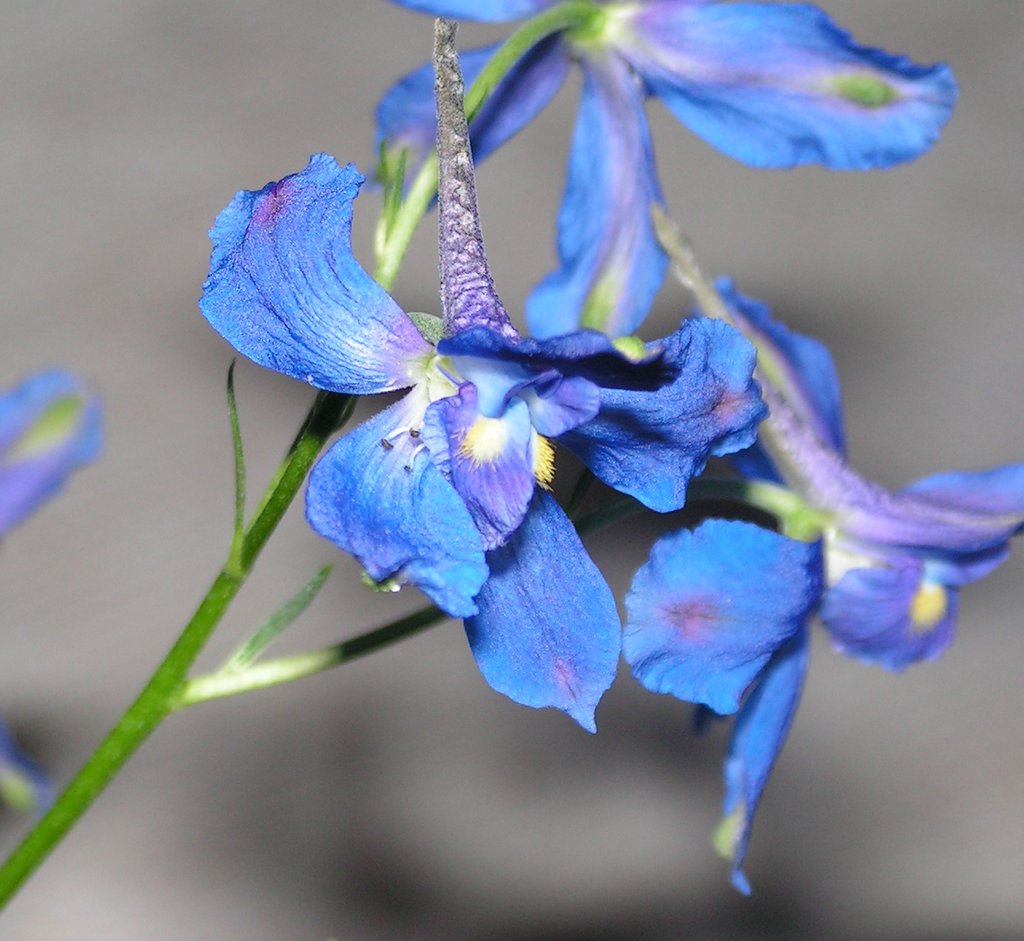
Mediterranean Seas (Delphinium tatsienense) from Thompson & Morgan. I started these a bit late, in February or March, but they seem to be going strong in the back of my bed. Not the tallest delphiniums at only 30 inches, but they're an intense blue and they seem to handle the heat with little complaint.

An addendum: This particular Delphinium makes a first-rate cut flower. It looks as good six days after cutting as the first day -- the best vase-life of any cut flower I am currently growing.


Sunday, May 14, 2006

A family of milkweed beetle (Tetraopes tetraophtalmus) enjoying the butterfly flora at Leu Garden. Posted by Picasa

Friday, May 12, 2006

Chrysanthemums


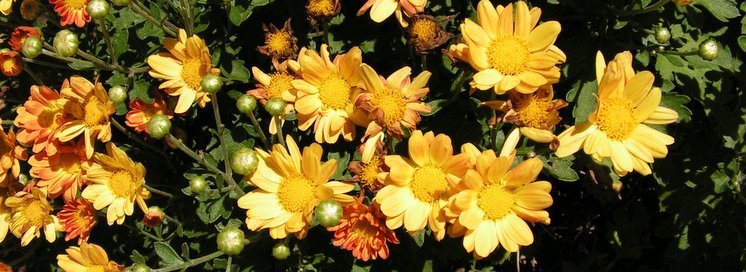
More true perennials for Florida: Up North, people think of mums as plants for fall. Here, though, Mums have two seasons: I buy them in early fall for some quick color in pots when everything else has died or has yet to recover from the rains and heat of September. Once the plants go out of bloom (usually a month or so), I chuck them in a sunny corner where it's easy to water them from time to time, and then wait the four months until they come back into bloom, right at the end of spring. If I were really really patient, I could then transplant them into a lightly shaded corner of the garden and they would bloom again come fall. Posted by Picasa

Sunday, May 07, 2006

Bulbs of FLA...


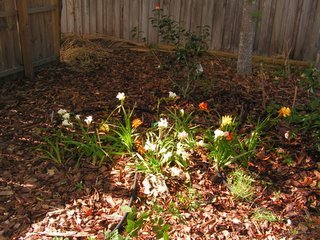
Because we can't grow (perennially, in any case) tulips, hyacinths and daffodils, there's a strange idea common to Central Florida that we cannot grow bulbs at all. That's far from the truth, though gardeners need to choose their bulbs carefully. (Now, of course, the pictures above and the discussion here is not limited to bulbs, but includes rhizomes (and their ally, the tuber) and corms. These are distinct storage organs, but from the gardener's perspective, there's really little difference.) As a rule of thumb, we can grow virtually any bulb if planted at the right time of the year, including tulips and daffodils. However, many bulbs from temperate climates can't cope with Florida's heat, humidity, and "soil." Bulbs from the southern hemisphere, particularly from South Africa, do very well here. I don't mean this to be a comprehensive list, but here goes with the bulbs I have grown in my garden, with some comments on their performance:
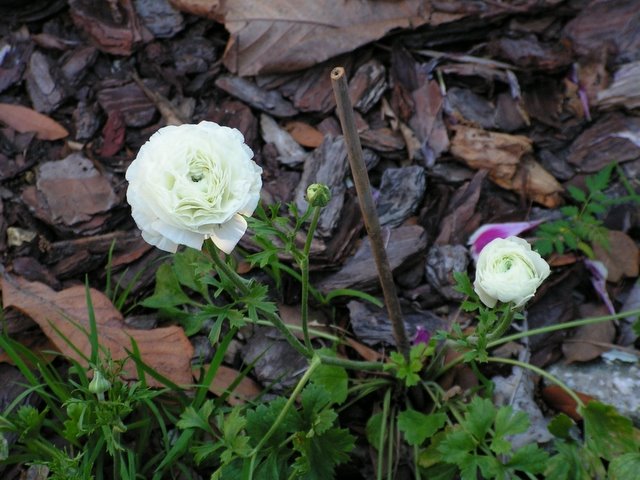
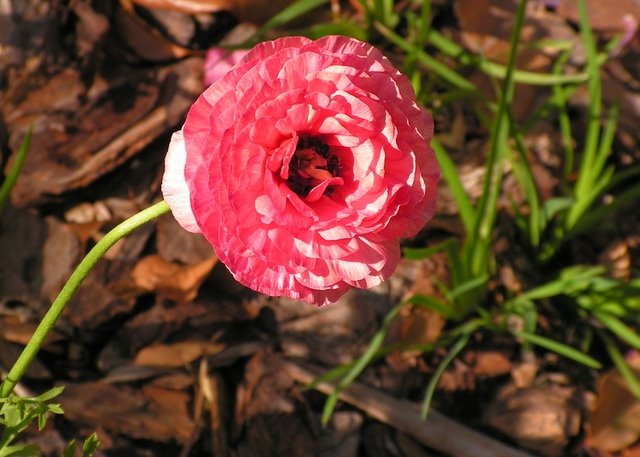
  • Ranunculus asiaticus (Persian buttercups): Plant as soon as cool weather starts. I remember reading somewhere that the name means little frog (rana in Latin). That might incline you to believing that they grow in marshy, wet soil (which would be entirely wrong -- they're actually sold as xeriscaping bulbs); I think the name more likely comes from their star-shaped, crinkled rhizomes, which look a lot like little frogs. I planted these in too shady a spot this year, and by the time they bloomed, we started to have our typical intermittent heat waves. Still, I had several dozen lovely blooms for a small investment. Next year -- rich soil, full winter sun, plant in early November.
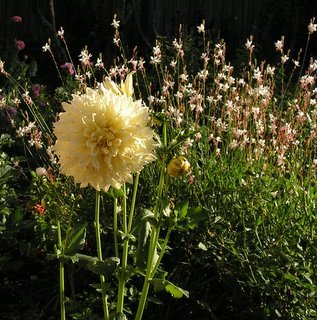
  • Dahlias: This is my first year growing them, as many gardeners and books had instructed me that they don't grow here. Nonsense. The trick for me at least was to plant them (in full sun and fairly rich soil) at the beginning of February: They started to bloom in mid-April. There was the risk that a late frost might have killed them, though. I bought cheap, generic tubers from Lowes, but have been very happy -- I have 6 plants growing, two blooming; the others are too small to bloom now, but might still do so this season. (They are the yellow and burgundy blooms in the photos above.) I mistakenly divided the tubers when I probably should have kept them all together. I predict that these will continue to bloom as long as they are watered well. I'll pull them as soon as it's obvious they are rotting (which they will inevitably do, once the rainy season starts).
  • Dietes (several species): My comments from Daves Garden:
Sturdy, ultra-low maintenance plant here in Central Florida. It grows rapidly -- even very small, one-gallon plants grow within three years to 2-3' or more in diameter.
Grows best in filtered light here in FL (direct sun farther north), but I have it in full direct sunlight in the swale and it's doing well in those tough conditions, though the leaves are not as deep green. Flowers best in sun, but even in full shade it flowers and grows. Blooms in flushes, with large flowers in the cool season and smaller ones when it's hot. Makes a beautiful cut flower, though lasts only one day.
It does self-sow, but the seedlings are easy to recognize and shallow-rooted.
Note: These plants, when large, are VERY difficult to dig and divide. I have dug and divided monster clums of 4' -- it took me more than an hour to pull the plant out of the ground and another hour to cut the plant into manageable clumps. That said, the one large clump produced 10 medium plants that are now filling a bed.
  • I can't praise highly enough the freesia I bought from easytogrowbulbs.com. They have provided a full spring of blooms. In my garden they grow in completely unimproved, though heavily mulched, soil under partial shade. They aren't demanding, don't take up much space with their small, sword-like foliage, and have already put out new growth. They say you can leave them in the ground, and given their relatively low price, I'll give it a shot this year.

  • To be continued...


Stokes Aster


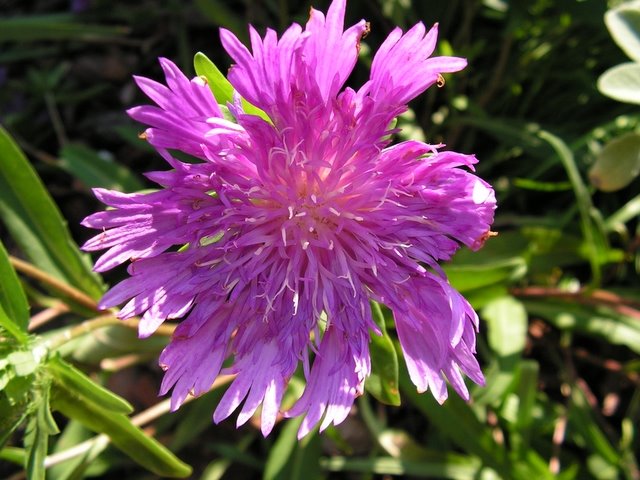
Stokes Aster (Stokesia laevis) is another reliably perennial herbaceous (as opposed to a shrub) plant here in Central Florida. When dormant, it looks like fat liriope (which, by the way, is unaccountably pronounced luh-rye-o-pee -- surely the second least predictable pronunciation after kalanchoe, which, trust me, is correctly pronounced (per Greek norms) kal-in-kow-ee).

Anyway, back to Mr. Stokes. Best grown (like most on the perennials here) with some afternoon shade. Mine has been thoroughly abused (replanted twice in the cool season) and continues to thrive. The first year I got, maybe, 10 blooms. This year it's been non-stop blooms for weeks. Makes for an interesting cut flower which lasts for at least three days. The downside (at least through year two) is that the stems are too short for really interesting cuttings: If you were to take a long stem (say 18"), you'd have to sacrifice a bloom in bud. You could do it, but it would be a pity. Maybe next year the plant will put out sufficiently long stems, or sufficiently large that I won't miss the bloom.

It's native here in Central Florida. If that matters to you. I haven't seen any seedlings, but it's clearly divisible: Fat, tangled roots, not unlike (again) liriope. (Liriope is in the lily family, while Stokes Aster is (predictably) in the Asteraceae.)